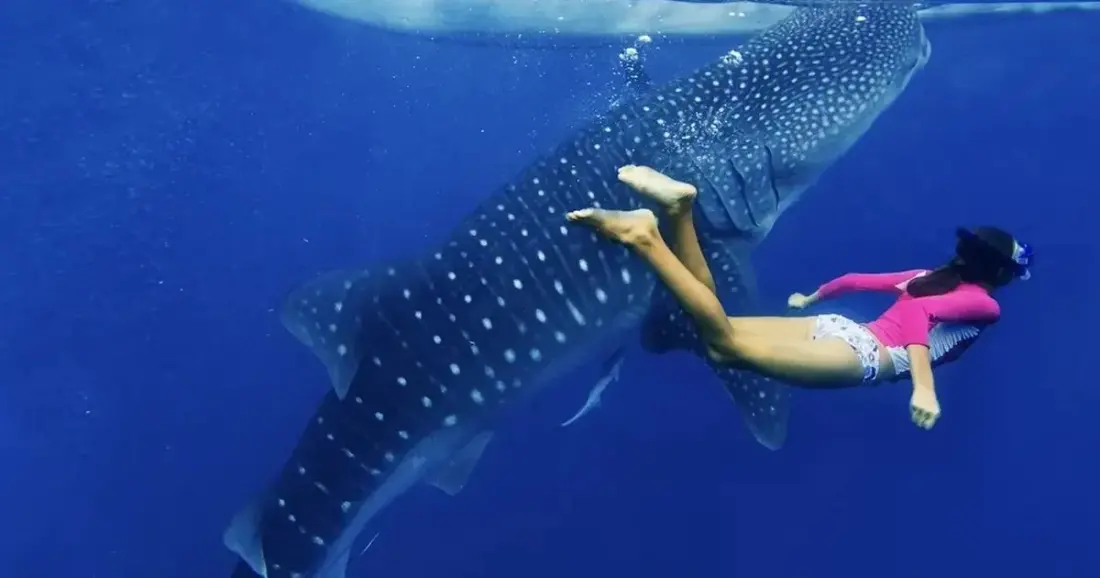
Whale sharks are the biggest fish in the sea — school-bus sized, with mouths that can stretch three feet wide — and yet they've never attacked a human. The danger runs the other way: unregulated tourism and fishing nearly wiped them out, and the IUCN listed them as endangered in 2016. The good news is that a handful of places around the world have figured out how to run encounters that protect the animals while letting travellers swim alongside them.
La Paz, on Mexico's Baja California peninsula, is the cautionary tale turned success story. Five years ago you could buy a whale shark trip off the pier for $10, with packed boats and zero rules. In 2017 locals and scientists created a Whale Shark Refuge: operators now need permits and fly a flag to prove it, guides must be certified and retested yearly, and swimmers keep six feet from the body and ten from the tail. Juvenile males gather here from November to April; Tuna Tours and Baja Adventure Co. are solid choices.
In the Maldives' South Ari Atoll, whale sharks live year-round — unusual for a species that normally roams thousands of miles. New rules introduced in 2024 require three metres of distance from the body, four from the tail, and ban touching or blocking the animals entirely. Maldives Whale Shark Research and the Be Gentle To Giants campaign can point you to vetted operators.
St Helena, the remote Atlantic island where Napoleon died, is the only place that draws roughly equal numbers of adult male and female whale sharks — leading scientists to suspect it may be where they mate. Snorkelling is allowed, diving isn't, and the season runs January to May.
In the Galápagos, around 98% of passing whale sharks are female, hinting this could be a birthing ground. Access to Darwin and Wolf Islands is via live-aboard boats, best between July and November, often with scientists aboard.
Ningaloo Reef in Western Australia hosts the largest aggregation on the planet — 300 to 500 sharks a year along 162 miles of coast, now UNESCO-listed. It's also where the world's first whale shark tourism guidelines were written. Spotter planes radio boat captains, and licenses are limited enough that any operator is trustworthy. Season: March to July.
Mafia Island, near Zanzibar in Tanzania, holds sharks that rarely leave — perfect for tracking research, and where scientists discovered whale sharks eat seaweed, making them the world's largest omnivores. Marine Megafauna Foundation and Kitu Kiblu run ethical trips from October to February.
Finally, Cancún, Holbox and Isla Mujeres have strict rules and tours that often add manta rays, dolphins and turtles to the mix, from May to September.
Who's this for? Anyone who wants a genuine bucket-list wildlife moment without the guilt. The universal rule everywhere is the same: don't touch, don't chase, and book operators with scientific ties. Do that and the giants will keep showing up.