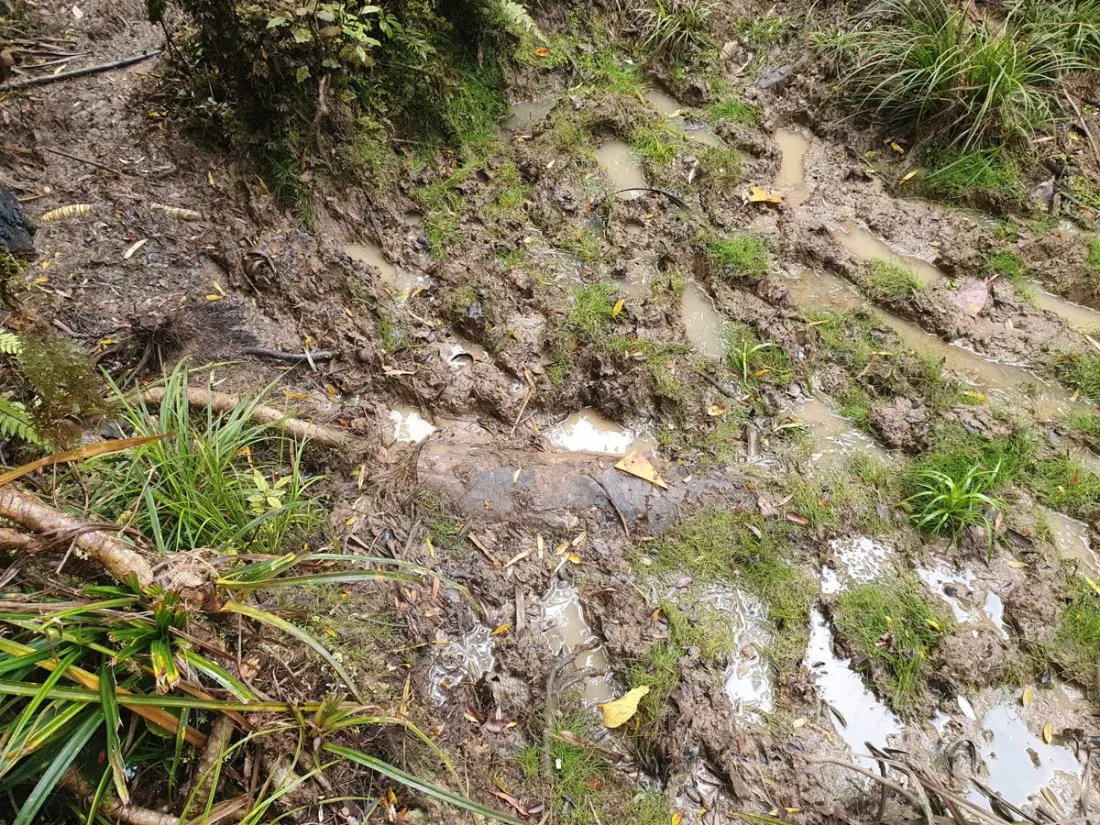
New Zealand's Te Araroa trail has a reputation-maker early on: the crossing of Raetea Forest, between Kaitaia and Kerikeri in Northland. Officially, the Department of Conservation gives this 18km stretch a 9-hour estimate. In practice, hikers routinely take 12 or more, thanks to steep, rooty climbs, a high point at 580m and mud that slows even fast walkers to around 2km/h on the bad sections.
One recent thru-hiker writing for The Trek tackled it in a single day — a sensible strategy, because the forest's campsites have no water source until you exit the other side. Carrying 3 litres plus a full day's food means a heavy pack, so the alternative is pushing all the way through to Makene Road campsite. Setting off at 7am after a chilly, condensation-soaked night, they reached the radio repeater turn-off (a possible camping spot with open, sunny ground for drying tents) by 10am and made the road end campsite in just over nine hours — including an hour-long lunch stop. That counts as quick going for Raetea.
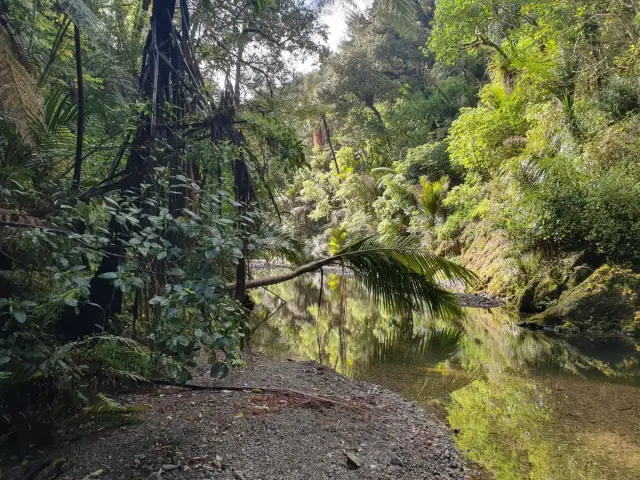
The route itself is a taste of proper Kiwi bush tramping after the trail's opening beach and road-walking days. It climbs an old gravel road that roughens as it goes, then punches up through dense bush to the summit, before a long series of muddy ridgeline ups and downs. Not everything goes to plan: a rolled ankle on a stone, knees protesting on the descents, and a group of hikers who missed the repeater turn-off entirely. At the far end, the exit gate was tied shut with baler twine, forcing a climb over a pipe and fence. The campsite at the road end is small and sloped, with a doorless toilet facing into the bush — quirks worth knowing before you arrive.
Why should a traveller care? If you're considering walking even a section of Te Araroa, Raetea is the reality check that separates beach strolls from genuine backcountry tramping. Hikers who hated it are warned that harder sections lie ahead; those who relished it know they're cut out for the full 3,000km route. The practical lessons transfer: start at dawn, carry enough water for a dry forest, budget double the DOC time estimate if you're not a confident walker, and pack food you'll actually be excited to eat at a muddy lunch stop. There's also a social rhythm to the trail — walkers leapfrogging each other all day, sharing intel about missed turnings and campsite space — that makes even a slog through mud feel like a shared adventure rather than a solo ordeal.
For anyone planning the Northland section, the key stops frame the story: Kaitaia as the launch point, the Raetea Forest crossing as day one of the backcountry, and Kerikeri as the reward town at the other end, where a rest day and a resupply await.