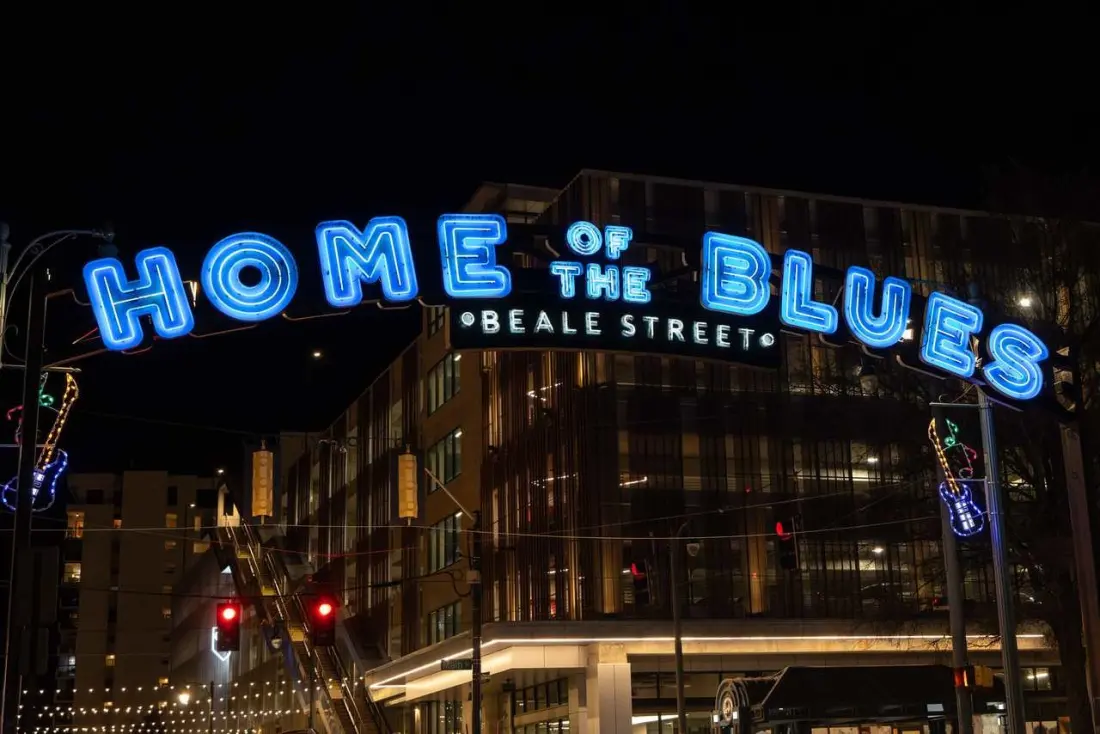
Beale Street gets the postcards, but Memphis rewards travellers who push past the neon. The city's real personality shows up block by block — in converted warehouses, former Sears depots and leafy districts where porch concerts are a summer tradition. Here's how the key neighbourhoods break down.
Downtown is the obvious starting point. Beale Street's blues clubs still run nightly live sets in the venues B.B. King and Louis Armstrong once played, and the Memphis Rock 'n' Soul Museum and riverside Tom Lee Park are both walkable. Two institutions anchor it: Charlie Vergos' Rendezvous, grilling dry-rub ribs over charcoal in a former elevator shaft since 1948, and The Peabody hotel, famous for the ducks that march through its lobby twice a day.
A short walk south, the South Main Arts District pairs brick warehouses and galleries with the National Civil Rights Museum, set in the Lorraine Motel where Dr Martin Luther King Jr. was assassinated in 1968. Its newly reimagined Legacy Experience reopened in May, extending the story through interactive galleries on equality, housing and education. Food-wise, The Arcade — Memphis's oldest restaurant — still serves Elvis's peanut butter and banana sandwich, and ARRIVE Memphis makes a stylish, industrial-chic base.
Cooper-Young is the bohemian counterpoint: vintage shops, record stores at Goner Records, murals and the annual Porchfest, when locals turn their front steps into stages. Book dinner at The Beauty Shop, a former salon where Priscilla Presley once had her hair done — the hooded dryer chairs are still part of the decor.
Overton Park blends trails, the Memphis Zoo and the Overton Park Shell, the open-air amphitheatre where Elvis played his first paid concert in 1954; free seasonal concerts and the Shell Daze festival keep it busy. The Metal Museum has just moved into historic Rust Hall here, tripling its space with the largest collection of its kind in the USA. Nearby, Babalu covers the tacos and cocktails, while The Memphian hotel adds a rooftop bar called Tiger and Peacock.
Broad Avenue, once a plain commercial strip, is now a mural-filled corridor of galleries and studios — plus Broadway Pizza, a local fixture since 1977. Further north, Crosstown Concourse might be the city's boldest reinvention: a 1.5-million-square-foot former Sears distribution centre reborn as a vertical village of eateries, galleries and apartments. Don't miss the free Memphis Listening Lab and its archive of records and memorabilia, or Global Café, where refugee and immigrant chefs cook dishes from their home countries.
Finally, Soulsville is where the soul lives — literally. Stax Records stood here, and the Stax Museum of American Soul Music now occupies the original site, complete with a recreated studio and relics from Otis Redding, Isaac Hayes and Booker T. & the M.G.'s. The Four Way, serving soul food since the 1940s to everyone from Dr King to Stax session players, is the right place to end the day with fried chicken and catfish.
Music pilgrims, food-first travellers and anyone tired of formula city breaks will get the most from Memphis — it's compact, affordable and best explored on foot, one neighbourhood at a time.
Story via The Travel Magazine.