
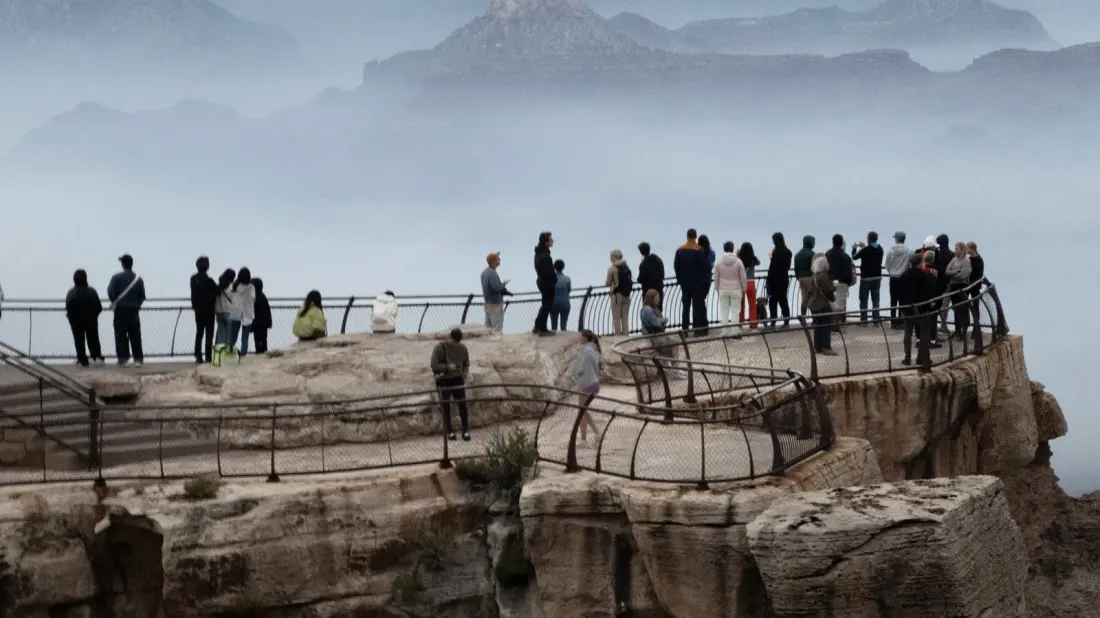
The Grand Canyon pulls in millions of visitors a year, and anyone who has circled the Mather Point car park in August knows the beauty comes with queues, heat and elbows. Islands has rounded up ten smaller-scale alternatives scattered across Missouri, Illinois, Indiana and Michigan — places where you get sandstone cliffs, gorges, waterfalls and dark night skies, minus the tour buses.
Missouri arguably comes out best in the round-up. Hickory Canyons Natural Area, a 1,100-acre patch of sandstone box canyons in the east of the state, hides a 40-foot waterfall that flows after rain, with wild azaleas, woodpeckers and the occasional bobcat for company. Pickle Springs Natural Area, under 90 minutes south of St. Louis, crams sandstone formations, wet-weather falls and a box canyon into just 171 acres — its Trail Through Time is a highlights reel of the whole site. Hawn State Park, about 70 minutes from St. Louis, adds nearly 5,000 acres of canyons, creeks and the pine-covered Whispering Pine Wild Area.
Illinois offers two very different vibes. Apple River Canyon State Park, an hour west of Rockford, is a quiet stretch of limestone bluffs and trout streams carved by the Apple River. Starved Rock State Park, 90 minutes southwest of Chicago, is the big-hitter: 13 miles of trails along 100-foot bluffs above the Illinois River. It draws more than two million visitors a year — though trail renovations currently underway may thin things out. Then there's the Little Grand Canyon Trail in Shawnee National Forest, near the Missouri border: a moderately difficult three-miler with 300-foot bluffs you can admire from above and from the canyon floor. Go between spring and fall for colour.
Indiana gets two entries an hour or so from Indianapolis. Shades State Park packs ravines, ladders and waterfalls into its Six Ravine Hiking Challenge, which takes up to three hours. Turkey Run State Park is busier — over 800,000 visitors annually — with 11 trails ranging from easy to very rugged, sandstone ravines and a photogenic suspension bridge over Sugar Creek.
Michigan's Upper Peninsula supplies the scale. Sturgeon River Gorge Wilderness, a 16,700-acre slab of pine and hemlock forest on the edge of Ottawa National Forest, features a gorge up to 300 feet deep and at points a mile wide. Rock River Canyon Wilderness, between Marquette and Munising, has twin canyons up to 150 feet deep, waterfalls and even ice caves — getting there is half the adventure.
None of these will replace the real thing; the Grand Canyon's 1,904 square miles are unrepeatable. But for a weekend hike, a waterfall photo or a canyon vista without parking stress, these Midwest picks are a genuinely good swap. They suit road-trippers, weekend hikers from Chicago, St. Louis, Indianapolis or the Twin Cities, and anyone who'd rather hear rushing water than tour-group megaphones. Just note the remote Michigan spots need a proper detour — and a vehicle that handles rough access roads.