
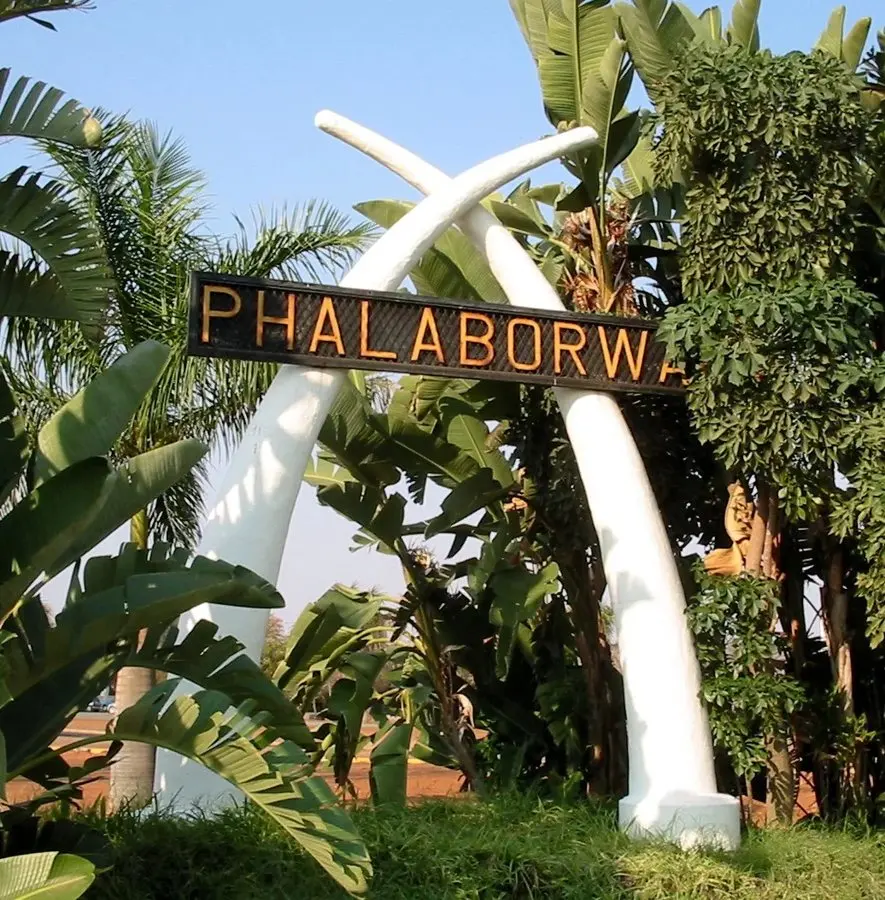
Most towns that call themselves gateway destinations to a famous park are exactly that — places you pass through on the way to somewhere better. Phalaborwa, in Limpopo's Lowveld, doesn't fit that mould. The Phalaborwa Gate into the Kruger National Park sits roughly one kilometre from the town centre, making this one of the most convenient bases anywhere along the park's edge. But what keeps travellers lingering is everything the town offers before you've even scanned your permit.
The area's story runs deep. The Ba-Phalaborwa settled here in the 1800s, drawn by iron ore deposits and the proximity of the Olifants and Letaba rivers, and built a trade in iron goods that connected communities across the Lowveld. Modern copper mining arrived in the mid-20th century and shaped the town you see today, but people were smelting metal here long before that. The Phalaborwa Complex, the geological formation underfoot, is around 2.05 billion years old and rich in copper, phosphate and iron.
You can see that heritage firsthand at the Masorini Ruins, about 12 kilometres from Phalaborwa Gate inside the park. Reconstructed furnaces and homesteads tell the story of an iron-smelting economy that produced spears, arrowheads and farming tools. It's a genuinely worthwhile stop if you want to understand the region beyond its wildlife.
Then, of course, there's the Kruger itself. The gate, opened in 1961, gives access to the park's central and northern sections, which tend to be quieter than the southern hotspots. The drive to Letaba Rest Camp is a highlight — the camp sits on the Letaba River, where a sandy riverbed creates a green strip through the bush and elephants are the main attraction, with buffalo and waterbuck also regulars. If you'd rather slow down, Sable Dam lies about 8 kilometres from the gate and has a hide popular with birders. For the committed, a Sable Sleepover Hide offers a night in the park with no electricity, no shop and no cellphone reception — just you and the waterhole.
Back in town, the pace stays gentle. The Hans Merensky Golf Course is an 18-hole championship course where giraffe, hippos, crocodiles and a long list of birds share the fairways and waterholes. Phalaborwa is also known as the home of the marula tree, a local staple tied closely to the region's culture — and, famously, to Amarula cream liqueur.
The appeal here is the combination: easy early-morning access to the Kruger, a genuinely interesting archaeological record, rivers that shape the whole landscape, and enough to fill the hours between game drives. It suits travellers who want safari without the crowds of the park's southern gates, and anyone happy to trade a packed itinerary for a slower Lowveld rhythm.
Story via Getaway South Africa.