The Grand Canyon drew more than 4.4 million visitors in 2025, and it shows — its marquee viewpoints are notorious for packed shuttles and slow-moving traffic. But canyon country isn't exclusive to Arizona. The Pacific Northwest has its own collection of dramatic gorges, many of them bigger, greener or simply emptier than the famous original.
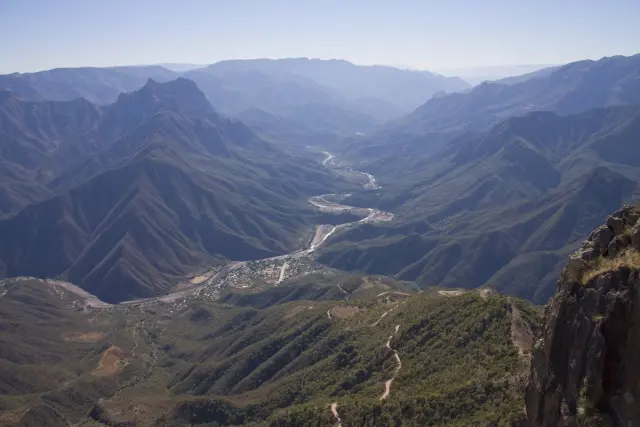
The standout on sheer scale is Hells Canyon, straddling the Oregon–Idaho border. Cut by the Snake River, it stretches 125 miles with walls rising nearly 8,000 feet above the water — making it the deepest canyon in North America, comfortably beating the Grand Canyon. Hells Canyon National Recreation Area is the place for multi-day river rafting beneath cliffs taller than anything on the Colorado.
Washington counters with some genuinely strange geology. Palouse Falls State Park, in the dry Columbia Basin of the state's east, looks almost Icelandic: dark basalt columns wrapped around a waterfall that drops nearly 200 feet into a stone amphitheater. Nearby, Sun Lakes-Dry Falls State Park preserves the site of an Ice Age waterfall four times the size of Niagara — now long dry, but its colossal cliff amphitheater remains. And the 50-mile Grand Coulee, another flood-carved giant, stars in Steamboat Rock State Park, where a 600-acre basalt monolith anchors the skyline.
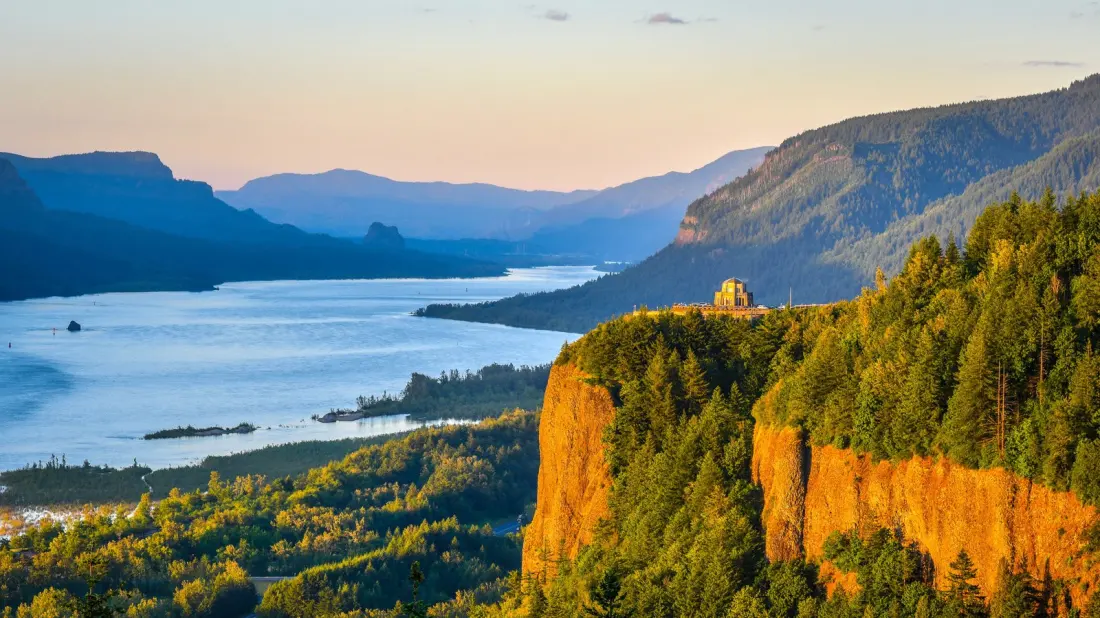
Oregon brings water and colour. The Columbia River Gorge is the region's flagship — 80 miles long, up to 4,000 feet deep, and the only place the Cascade Range splits at sea level. It's laced with waterfalls, including the celebrated Multnomah Falls. Silver Falls State Park, Oregon's largest at 9,200 acres, protects the ornate Silver Creek Canyon; the 7.7-mile Trail of Ten Falls loops past waterfalls over 100 feet high through fern-filled rainforest. Smith Rock State Park guards the Crooked River Gorge, which plunges 500 feet and doubles as one of America's top rock climbing destinations. Farther southeast, the Owyhee Canyonlands — nicknamed Oregon's Grand Canyon — mix badlands, hoodoos and cinder cones, with hikes like the Painted Canyon Loop and Leslie Gulch Trail.
For something smaller, Box Canyon at Mount Rainier National Park is a narrow granite slot carved by the Cowlitz River, walked via an easy half-mile trail. And Cottonwood Canyon State Park, Oregon's second-largest at over 8,000 acres, offers lava-built cliffs above sagebrush steppe — plus officially certified dark skies for stargazing.
Why it matters: if you love canyon scenery but dread the Grand Canyon's summer crush, these parks deliver similar or greater drama with a fraction of the crowds — and most are within a day's drive of Portland or Seattle. The mix is different too: expect waterfalls, mossy forest and snowcapped backdrops rather than pure desert. This suits road-trippers, hikers and rafters who'd rather trade a viewpoint queue for a quiet rim trail. Just note many of these sites are remote — fuel up, download offline maps, and check seasonal road access in eastern Oregon and Washington.