Punta Cana's beaches get the postcards, but first-time visitors to the Dominican Republic often come home talking about something else entirely: colmados, motoconchos, merengue on every corner, and strangers who treat a simple hello as the start of a conversation.
The country shares the island of Hispaniola with Haiti, and its culture blends Indigenous Taíno roots, African heritage and Spanish colonial history. That mix shows up everywhere once you step outside the resort zone.
Start with the people. Dominicans are famously chatty — a greeting in a market or neighbourhood can turn into a debate about baseball or family news within seconds. Social hubs come in the form of colmados, small neighbourhood shops that double as community gathering spots, often delivering goods to homes and always playing music. If you're used to sterile convenience stores, this is a revelation.
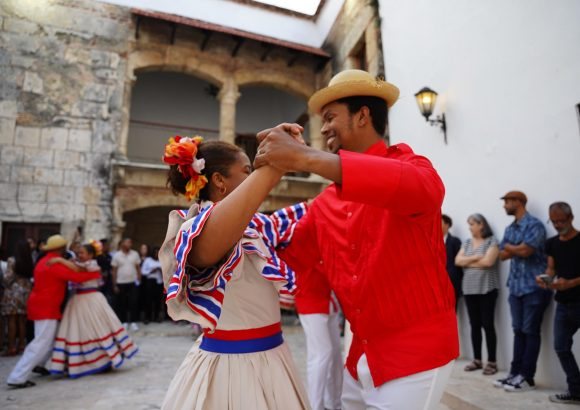
That music matters here. Merengue was added to UNESCO's Intangible Cultural Heritage list in 2016, bachata followed in 2019, and artists like Juan Luis Guerra have carried the sound worldwide. You'll hear both at family parties, in restaurants and from passing cars.
Getting around has its own learning curve. Motoconchos are motorcycle taxis for short hops, guaguas are shared buses, and carros públicos run fixed urban routes. They sit alongside the Santo Domingo Metro and ride-hailing apps — though for motorcycle rides, helmet safety is worth taking seriously.
Food is anchored by la bandera dominicana — "the Dominican flag" — a plate of rice, beans and meat with plantains or salad. Mangú (mashed green plantains), sancocho stew and tostones round out the classics. Even fluent Spanish speakers stumble on local expressions like "¿Qué lo qué?" (a greeting), "un chin" (a little bit) and the endlessly flexible "vaina".
Family life runs deep, with multi-generational weekend lunches and celebrations common, and baseball — pelota — borders on religion. Winter league teams like Tigres del Licey and Águilas Cibaeñas draw devoted crowds, and the country produced MLB legends including Pedro Martínez, David Ortiz and Juan Marichal.
Perhaps the biggest surprise: mountains. Jarabacoa and Constanza in the interior offer cool temperatures, farms and pine forests, and Pico Duarte in the Cordillera Central is the tallest peak in the Caribbean. Valle Nuevo National Park adds to the range of scenery far from the coast.
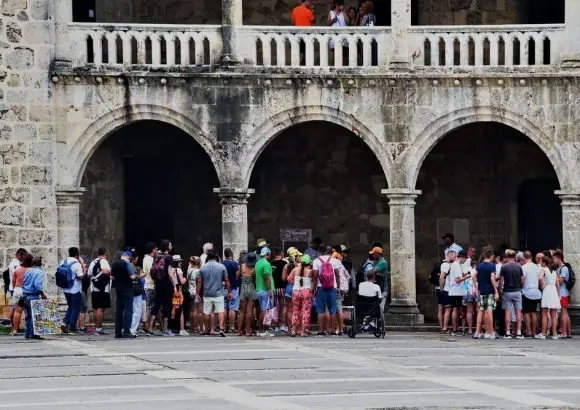
For travellers, the takeaway is simple: the beach resort is only one version of the Dominican Republic. Budget a few days for Santo Domingo's colonial streets, a colmado dinner, a winter league game, or a trip into the interior, and you'll leave with a far richer picture than any all-inclusive alone can offer.