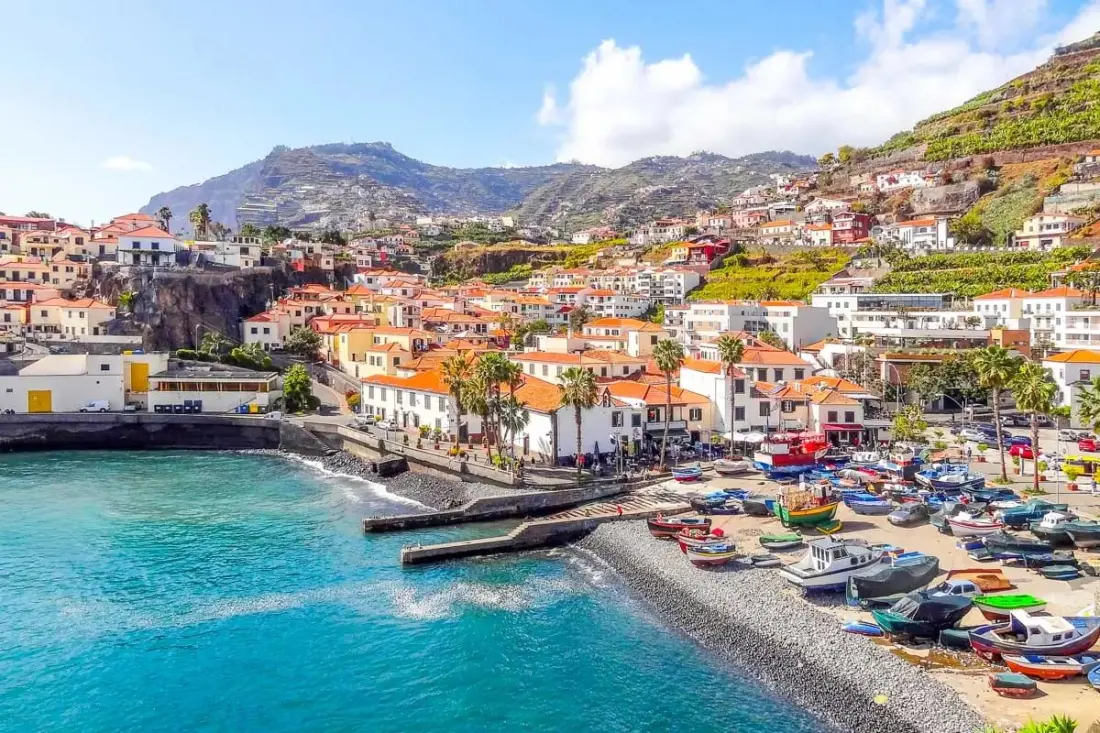
A Portuguese island in the Atlantic has quietly become one of Europe's most rewarding outdoor destinations, and a recent in-depth guide from Destinationless Travel makes the case with a rundown of 15 things to do. Madeira earns its nickname honestly: steep green mountains, volcanic pools, black-sand beaches and a mild year-round climate its residents call eternal spring.
The standout experience, according to the author, is a 4×4 tour in a Land Rover Defender with a local guide named Pedro and his beloved vehicle Manu. The route hits the glass-floored Cabo Girão Skywalk, the black-sand beach at Seixal, the volcanic swimming pools at Porto Moniz, and the fog-draped Fanal Forest, where ancient trees can swallow visibility entirely. The day ends with open-roof off-roading through mountain tracks before finishing in the sunny beach town of Ponta do Sol.
Wildlife is another big draw. Madeira ranks among Europe's best spots for whale and dolphin watching, and pilot whales live off the island year-round without migrating — often appearing within 15 minutes of leaving Funchal's marina. Cruises cut their engines to avoid disturbing them, and one trip even scored a sighting of the Mediterranean monk seal, the rarest seal species in the world. Travellers should pack swimwear: many cruises include a swimming stop beneath the cliffs of Cabo Girão.
On foot, the classic move is a sunrise hike up Pico Ruivo, the island's highest point. Tours run with roughly 4 am hotel pickups and torches for the 2.5-kilometre dark climb, which takes about 90 minutes at an easy pace. Mountain weather is fickle, though — one hiker's group reached the summit in a whiteout and laughed it off — so keep your hike day flexible.
Food deserves its own itinerary. A walking food tour of Funchal covers the Mercado dos Lavradores, Madeira wine in a historic bar, local cheeses and cured meats, flaming chorizo, tempura black scabbard fish with banana (a local classic), and a poncha bar, where the island's signature sugarcane drink flows. One practical warning from the market: weigh your fruit and ask prices first — one tourist reportedly paid €94 for imported figs.
For a slower day, Calheta is about 30 minutes from Funchal and offers two man-made golden-sand beaches — the sand imported from Morocco — plus reliably better weather than much of the island. Back in the capital, there's the cable car up to Monte with its tropical gardens, the famous wicker toboggan ride, quirky museums, and a Cristiano Ronaldo museum for football fans.
Practical notes: base yourself in Funchal, where the best restaurants cluster and tours depart from. Five days is the sweet spot, ideally a week. Renting a car is optional — the steep, winding roads divide opinion — and organised tours solve the driving problem entirely. Bring layers, because microclimates can flip on the other side of a tunnel, and carry around €100 in cash for small cafés and tips (skip Euronet ATMs, which charge steep fees).
Who is this for? Hikers, wildlife lovers and food travellers who want a compact destination with outsized variety — and no long transfers between activities.
Original reporting: Destinationless Travel