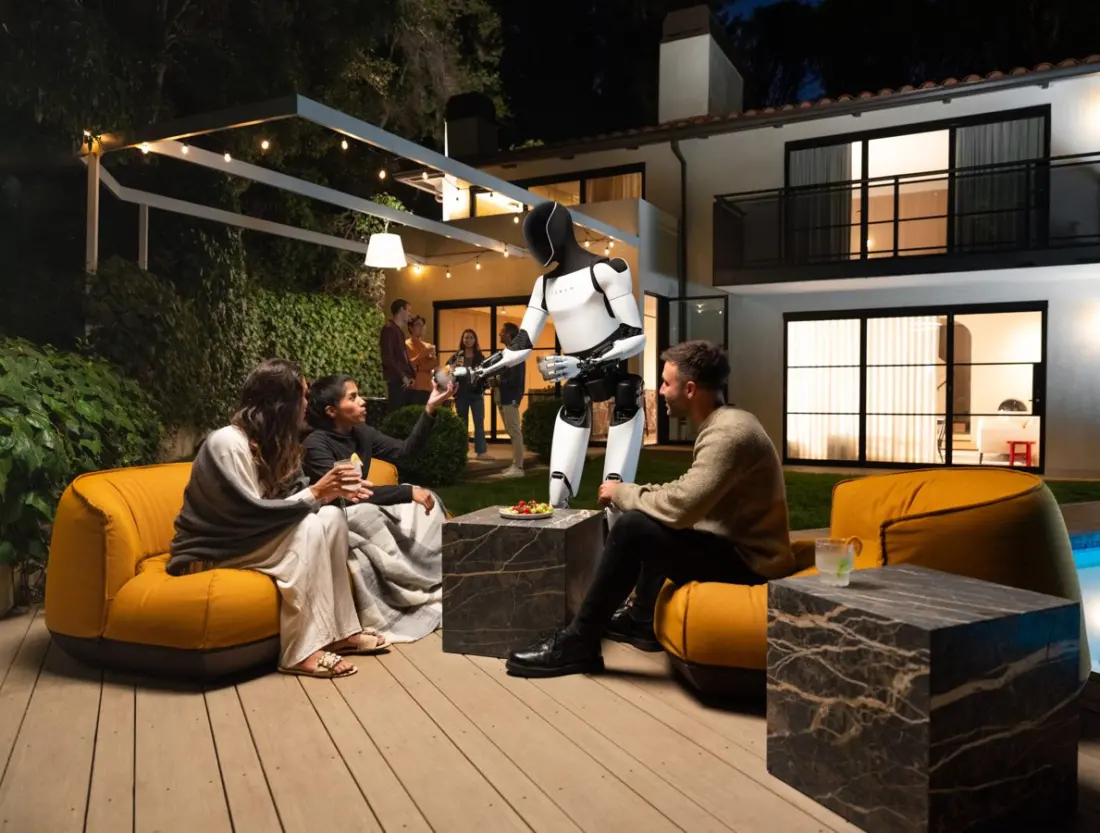
Tesla has started building Optimus humanoid robots on its high-volume lines at the Fremont factory in California, with first deliveries targeted by the end of 2027 and a ramp towards 20,000 units. The announcement appeared in the company's Q3 shareholder update, and it's the clearest sign yet that robot assistants are moving from demo videos to actual products.
Even Elon Musk is tempering expectations, warning investors the road to consumer-ready robots will be "bumpy" while Tesla tweaks the design for safety, reliability and endurance. One of the toughest engineering problems, he says, is the hands. To crack it, Tesla is setting up an "Optimus Academy" where robots rehearse tasks and feed data back into their AI models. The company is also racing to hit 400 megawatts of training compute by the end of 2026, with its new AI5 chip expected to slot into the robots from April 2027 — a jump Musk calls a "big step change in intelligence."
Why should a holidaymaker care? Price, for one: Optimus is projected to cost $20,000–$30,000 (roughly €18,000–€27,000), which puts a household robot within reach of a lot of people. The near-term use is industrial — sorting parts and inspecting quality in factories — but the consumer pitch is essentially a robot butler. Think unpacking your bags when you get home, mixing a drink, tidying up, or carrying luggage. For travellers with limited mobility or cognitive challenges, a capable robot companion could be genuinely transformative rather than just a gimmick.
There's a catch if you were planning to take one on holiday: much of the aviation industry currently bans humanoid robots over battery safety concerns, so your Optimus will be waiting at home for now.
Tesla isn't alone. US rivals including Agility, Figure AI, 1X, Sunday Robotics and Weave Robotics are all due to start manufacturing this autumn, while Lenovo is developing a six-limbed, dog-like robot that can haul 100kg upstairs, run for 24 hours straight and could handle wilderness surveys or emergency rescues. Musk himself has predicted that by 2040 there will be more humanoid robots on Earth than people.
All of this comes as Tesla faces profit pressure in its core car business, so the huge spending on robotics is a calculated bet. But if the timeline holds, the first Optimus owners will be unpacking theirs within a couple of years — and the way we pack, move and settle back in after a trip may never look quite the same.
— Travel Tomorrow