A lie-flat bed is the gold standard on a long overnight flight — but on a daytime sector of eight hours or less, it can be thousands of dollars spent on sleep you'll never get. That's the logic behind the 'eight-hour rule', a planning guideline (not an official industry rule) gaining traction as a way to decide when premium economy is the smarter buy.
The maths is stark. Illustrative round-trip fares put premium economy at $1,400-$2,200 versus $4,500-$7,000 for business class. Take a $1,800 premium economy ticket instead of a $5,500 business one and you save around 67% — roughly $37,000 across ten trips. The catch: the scheduled flight time isn't the same as usable sleep time. Meal services, cabin prep and settling in can eat away at an eight-hour overnight sector until there's far less than eight hours of genuine rest on offer. If a lie-flat bed doesn't deliver a real six-to-seven-hour sleep window, its premium is hard to justify.
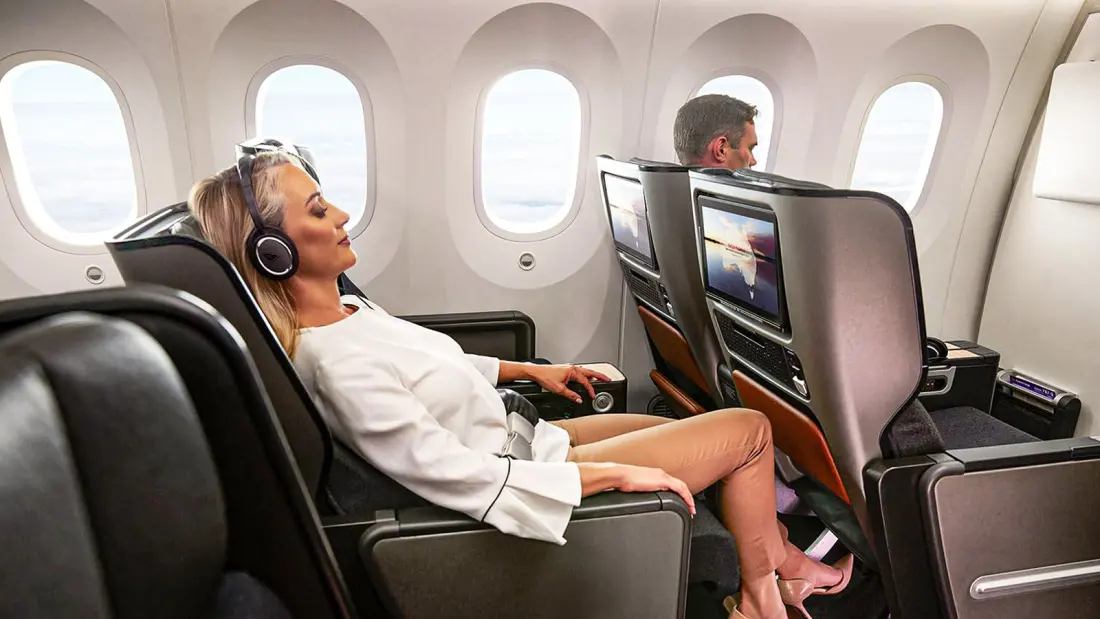
Airlines like Qantas and Air France show what the middle cabin actually gets you. Qantas premium economy offers around 38 inches of pitch, 20.5 inches of width and 9 inches of recline — comfortable for working or relaxing, though nothing like the roughly 80-inch lie-flat surface in business. Air France's version averages about 38 inches of pitch (some seven more than economy), in 2-4-2 or 2-3-2 layouts, with French-inspired dining that varies by route. Both treat premium economy as a proper cabin, not just a better economy seat.
The smarter approach, argues the source, is trip-by-trip booking rather than blanket policy. Fly business on the overnight outbound before a morning meeting, then drop to premium economy on the daytime return when sleep isn't the point. But watch the fine print: premium economy products vary widely by airline and aircraft, and perks differ too — Air France's premium economy carry-on allowance is 12kg, the same as economy, versus 18kg in business. Connection times and what you're doing on landing matter as much as sector length. If someone lands exhausted before a big negotiation, the fare savings evaporate fast.
For leisure travellers, the same logic applies in reverse: it's a useful lens for your own splurge decisions. Booking a daytime flight and a hotel bed at the other end? Premium economy likely delivers most of the comfort at a fraction of the cost. Red-eye into a packed first day? That's when business class earns its keep.