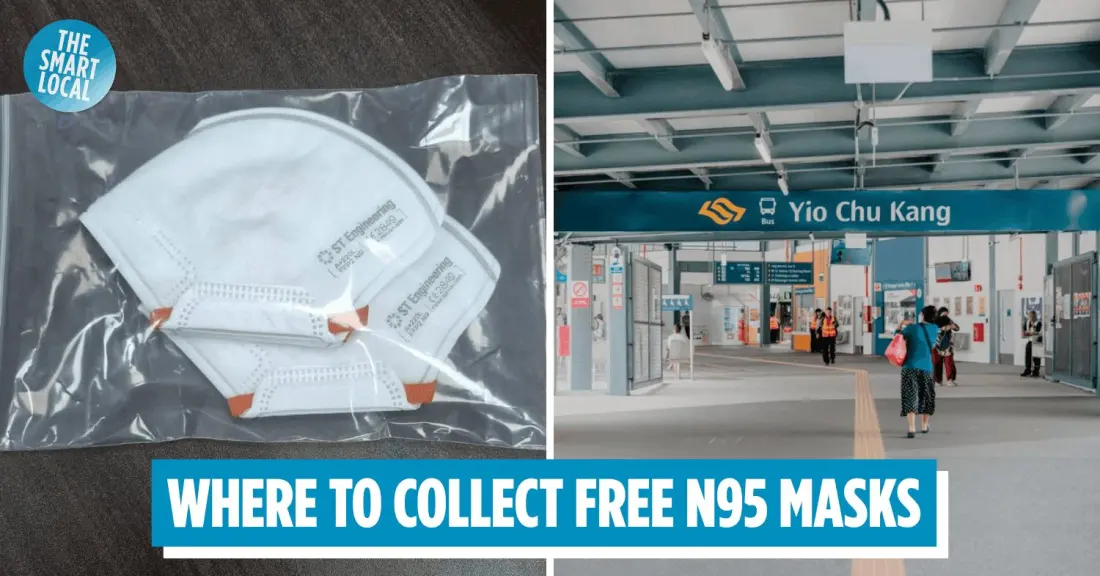
Air quality in Singapore has been sliding as haze season rolls in, with PSI readings climbing towards mid-October. In response, the People's Association has started handing out free N95 masks — though not to everyone, and the rules are worth knowing whether you live there or you're visiting during the smoky stretch.
Free packs of two masks are reserved for groups considered vulnerable or lower-income: Pioneer and Merdeka Generation seniors, CHAS Orange and Blue cardholders, Medical Fee Exemption cardholders, ComCare assistance recipients, children aged 7 to 16, pregnant women, and people with medical conditions such as asthma.
Collection is straightforward. Eligible residents bring their NRIC to a PA Community Club. Those in the Pioneer or Merdeka Generation, CHAS Orange/Blue holders, MFEC holders and ComCare recipients have a second option: vending machines at selected public transport hubs, Social Service Offices and PA venues. The HazeMaskGoWhere website lets you type in your location and find the nearest collection point.
The official health guidance matters too. Vulnerable people — the elderly, pregnant women, and anyone with chronic heart or lung disease — are advised to wear an N95-equivalent mask once the PSI passes 200. Above 300, everyone, healthy or not, should mask up. For context, anything over 100 counts as unhealthy air, and readings have been trending upwards.
Why should a traveller care? Haze is a seasonal reality in Singapore, typically linked to forest fires in neighbouring Indonesia, and it can derail outdoor plans fast — Gardens by the Bay strolls, Marina Bay walks and Sentosa beach time all lose their appeal when the skyline disappears into smog. Tourists don't qualify for the free government masks, so if you're visiting during hazy months (often August to October), pack your own N95 masks or buy them at local pharmacies like Guardian or Watsons. Check live PSI readings on the NEA website each morning, keep indoor alternatives in your back pocket — the city's malls, museums and food courts are all air-conditioned — and consider rescheduling hikes or long outdoor days if the PSI climbs past 100. Travellers with asthma or heart conditions should take the 200 threshold seriously and carry medication.
Even if the haze isn't severe during your trip, a cheap packet of masks in your day bag is a sensible insurance policy in this part of the world.