Rankin Inlet Airport (YRT), a lifeline hub for Nunavut's Kivalliq region, is getting an $85.5 million facelift courtesy of Transport Canada's new Arctic Infrastructure Fund. Announced on September 28, the Rankin Inlet Airfield Rehabilitation Project will resurface roughly 1.52 million square feet of airfield pavement — runway 13-31, taxiways A and C, and the aprons — extending the strip's life by 15 to 20 years.
For locals, this matters purely on practical grounds: YRT is the region's connection for passenger flights, food and medical supplies. But there's a second agenda. The airstrip has been designated a Northern Operational Support Node under Canada's $35 billion northern defence blueprint, meaning it must be able to handle Royal Canadian Air Force fighters, including the F-35 Lightning II that Ottawa is considering buying.
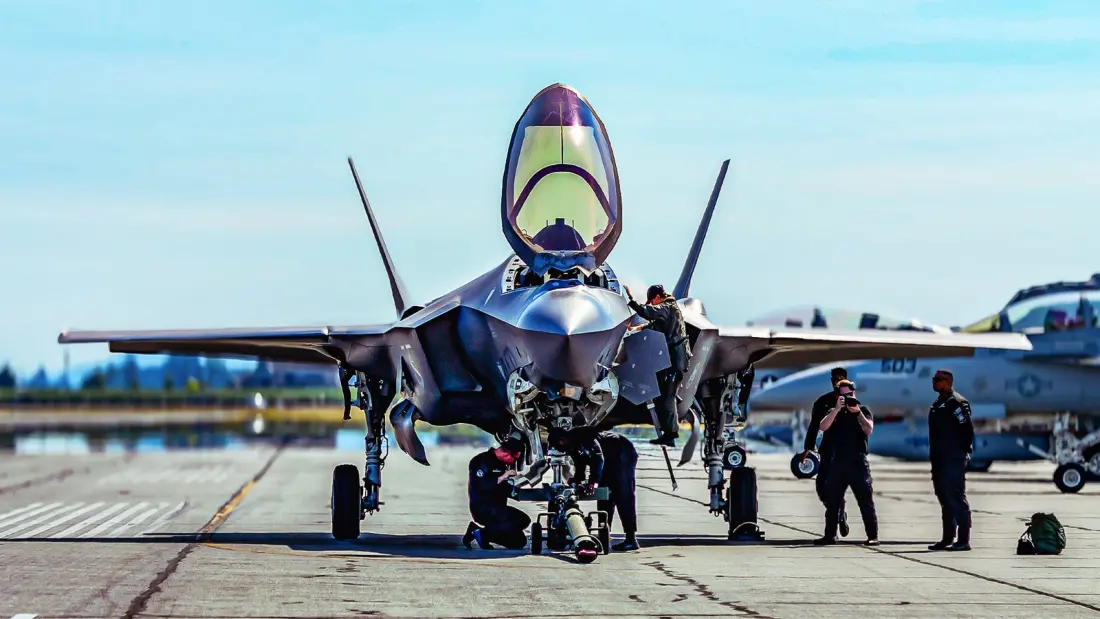
That's harder than it sounds. The F-35's Pratt & Whitney F135 engine runs so hot during startup and taxiing that ordinary asphalt can literally fail — trapped moisture under the exhaust plume flashes to steam and shatters the pavement surface, a problem known as spalling. So sections where jets will idle are being replaced with ultra-dense, heat-resistant concrete, and new ruggedized hangars with climate controls will let ground crews service the engines indoors.
The 6,000-foot runway, originally built by NORAD, is actually short for F-35A operations, which ideally want 8,000 feet. Canada's future jets will carry a Kevlar drag chute pod (a system already proven by Norway and Finland) for landing on short, icy strips — usable, but not the preferred routine. Rankin Inlet is also positioned as a secondary dispersal field rather than a main hub: that role belongs to Inuvik, which is getting $230 million to stretch its runway to 9,000 feet so fully loaded F-35s and tankers can operate from it simultaneously.
The bigger picture is still in flux. Canada's planned purchase of 88 F-35As is under an 18-month review, with a mixed fleet of 30 F-35As and 60 Saab Gripen Es rumoured as a possible compromise. The first Canadian airframes aren't expected home until late 2028, with main bases at Cold Lake and Bagotville F-35-ready around 2030-2031. Meanwhile, the funds from Transport Canada only cover the pavement itself; hardened hangars, fuel farms and weapons storage would depend on a separate $11 million design agreement between Nunavut and the Department of National Defence.
Why care if you're not a fighter pilot? Because Arctic infrastructure spending of this scale usually signals broader investment in remote northern airports — the same ones commercial flyers, supply flights and medical evacuations depend on. Travellers to Nunavut's Kivalliq region may eventually see a more resilient airport, though no schedule for the works has been announced. For now, Rankin Inlet remains a small civilian field with a very large strategic future being sketched on paper. (Source: Simple Flying)