
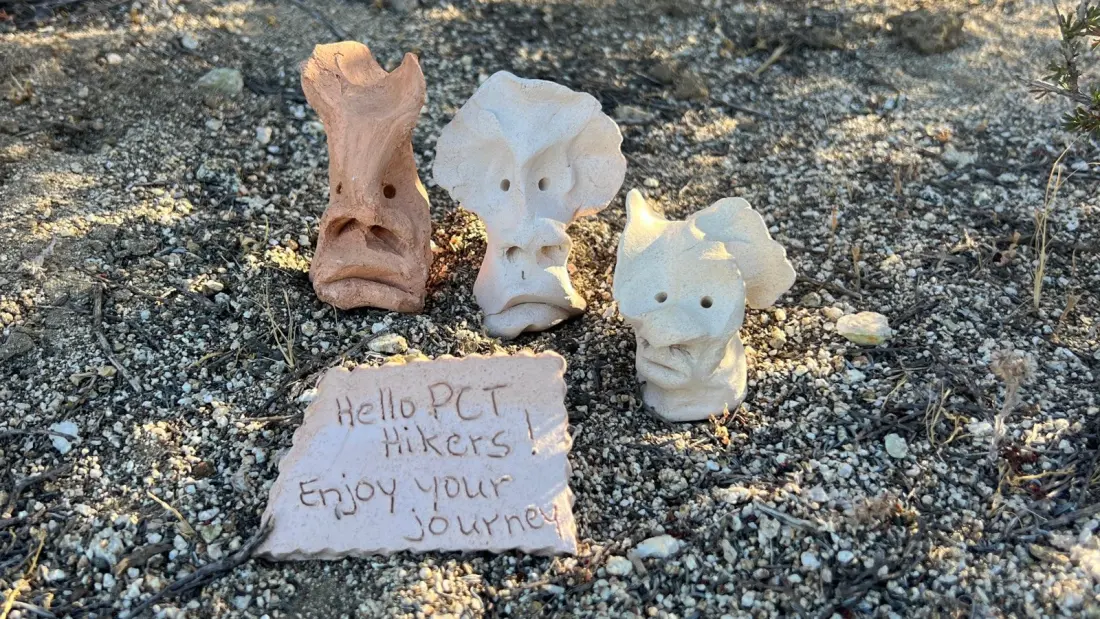
For years, hikers on the Pacific Crest Trail have been finding strange little humanoid figures perched beside the trail — small, unglazed clay sculptures with wide eyes and a comic sci-fi origin story. Some pocket them as souvenirs. Others call them trash. Now the artist behind them has revealed himself: Warren Sherich Jr., a 74-year-old maths teacher and sculptor from southern California, who lives just a few miles from the trail and drops off a dogu or two every time he hikes it.
The figures are part of a project he calls "The Dogu Invasion," riffing on the ancient Japanese figurines dating back to around 14,000 BCE. Sherich's twist: his dogus are emissaries from the planet Doguanda, sent to colonise Earth. He's planted them in every US state, across Central and South America, and throughout Western Europe — deliberately "punking future archaeologists." Fired clay lasts millennia, so his pieces will outlive him by thousands of years, eroding slowly like natural stone.
The controversy exploded in 2024, when an article about the mystery sculptures set social media alight while Sherich stayed anonymous. Online commenters branded his work "garbage on the trail" and accused him of littering. In person, the reaction couldn't be more different — thru-hikers regularly stop him for selfies when they realise he's the dogu man.
So who's right? Sherich argues his unglazed clay is chemically inert and environmentally harmless — essentially like dropping a lump of sandstone beside the trail. Erin Collier of Leave No Trace notes the organisation has no hard rule on trail art, but points to a subtler problem: the "runaway litter effect," where one visible piece of trail art inspires dozens of imitators, from painted rocks to graffiti. Sherich counters that in 15 years he's seen fewer than 50 imitations against his thousands of figures. Collier also frames Leave No Trace as a spectrum rather than dogma — if we truly left no trace, there'd be no trails at all.
The debate isn't new. The chrome monolith that appeared in Utah's desert in 2019 became an instant tourist magnet before being quietly removed, and Breckenridge, Colorado dismantled a wooden troll sculpture in 2018 after it drew crowds but angered locals. Art in wild places reliably stirs the pot.
For travellers, it's a useful mindset question before your next hike: what belongs in nature, and who decides? Whether you'd smile at a dogu on the trail or resent it, the conversation about how we mark — and un-mark — wild places isn't going anywhere. Sherich certainly isn't stopping. If you find one, he says, do what you like with it; a dogu tossed into the bushes is simply continuing its journey.
Reported first by Backpacker.