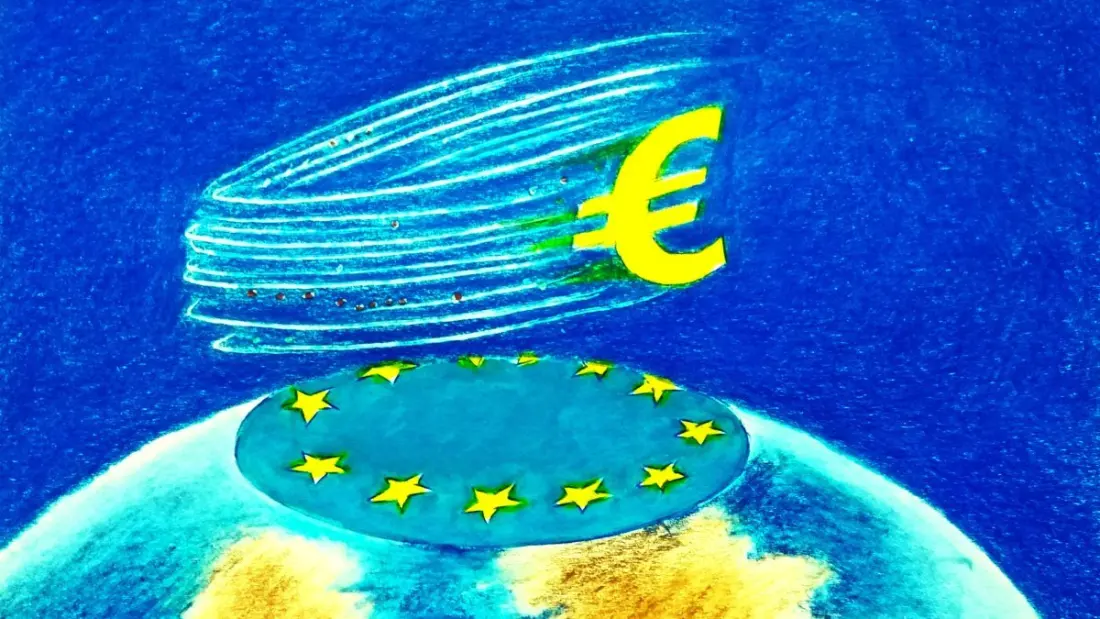
A European digital currency moved a big step closer to reality in July 2026, when the European Parliament backed a negotiating mandate for the digital euro by 416 votes to 169. Talks between Parliament, Council and Commission are aiming for a final deal before the end of the year, with a retail pilot planned for 2027. If you holiday in the eurozone, this is the payment system you may eventually be using at cafés and ticket machines.
The project has momentum beyond the political track. The European Central Bank in Frankfurt has launched "Pontes" — Latin for bridges — a platform letting banks settle tokenized securities and digital assets directly in central bank money, which carries no default risk. A separate effort is exploring links between Europe's instant payment system and foreign equivalents, including Brazil's Pix.
Why does this matter beyond tech circles? The argument driving the project is strategic, not just convenience. Most card payments in eurozone countries currently run through non-European schemes, and mobile wallets are dominated by a handful of American firms. Meanwhile the US has backed privately issued dollar stablecoins rather than a central bank digital currency, and China is building state-led payment infrastructure through its e-CNY and cross-border settlement systems. Europe wants public, rules-based digital money as a third option — and wants everyday payments at home to keep working even if foreign networks are switched off.
The design, however, is deliberately cautious. Individual digital euro holdings will be capped (Parliament and Council still disagree on who sets the limit), balances will earn no interest, and distribution will go through commercial banks — whose associations estimate implementation costs of around 18 billion euros. Access for non-residents and links to foreign payment systems have largely been deferred. Critics, including the opinion writer behind the original piece, argue this makes the digital euro a domestic shield rather than a tool of global influence, and that without deeper European capital markets it will struggle to compete with instantly available dollar tokens.
For travellers, the near-term picture is simple: nothing changes yet. The digital euro would sit alongside cash and cards as a wallet held at the central bank level, distributed through your bank, usable offline and free of the card-network fees baked into today's transactions. For now, keep using your usual cards, and expect pilot rollouts from 2027 before anything reaches everyday tourism.