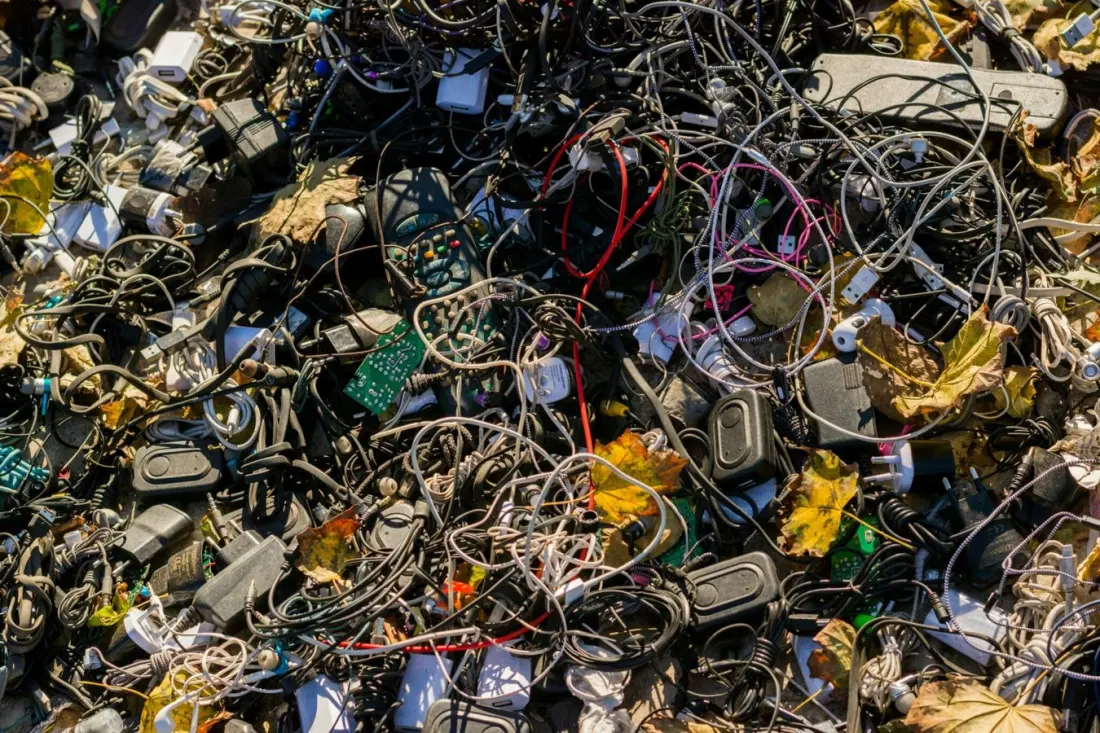
Portugal collected and treated just 32% of its electronic waste in 2024, according to official figures from the Portuguese Environment Agency (APA) highlighted by environmental group ZERO. The EU target is 65%. ZERO, marking International E-Waste Day, called the country's record on Waste Electrical and Electronic Equipment (WEEE) a "disaster".
The timing is awkward: 2025 marks two decades of Portugal's e-waste management system, SIGREEE. Rather than celebrating, ZERO argues the anniversary chronicles failure. The association blames three public bodies in particular — the Environment Ministry, the APA and the Directorate-General for Economic Activities (DGAE) — for what it describes as 20 years of omissions, "boycotts and illegalities".
The details are damning. Up to 2018, the APA reportedly allowed shredded scrap to count towards collection targets for management entities like Electrão and ERP, with no proof the waste had been decontaminated first. When that loophole closed, the entities repeatedly missed their licensed targets — yet the financial penalty was a Waste Management Fee of just €10 per tonne, low enough, ZERO says, to keep mismanagement economically viable. Even after the fee was raised, a new APA calculation formula reportedly slashed the amounts payable again. Compliance with the European collection target has also been pushed back to 2030.
There's a health angle too. ZERO alleges that collected e-waste is often handed to treatment companies that don't meet minimum requirements for removing hazardous substances, with the APA "turning a blind eye". Old electronics can contain materials that pose real risks to public health and the environment if they aren't properly separated and processed. The oversight body meant to monitor all this, the Waste Management Monitoring Committee (CAGER), has reportedly been inactive for around two years.
The bill may be coming regardless. ZERO warns that from 2027 Portugal could owe the EU "several hundred million euros" for e-waste that isn't properly managed — money that ultimately comes from the public purse.
For travellers, this isn't the kind of story that changes an itinerary, but it's a useful window into the country behind the beaches and pastéis de nata. Portugal has strong environmental credentials on paper — generous recycling points, deposit schemes and green energy targets — and this report shows how patchy delivery can be. If you're staying longer in Portugal, renting an apartment or relocating, it's worth knowing that old electronics, batteries and cables shouldn't go in household bins: take them to dedicated WEEE collection points at electrical retailers or local waste centres (ecocentros). That small effort matters more than ever here.