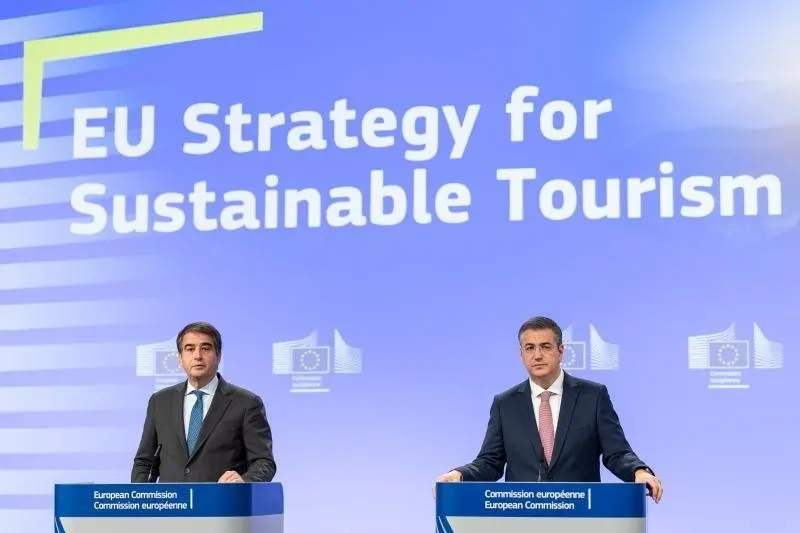
Europe's tourism sector finally has a shared playbook. On 4 November 2026, the European Commission adopted its first EU Sustainable Tourism Strategy, a framework that treats tourism as a strategic economic pillar rather than a patchwork of national policies. The numbers explain why Brussels is paying attention: tourism generates roughly 10% of the EU's gross value added, supports more than 20 million jobs and involves five million businesses, 99% of which are small or medium-sized.
The strategy rests on three pillars — competitiveness, sustainability and resilience, plus how Europe presents itself internationally. What should catch a traveller's eye is the push for "balanced tourism." The Commission says just 13% of European regions absorb half of all overnight stays in Europe, and it wants to change that. Expect new tools to nudge visitors towards lesser-known destinations and outside peak season, including an EU Model for Tourism Management, a Toolbox for Balanced Tourism and a proposed Council recommendation. As Executive Vice-President Raffaele Fitto put it, the goal isn't more tourists in the same places, but more value spread more widely.
Practical changes are on the way for travellers and businesses alike. An EU Tourism Academy will tackle sector skills shortages, while a Common European Tourism Data Space and Observatory should improve how destinations plan. A Simplification Initiative aims to cut red tape for small operators. On the transport side, the Commission is working on multimodal journey planning, cross-border car rentals and interoperable local transport ticketing — and a renewed aviation strategy is due in 2027, focused on islands and remote coastal regions. Tourism is expected to draw around €18 billion in EU support across the 2021–2027 budget period, though through existing programmes rather than a dedicated fund.
Industry reactions were broadly positive but cautious. Hotel and restaurant group HOTREC welcomed the focus on simplification and fair treatment by online booking platforms, while urging that implementation suit an industry of micro-enterprises. Airports were blunter: ACI EUROPE warned that the strategy's promise of seamless travel rings hollow while the Schengen Entry/Exit System keeps causing queues and disruption at external borders — a pain point any non-EU traveller arriving in Europe this year will recognise. Cyclists' groups welcomed the nod to EuroVelo but want funded projects, not just recognition.
Why does this matter if you're planning a trip? Because the policy is explicitly designed to reward shoulder-season travel and route demand beyond the usual hotspots — meaning better experiences in places like rural Portugal, the Balkans or lesser-visited islands, potentially with improved transport links to match. Watch for the new EU Tourism Alliance, deeper tourism dialogues with Japan, India and Gulf countries, new European Capitals of Tourism Awards, and a cooperation framework with UN Tourism expected by the end of 2026. The strategy doesn't harmonise national rules, so what you actually encounter on the ground will depend on how member states implement it.