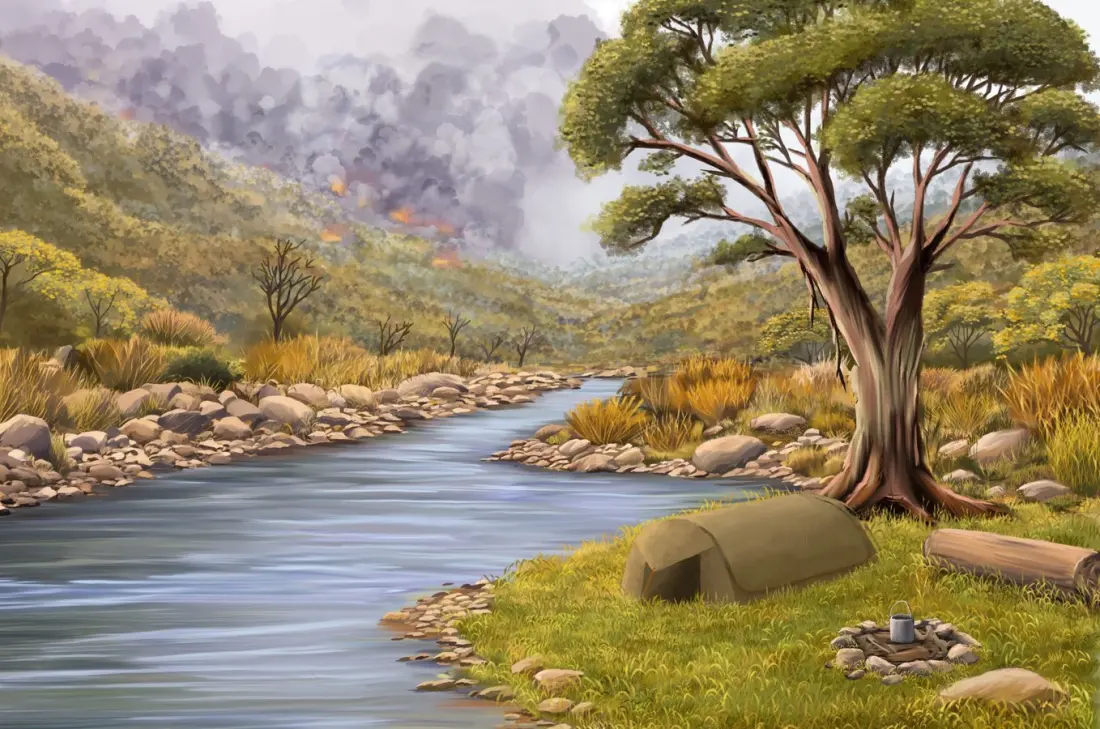
Upstream of the huge dam that most Australians know by name, the Eucumbene River still runs cold and clear through Kosciuszko National Park in New South Wales' Snowy Mountains — and a personal account from writer and historian Matthew Higgins shows just how rewarding this quiet corner can be, and how fragile it has become.
Higgins camped for years at a spot he found in 2007: a grassy flat shaded by a black sallee tree, a short 20-minute walk from the car on the Bicentennial National Trail, hidden well enough that he usually had it entirely to himself. From there he'd spend afternoons casting for trout along a river alternating between cascades, rapids and deep pools, then cook his catch in the coals with foil, a lime, salt and pepper, plus a few buttered spuds and a decent bottle of red.
The wildlife is the real draw for anyone tempted to follow. Platypuses surface at dawn, native water rats (rakali) cruise the stream with their distinctive white-tipped tails, wombats graze the flats at night, and lyrebirds call through stands of tall alpine ash — a forest so open and vertical that Higgins compares it to a cathedral. History is layered in too: a steam sawmill boiler sits near the trackhead, and hand-dug water races and sluicing rock piles date from the Kiandra gold rush of 1859–61. Kiandra itself claims Australia's first documented skiing, reported by The Sydney Morning Herald in 1861.
Then came the summer of 2019–20. Bushfires tore through the Kiandra area, burning the campsite and killing the alpine ash forest, which can't resprout and must regrow from seed — a recovery measured in decades. When Higgins returned in March 2021, the flat was overgrown and thistly, his shade tree barely clinging to life through a single epicormic shoot. Ground-cover plants and flame robins were returning, and the river itself still ran clean. The hut losses in the park have since been rebuilt, but the campsite he knew is gone for the foreseeable future.
Why it matters: this is a reminder that the Snowy Mountains' best experiences are often a short walk off the highway — a pack-weight campsite, a fishing rod, and mountains water cold enough for platypus. Autumn is prime time (frosts overnight, quiet banks), but check current park conditions before you go, as post-fire recovery and track closures still shape access in parts of Kosciuszko. If you're drawn by the story, treat it as a lesson in leaving places as you found them — Higgins' fireplace was loose stone, his fires were of fallen wood, and that's half the reason the spot stayed special for so long.