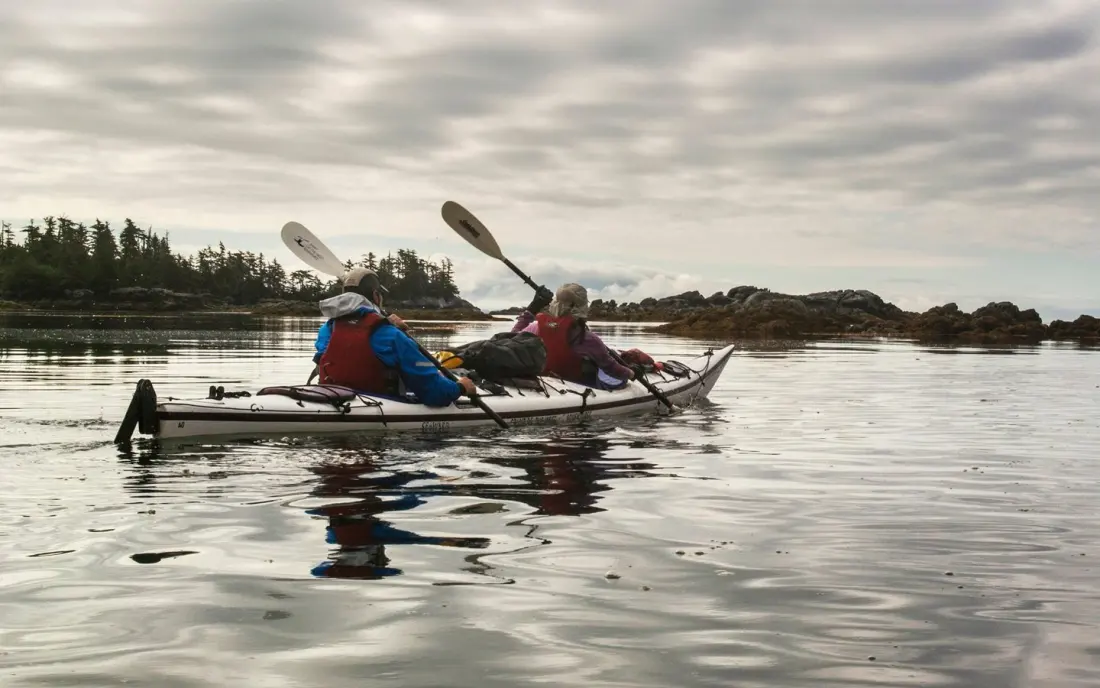
Summer owns the beach, but paddlers who know the coast best will tell you the shoulder seasons are the secret. Toby Story, lead guide at SSV — a sea kayaking outfit that's been running trips in Australia and worldwide since 1988 — makes the case for swapping the January crowds for a crisp morning in May or a long afternoon in October.
The appeal is easy to see. Launch ramps are free, favourite stretches of shoreline can be yours alone, and the light is softer — great if you carry a camera. In Tasmania, where Story is based, autumn often brings the most settled weather, and the sea is still holding some of summer's warmth. Spring adds long days and the coast waking up. In September to November there's a bonus: migrating whales moving along the Tasmanian coast.
The trade-off is unpredictability. Shoulder-season days can swing from blue skies to full winter layers within a few hours, so the guide's advice is to plan around conditions rather than hope. Check wind strength and direction, swell and rain — not just the sunshine icon — and pay attention to sea breezes. Spring is the tricky one: warm land, cold sea and a big temperature gap can whip up a stiff afternoon onshore breeze. In Tasmania, May and June often see fewer sea breezes because that land–sea contrast shrinks.
Daylight is the other thing that catches people out. A route that felt unhurried in high summer can turn into a race against dusk by late autumn. Start earlier, build slack into lunch stops, set a firm turnaround time, and know where you could cut a trip short if weather closes in. There's no shame in shelving an exposed crossing for a sheltered bay — or leaving the kayak on the rack entirely.
Kit matters more in the in-between months too. The sea stays cold long after the land feels summery, so dress for immersion, not just for comfort in the boat. Pack warm dry spares — a beanie and jacket in a waterproof bag rescue any lunch stop — and keep eating and drinking, because you still burn energy in mild weather.
Why it matters: if you own a kayak or hire one on holiday, the shoulder seasons deliver the same coastline with a fraction of the traffic, and often better conditions. You don't need an epic itinerary either — a couple of hours on a familiar waterway ending with a hot coffee somewhere is a proper outing. Story applies the same logic further afield: on Antarctic expeditions, the timing of the season shapes the wildlife, from penguin breeding colonies to late-season whale encounters. Story runs paddling trips through SSV, which has guided sea kayak adventures since 1988. — Australian Geographic