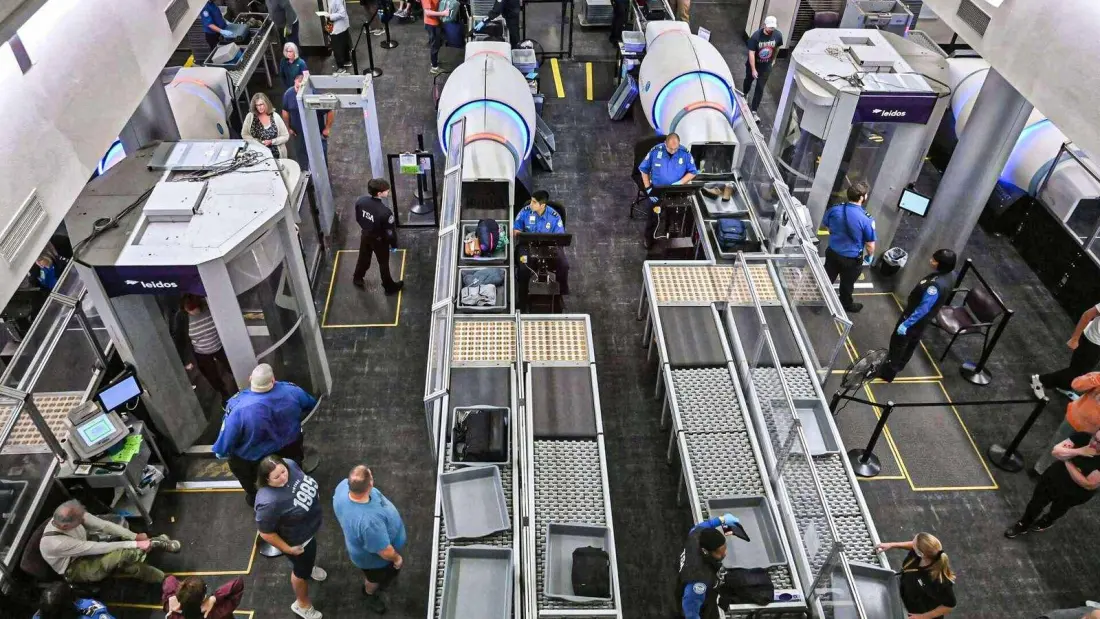
Roughly 3.3 million carry-on bags pass through US Transportation Security Administration checkpoints every day, and the items officers pull out of them follow a pattern so consistent it's practically a ritual: travellers forgot it was there.
Technically, the TSA doesn't confiscate most of what it takes. Items left at the belt are classed as voluntarily abandoned property — you hand it over or you miss your flight. And since 2008 the agency has only published data on firearms, so the rest of the ranking comes from officer accounts and spokespeople. The usual suspects: water bottles, oversized toiletries, knives, tools, and guns.
Water tops the list, mostly because of sheer volume. A full bottle breaks the 3-1-1 liquids rule, in force since 2006, which caps containers at 3.4 ounces (100 ml) in one quart-sized bag. The same rule catches full-size shampoo, sunscreen, shaving cream — and things you might not think of as liquids at all. Anything that pours, spreads, or squishes counts, so peanut butter, hummus, yogurt, and gel deodorant are all subject to the limit. One wrinkle: airports with newer 3D CT scanners can relax the rule, meaning a bottle that cleared security outbound might get surrendered on the way home.
Knives are next, and there's no blade small enough to qualify in carry-on. Swiss Army knives, keychain and credit card knives, box cutters, and multi-tools with blades are all out — a Leatherman counts. Tools longer than seven inches (wrenches, pliers, hammers) are a separate prohibition, and corkscrews trip people up because many contain a small foil-cutting blade. Everything in these categories is fine in checked baggage, and the TSA will even ship surrendered items back at your expense, though most people decline.
Firearms are the outlier. TSA detected 6,737 at checkpoints in 2023, up from 6,542 in 2022, with 5,028 in the first nine months of 2024. They're legal to fly with only in checked baggage — unloaded, locked in a hard-sided case, declared at the counter. A concealed carry permit makes no difference; the rule is federal. Get caught with one at a checkpoint and police take over: possible arrest, civil penalties up to nearly $15,000, and a five-year loss of TSA PreCheck privileges. Even replica guns and Nerf-style toys fall under the ban.
The takeaway for anyone flying through a US airport is simple. Empty your water bottle before the line and refill it at a station past security — most American airports have them now. Decant toiletries into travel sizes or pack them in a checked bag, and check pockets and work bags for stray pocket knives and multi-tools before you leave. If you genuinely can't part with something, ask about shipping it home instead of dropping it in the bin.
Nearly all of this comes down to forgotten items rather than bad intent, which means it's almost all avoidable. A five-minute bag check saves you a favourite knife, an expensive fragrance, or a very expensive conversation with local police.