
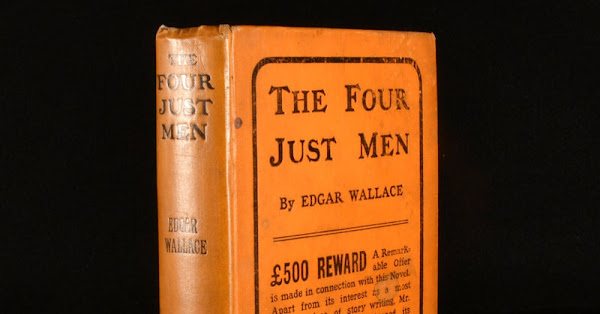
In 1905, a struggling London journalist named Edgar Wallace had one shot at making his first novel a hit. The book, The Four Just Men, was a thriller about four vigilantes who assassinate a British minister over an extradition law. To make it unputdownable, Wallace left the murder method unexplained and invited readers to solve the puzzle themselves — with cash prizes attached.
The prize fund was £500 (over £100,000 in today's money), with £250 for first place, £200 for second and £50 for third. Wallace wanted to offer £1,000 and even tried to borrow the money; colleagues talked him down to half. On top of that, he spent roughly £2,000 plastering advertisements across newspapers, buses, billboards and handbills — an extraordinary outlay for an unknown first-time novelist. He expected to recoup it all within three months.
Then came the mistake. The competition rules named the prizes but never stated that each prize would go to only one person. Legally, every correct entry was entitled to the money. Far from the handful of solvers Wallace expected, large numbers of readers cracked the mystery — including, ironically, his own publishers, who had to work out the solution themselves before printing. The liability ballooned into many multiples of £500.
Despite selling around 38,000 copies, Wallace lost about £1,400 on the venture. Winners went unpaid for months and public suspicion grew, until newspaper magnate Alfred Harmsworth bailed him out to protect the Daily Mail's reputation. Wallace was declared bankrupt and sold the rights to the novel for a mere £75. It later became one of his best-known works and spawned a series.
The bankruptcy, fortunately, was a detour rather than the end. Wallace went on to write more than 170 novels and 957 short stories, inspired over 160 film adaptations, and co-wrote the screenplay for King Kong shortly before his death in 1932. In hindsight, the failed competition did exactly what marketing is supposed to do — it made the book famous. It just also ruined him first.
Why does this matter to a traveller? Wallace's story is a slice of London's literary history you can walk through — the city where a workhouse-raised boy who left school at twelve became one of the world's bestselling thriller writers. His early life, from selling newspapers to reporting on the Boer War, is the kind of backstory that turns a casual wander past Fleet Street or a visit to a secondhand bookshop into something richer. A century on, his most famous book is remembered not for a plot twist, but for a lesson in fine print.