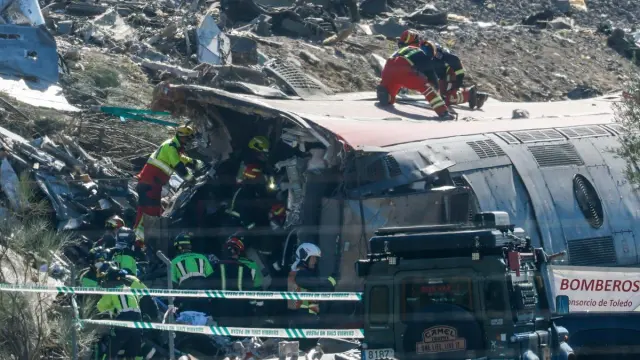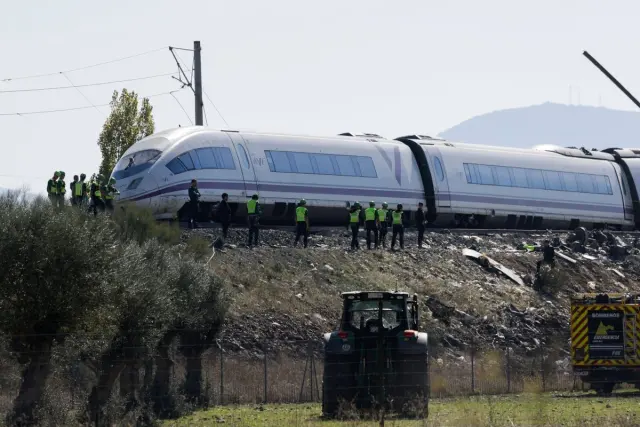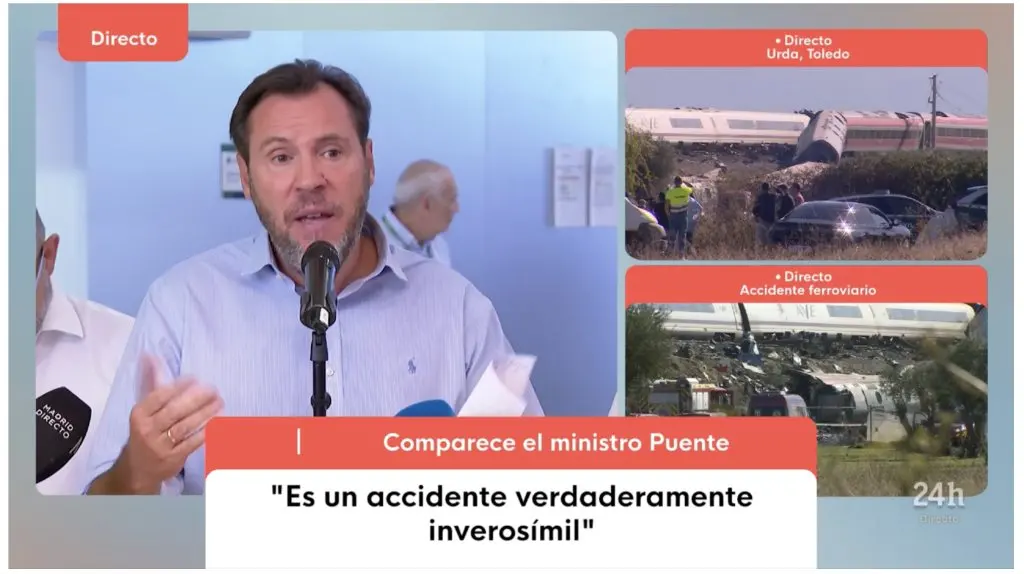
Spain is dealing with one of the worst rail disasters in its recent history after two high-speed trains collided near Urda station in Toledo province, killing at least 64 people and injuring more than 50. Services on the Madrid–Andalusia high-speed line have been suspended, and questions about how it happened are being asked at the very top of the transport ministry.
Transport Minister Óscar Puente gave a detailed reconstruction at Adif's Atocha control centre in Madrid. Around 8.30am, a computer communications failure knocked out the LZB train protection system along a 63-kilometre stretch of line, automatically stopping six trains in the area, including a RENFE AVE and an Iryo service, both heading from Madrid towards Seville.
With automatic signalling down, controllers at Atocha switched to manual procedures. Puente says that at 8.36am the control centre authorised the AVE to resume 'normal' running — even though the Iryo ahead was still occupying the track, a red signal was active, and the train was under a 'target zero' instruction requiring it to stop. He called the decision 'inexplicable' and noted that neither railway regulations nor Adif's own procedures allowed it. The controller who gave the authorisation has not spoken to officials and is now subject to the investigation.
The AVE then covered roughly 25 kilometres in about 17 minutes before striking the rear of the Iryo at 8.53am near kilometre 118 of the Madrid–Andalusia line. Carriages derailed and some fell down an embankment. More than 540 passengers were on the two trains combined. The train's speed at impact is not yet confirmed, though up to 200km/h is permitted on that section.
For travellers, the immediate impact is practical: rail connections between Madrid, Ciudad Real and Andalusia have been suspended while the investigation and recovery work continue. Anyone with tickets on the Madrid–Seville, Madrid–Málaga or Madrid–Cádiz routes in the coming days should check Renfe's website or app for cancellations and refund options, and expect long delays even once partial service resumes. Long-distance coach services and domestic flights to Seville and Málaga are the usual fallbacks if rail capacity stays tight.
Beyond the disruption, the disaster will likely trigger a wider review of how Spain's high-speed network handles manual signalling failures — procedures that carry tens of thousands of passengers a day on one of Europe's busiest corridors. Puente himself called a rear-end collision on the Spanish network 'implausible', which underlines how unusual this failure chain was. Until the investigation reports back, the safest assumption for anyone travelling to or within Castilla-La Mancha and Andalusia by rail is to build in flexibility and monitor official Renfe and Adif channels.