The 31st Busan International Film Festival is underway in the South Korean port city, and Thailand has a noticeable footprint this year with three new features screening at Asia's biggest cinema event: Banjong Pisanthanakun's Inherit, Phuttiphong Aroonpheng's The Burning Giants, and Bua, directed by Inthira Charoenpura and Phensiri Klangsurin.
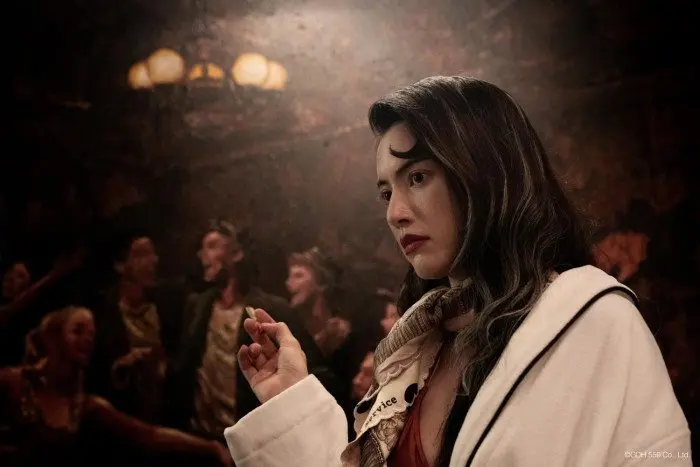
The headline title is Inherit, an adaptation of a classic Thai horror novel by Teerap Aupree from 2013 — still the highest-grossing film in Thai cinema history. Banjong, best known internationally for Pee Mak and The Medium, reimagines the story as full-blooded gothic horror with a timely twist on Gen-Z rebellion and eco-disaster. The film stars Davika Hoorne, who arrived in Busan to present it under the giant dome of the Busan Cinema Center. Fresh off a worldwide festival run for Pee Mak that included an Oscar submission for Thailand, she plays Tayaya Arsus, a more malevolent demon than the volunteer ghost she played in Inherit's on-screen credits. Opposite her, Thitiya Jiraprapasilp takes the young heroine role, while the pallid but magnetic Davika embodies Grandmother Waran — an 80-year-old matriarch who doesn't look a day past 18. The pair's hot-and-cold energy drives the film's female-centred drama, produced in co-production with Korean studios.
The Burning Giants is a different beast entirely. Inspired by the story of Billy, a Karen activist who was forcibly disappeared, Phuttiphong's film examines minority persecution and border anxiety. Set amid toxic smoke blanketing the country, it follows a Karen woman searching for her missing husband as the government rolls out a repatriation programme for villages destroyed by fire.
Rounding out the trio is Bua, a coming-of-age drama set in 1973. Its heroine is a 15-year-old live-in helper raised by her grandmother in a rural chard-ay household — father never mentioned, mother absent. When her mother's younger brother unexpectedly shows up at the rural house, having possibly fled the crackdown in Bangkok, Bua's life gets complicated. Newcomer Oprneeraya Khamhau embroils the story in the confusion of someone teetering on the edge of womanhood, shot around lotus ponds and chard-ay canals with a simplicity that sometimes reads as too simple, though the film's strength lies in that very implication.
For travellers with a cinephile streak, this is a useful signal: Thai cinema is having a moment on the international stage, and festivals like BIFF are where it surfaces first. If you're in South Korea in early October, Busan's festival screenings, red carpets and riverside venue make an easy cultural add-on to a Korea trip — and a good excuse to catch Thai titles long before they reach streaming. And if the films themselves whet your appetite, they double as an unusually atmospheric preview of Thailand beyond the beaches: rural provinces, border regions and 1970s Bangkok all on screen.
First reported by Bangkok Post Life.