Britain has a northern edge, and it's a lot more inviting than people expect. Thurso, in the Highland county of Caithness, is the mainland's most northerly town — and while the postcard version of the far north involves wind and moorland, this little coastal place also delivers golden sand, rideable waves and ruins that go back to the Vikings.
Getting there is part of the experience. Inverness, 109 miles south, is the gateway: it has the nearest commercial airport, with flights from London, Dublin and Amsterdam, and it's the hub for ScotRail's Far North Line. The train north takes about four hours, but the route through hills, lochs and boggy moor is regularly rated among the most scenic rail trips in the UK. If you're coming from Edinburgh or further south, you'll pass through Inverness anyway.
The beach line-up is surprisingly varied. Thurso Beach, right by the town centre, is a sheltered horseshoe bay — good for a swim or a lazy afternoon. Two miles east, Thurso East is a different beast: powerful barrel waves that have made it a famous surf break and the usual host of the Scottish National Surfing Championship. Beginners should head to Dunnet Bay instead, seven miles away, where calmer water suits paddleboards and first-timers. North Coast Watersports there rents boards, kayaks and wetsuits (you'll want one — the North Sea doesn't do warm) and runs private and group surf lessons.
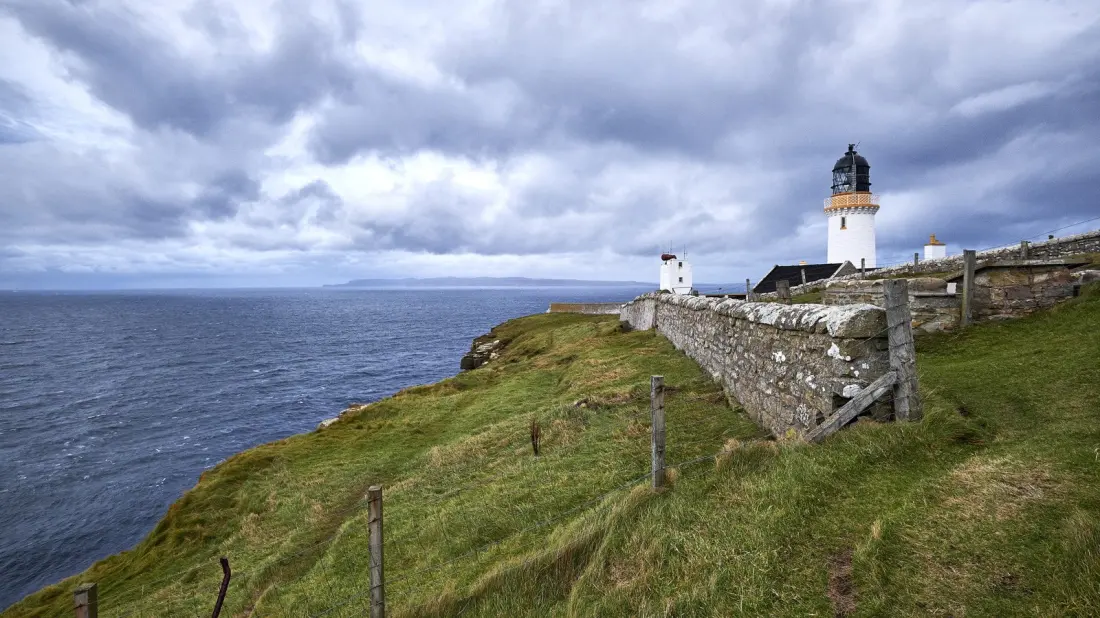
On foot, the easy 1.4-mile River Thurso Circular gives you a quick orientation to town and coast, while the 4.3-mile Holborn Head Circular from Scrabster Harbour passes an old lighthouse, Orkney ferry views and clifftop fort ruins dating to the Bronze and Iron Ages. nearby, Dunnet Head is the most northerly point of mainland Britain, with a lighthouse, a paved lookout trail and puffins on the cliffs — plus diving gannets if you time it right.
History runs deep here. Thurso Castle, perched on the coast at Thurso East, was first built in 1157 and later rebuilt in 1872 as a baronial seat. In the town centre, Old St Peter's Church, a protected site from the 13th century, still has standing walls and carved stone fragments. The North Coast Visitor Centre, set in the 1870 town hall, doubles as a museum tracing Caithness from the present day back to the Devonian Period.
Sleep options lean independent and characterful rather than chain. The Commercial Hotel has been open since 1817, its bar is the oldest in Caithness, and there's live traditional music on Wednesdays. For something quieter, the Forss House Hotel is a converted 19th-century country house beside a waterfall, set in 20 acres.
Thurso works well for road-trippers running the North Coast 500, surfers chasing a famous break, or anyone who wants wild coastal scenery without the crowds further south. Pack layers, book the train window seat, and give yourself a couple of days — the far north rewards slow travel.