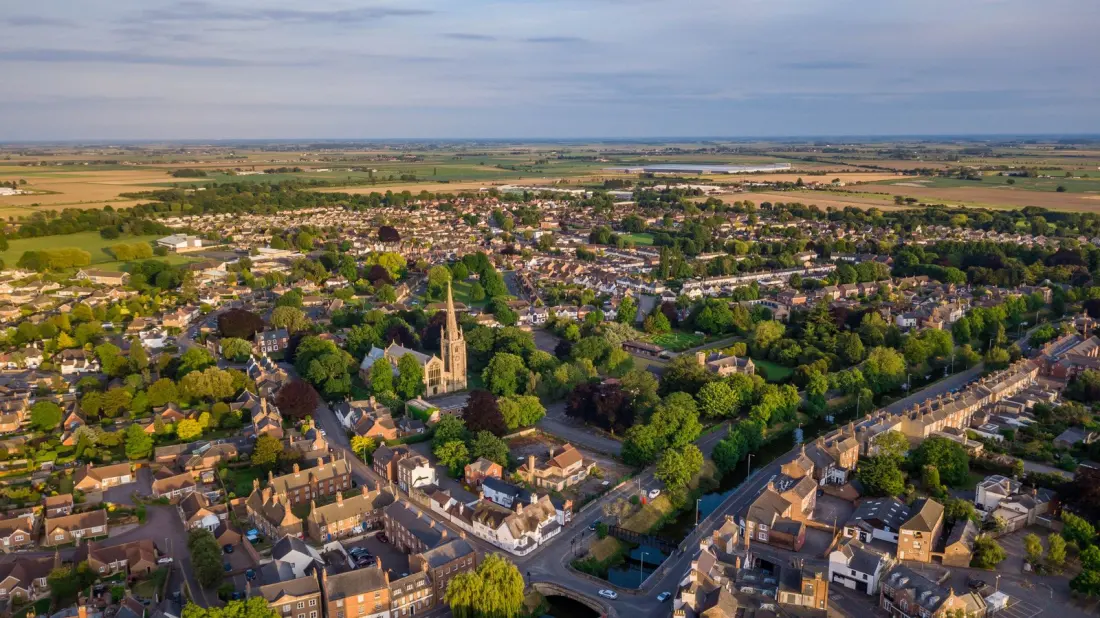
A small market town on the River Welland in Lincolnshire has been quietly earning a reputation as one of England's more rewarding off-the-beaten-track stops. Spalding, often called the 'Heart of the Fens', traces its roots back over a thousand years, and its mix of medieval buildings, gardens and bird-of-prey encounters makes it an easy day trip or weekend detour.
History runs deep here. The Romans were drawn to the marshy landscape first, setting up a salt-making industry, and by the 8th century an Anglo-Saxon tribe called the Spaldingas had given the town its name. A market charter followed, and the cobbled marketplace still anchors the town today, ringed by historic storefronts. The weekly Spalding Market is a good spot for handicrafts and fresh produce, and the area's farming past includes a famous tulip harvest that still shows up in the town's spring displays.
The sightseeing is compact and walkable. The Sessions House, a Gothic-style former courthouse from the 1840s with two crenellated stone towers, now operates as a wedding and events venue — it's not open for casual visits, but it hosts concert evenings and Christmas events, so worth checking the schedule. Around the corner, St. Mary and St. Nicolas Church dates to the 13th century on Saxon foundations, with a wooden hammer-beam roof, Gothic arches and a churchyard that turns yellow with daffodils each spring.
Directly beside the church sits Ayscoughfee Hall, a stone manor begun around the 1450s for a wealthy wool merchant and later home to the Ayscough family. Its rooms layer medieval, Georgian and Victorian architecture, and the wood-panelled Victorian library is the standout. Entry includes the formal gardens outside.
For green space, Springfields Gardens covers 15 acres to the northeast of town and is free to enter year-round. Expect everything from a working vegetable plot to wild woodland paths, plus a Renaissance-style Formal Garden with fountains and clipped hedges and a Japanese-themed Momotaro Garden with gravel beds and rock formations. Tulips bloom April to May, and the Annual Daffodil and Spring Flower Show lands every April.
A short drive away, the Baytree Owl and Raptor Centre offers hands-on wildlife experiences — the Owl Experience gets you up close with a gauntlet and a perched owl, while the Bird of Prey Experience lets you fly falcons yourself. The flying displays come highly rated, and visitors regularly praise the knowledgeable handlers.
Spalding works well as a base too. Peterborough is about 35 minutes away for historic streets and rail connections; Louth, around 90 minutes by car, has antiques and markets; and the seaside town of Hunstanton, with beaches, cliffs and seafood, is roughly the same drive. Norwich sits two hours east by car, Nottingham 90 minutes west, and the train from Norwich takes about two and a half hours.
Who's it for? Anyone who likes their England slow, green and unhurried — garden lovers, history browsers and bird fans especially — or travellers driving between the Midlands and East Anglia who fancy a break that isn't another motorway services.