A city of nearly three million people, with no museum dedicated to itself — that's been Toronto's odd cultural gap since 2014. It's about to close. The Museum of Toronto has announced it will open a permanent brick-and-mortar home at 2 Queen St. E., right at one of the city's busiest corners near Queen and Yonge, in spring 2027.
The site itself is a slice of local history. The museum is working with Toronto architecture studio Superkül to convert a former Bank of Montreal branch into the new cultural space. Rather than knocking the building down, the plan leans into adaptive reuse — keeping a familiar downtown landmark and giving it a second life as a place to explore the city's past.
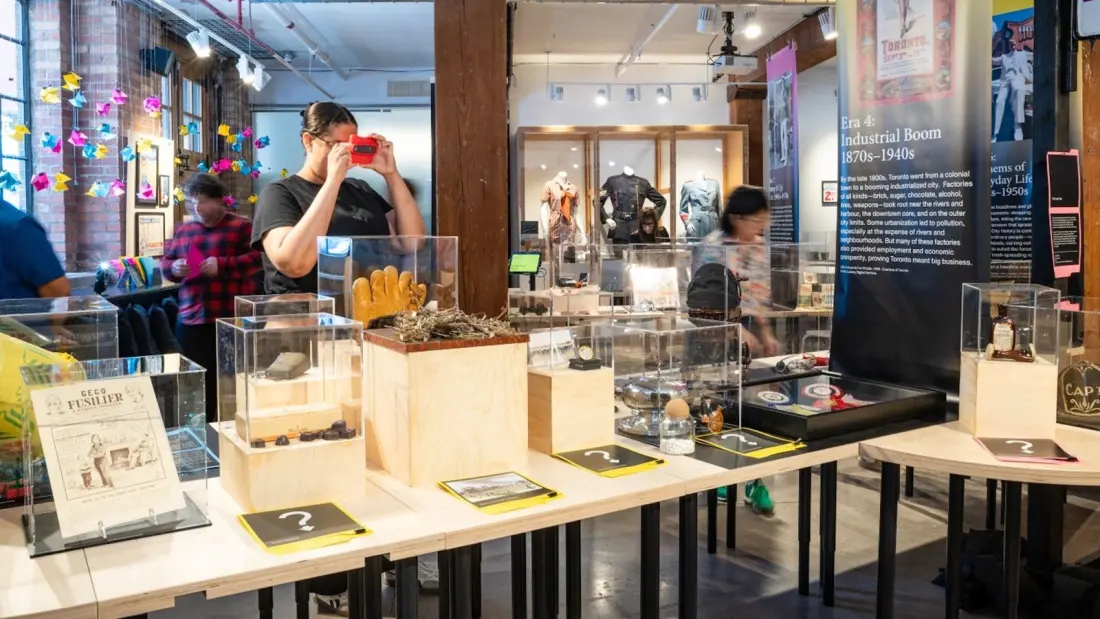
The organization behind it isn't new. Founded in 2014 under the name Myseum of Toronto, it has spent a decade producing pop-up exhibitions and projects about the city, from neighbourhood histories to the communities that shaped them. What it never had was a front door — no fixed place where visitors could drop in and get a coherent story of how Toronto came to be. A 2024 rebrand to the more straightforward Museum of Toronto signalled the shift, and this announcement makes it concrete.
According to the museum, the new venue will be dedicated to the people, places and stories that have shaped the city. That's a broad remit, and arguably a necessary one in a place as layered as Toronto: an Indigenous gathering place long before it was a colonial town, a 19th-century capital, and now one of the most multicultural cities on earth. Expect the institution to act less like a dusty repository and more like a storytelling hub — the pop-up era built that experimental DNA.
Why should a traveller care? If you're visiting Toronto, the museum will give you context most guidebooks skip. It sits in the heart of downtown, steps from the Queen subway station, so it slots easily into any city itinerary alongside the Eaton Centre, Old City Hall and the King West strip. For anyone who's ever wondered why the city feels the way it does — the neighbourhoods, the food, the accents — this will be the one-stop explainer. It also joins a growing push to make Toronto more than a stopover on the way to Niagara Falls.
The spring 2027 opening date means there's time to plan a trip around it, and the museum is expected to share exhibit details as the launch approaches. Until then, the organization continues its pop-up programming, so you can get a taste of its approach even before the doors open at Queen Street East.
For culture-hungry visitors, the bottom line: from 2027, Toronto finally gets an institution that answers the question every visitor asks — what actually made this city what it is?