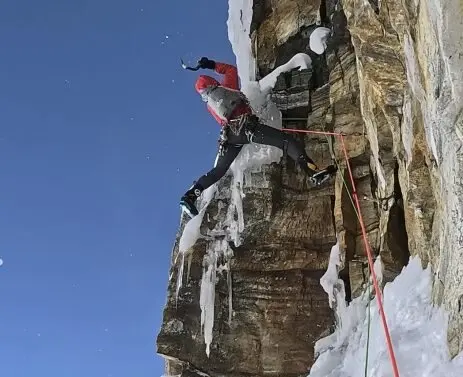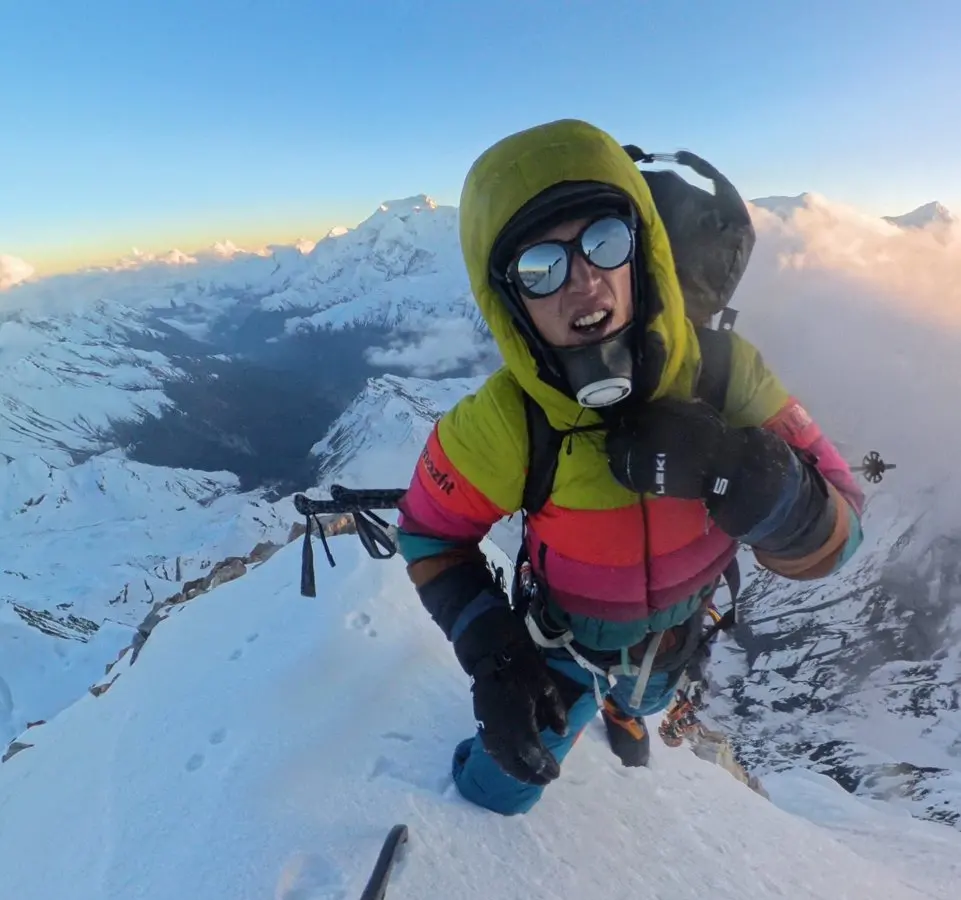
Jost Kobusch is back in Nepal, gearing up for his fourth attempt at something no one has done: climbing Everest alone, in winter, without supplemental oxygen, and without support. The 34-year-old German follows a route via the Lho La and the West Ridge — a line that keeps him out of the Khumbu Icefall, the serac-laden bottleneck that most Everest climbers pass through with fixed ropes and Sherpa support.
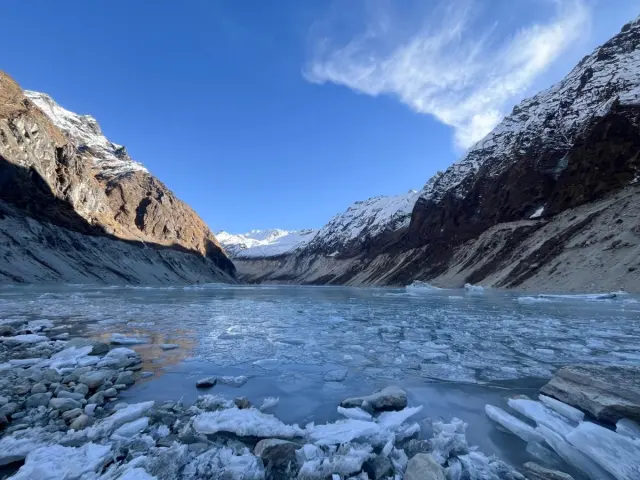
Kobusch arrived in Kathmandu two weeks ago with friends Nicolas Scheidtweiler and Ella Bruemmer, plus photographer Alex Pichon. The team headed straight for Manang in the Annapurna region to build altitude tolerance in the Chulu range, aiming to traverse all four Chulu peaks, each above 6,000m. Things went only partly to plan: Pichon ran out of steam after the second summit, so the group settled for a traverse from Chulu Far East (6,059m) to Chulu East (6,584m) from the southeast — a line Kobusch believes had never been climbed before.
There's more acclimatisation to come. Before the winter window opens, Kobusch wants to tick off a 7,000m peak in the same area, then summit an 8,000m mountain other than Everest. He plans to start work on Everest itself on December 22, the first day of calendar winter, by which point he intends to be fully acclimatised. Two photographers will wait in Base Camp; on the mountain, he'll be entirely on his own.
That isolation is the point — and the risk. As Kobusch puts it, he needs to move efficiently, manage risk solo, and make sound decisions when exhausted, in a place where small errors can be fatal. His track record shows steady progress: on his first attempt in 2019-20 he pushed above 7,300m on the West Shoulder. Winds stopped him at 6,400m in 2021-22. A dengue infection then forced a cancellation, and a back injury delayed things again — though he filled the gap by soloing Denali in February-March 2023. On his most recent attempt, in December 2024, he reached 7,537m on December 27, his highest point so far.
He's under no illusions about the odds. Kobusch himself estimates his chances of success at roughly 20%. But, he argues, that low probability is exactly what makes the project worth pursuing.
For travellers, the story is a reminder of how much life hums around Nepal's mountains even in the depths of winter, when the crowds are gone. The Annapurna region around Manang, where Kobusch is acclimatising, offers superb high-altitude trekking on the Annapurna Circuit, while the Khumbu valley below Everest stays walkable through the cold months for hardy trekkers who pack for seriously low temperatures.