Every autumn the same debate pops up in mountain towns: lawns are browning, reservoirs are low, and yet the snow guns at the local ski area are firing at full blast. Ski Magazine spoke with resort operators and the National Ski Areas Association to sort out what's myth and what's reality when it comes to water use on the slopes.
The core answer comes down to a legal and hydrological technicality: snowmaking counts as a "non-consumptive" use of water. Unlike farming or heavy industry, the water isn't polluted or locked away — it sits on the hill as snow, then melts and flows back into the watershed, or evaporates. As Jackson Hole's slope maintenance director Austin Irby put it, the water all ends up back in the environment, and it goes back clean. Resorts still need legal water rights to pump it, and how secure those rights are depends on seniority, storage and local conditions.
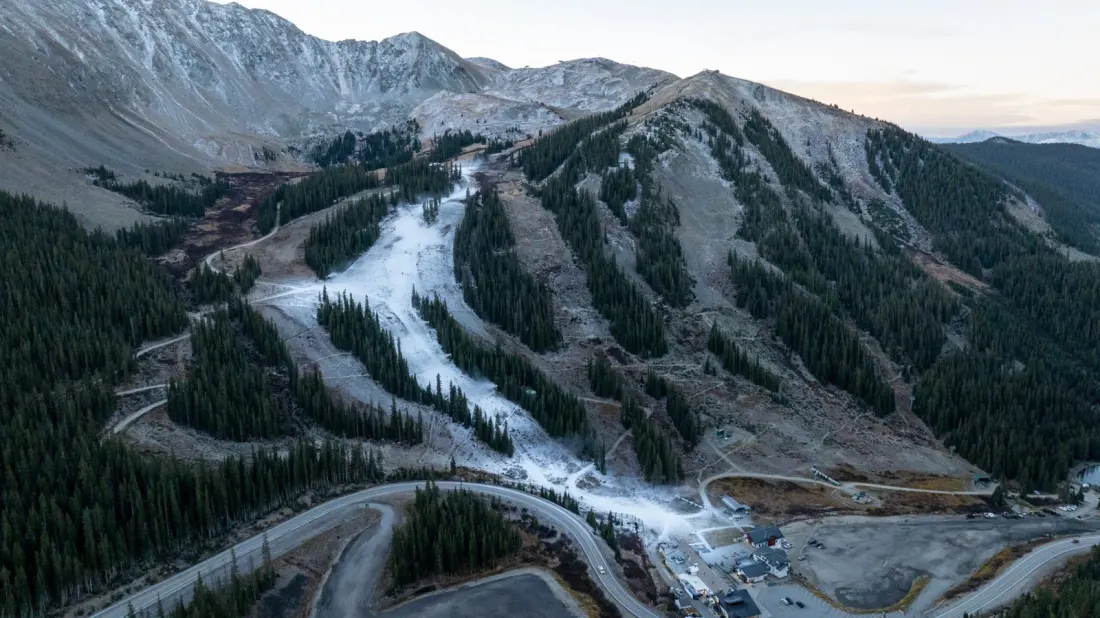
The volume involved is smaller than most skiers assume, too. Jackson Hole makes snow on only about five percent of its terrain — but that slice covers lower-mountain trails used as exit routes in spring, so it matters enormously. Arapahoe Basin, often first to open in North America thanks to its high elevation, guns snow on just a handful of trails each October as a "toehold" for the season. At the other end of the scale, family-owned Red River in New Mexico covers roughly 85 percent of its runs and last season made snow about a month longer than usual — an expensive but necessary hit, according to its marketing manager.
Resorts are also getting smarter about it. Red River credits LiDAR-guided snowmaking with a "game changer" boost in efficiency, placing snow exactly where it's needed. Willamette Pass in Oregon is rolling out top-to-bottom snowmaking this season, a shift from treating snow as a bonus to making it central to operations. Others are going low-tech: Aspen Snowmass recently hosted a terrain park session on snow farmed the previous winter and stored under an insulated blanket, Arapahoe Basin uses snow fences to catch drifting snow at altitude, and Jackson Hole is weighing a system where skiers ride the upper mountain and download lifts over bare lower runs.
None of this escapes the bigger picture. A 2023 NSAA study warned that if emissions stay high, ski areas face more vulnerable water sources and warmer temperatures in the coming decades. As Irby noted, even the best snowmaking system on the planet still needs it to get cold. Snowmaking is a resilience tool — reliable season starts, on-schedule endings, a buffer in dry years — not a fix for a warming climate.
For skiers planning an early- or late-season trip, this matters directly. That November opening-day groomer, or the April spring skiing you count on, increasingly exists because of these systems and the crews running them overnight. If you're booking shoulder-season trips to western US resorts, expect snowmaking reliability to become a bigger factor in which mountains deliver — and maybe thank a snowmaker if you see one in the dark with a headlamp.