Toronto has a reputation problem. Ask around and you'll hear it called a concrete jungle — traffic, packed streetcars, endless towers. But a writer returning to the city after 12 years away found something else entirely: enough outdoor adventure to fill a week without ever feeling like she was 'in the city' at all.
The surprises start 40 kilometres east of downtown at Rouge National Urban Park, one of North America's largest urban parks at more than 79 square kilometres. Its 14 trails run through meadows, forests, farmland and wetlands, all the way from the Oak Ridges Moraine down to Lake Ontario. The Mast Trail is the highlight: a 2.3-kilometre route along a 200-year-old path once used to haul giant white pines to the lake for Europe's shipyards. Under the canopy of rare Carolinian forest, the summer humidity disappears and so does the traffic noise.
Closer to the city, the Scarborough Bluffs are hard to believe until you see them — 15 kilometres of white sedimentary cliffs, built up over some 12,000 years, dropping into the emerald water of Lake Ontario. At Bluffers Park, Indigenous-owned rental company Oceah Oceah runs paddleboard sessions along the bluff base, with guides who talk about the responsibility of caring for the water. Expect a soak: the lake is cold, which is welcome after a humid morning hike.
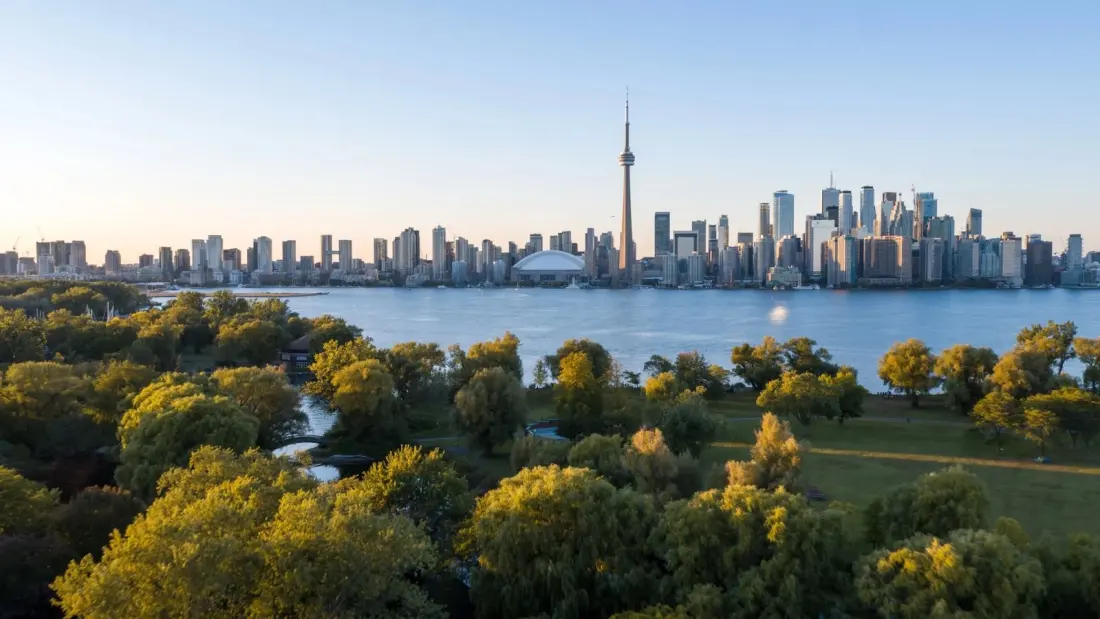
Back downtown, the waterfront trail — part of the 3,600-kilometre Great Lakes Waterfront Trail linking 170 communities — has grown into a genuinely pleasant ride, with wider bike lanes, new public spaces and public art. From there it's a 13-minute ferry from Jack Layton Ferry Terminal to the Toronto Islands, a car-free chain of 15 islands with sandy beaches and about five kilometres of flat biking paths running from Centre Island past the old Gibraltar Point Lighthouse to Hanlan's Point. The skyline fades fast.
For a finale, the CN Tower EdgeWalk puts you on a hands-free platform 356 metres above the street, harnessed in, wind in your face. From up there you can pick out everything you've just explored: the lake, the islands, even the Rouge Valley in the distance.
Why it matters: Toronto works as an outdoor trip, not just a food-and-museums city break. The trick is treating it like a base camp — most of these spots are reachable by a short drive, a ferry or a bike ride, and summer is when the whole setup clicks. Just pack for the humidity.