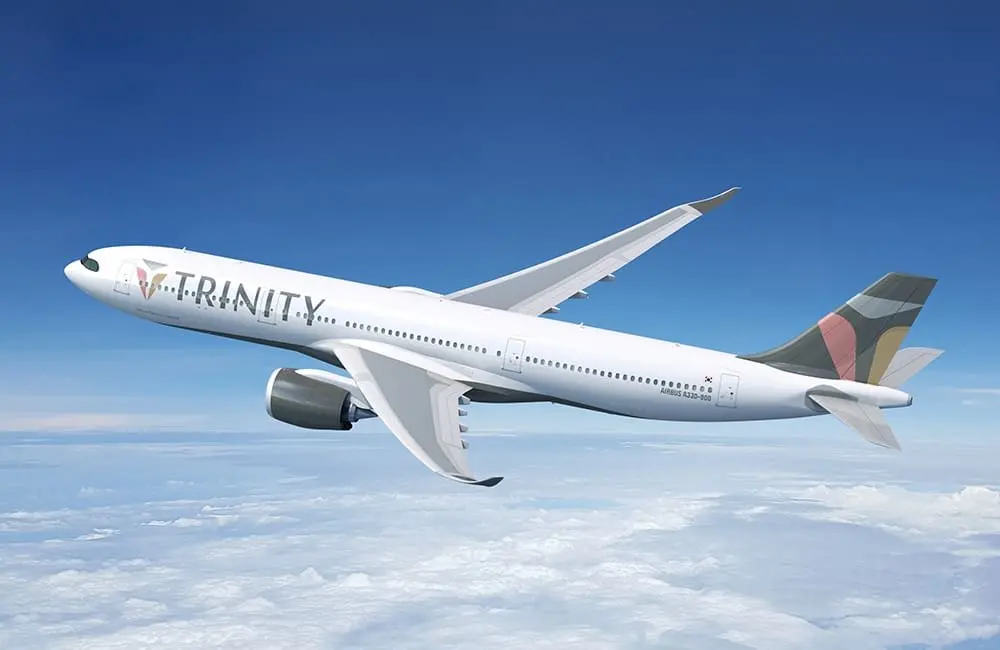
Trinity Airways — the new name for South Korea's T'way Air since 10 September — has revealed just how well its Sydney–Seoul route is performing, and the numbers are striking. Since launching in December 2022, the airline has operated more than 1,380 flights between Sydney and Seoul Incheon, carrying over 410,000 passengers in total. That works out to roughly 120,000 travellers a year, with average load factors sitting near 90 per cent.
For anyone flying between Australia and South Korea, the practical news is capacity. The route currently runs three times a week, on Mondays, Wednesdays and Fridays, but goes daily from 20 October 2026 through to 27 March 2027 — a window that covers the Australian summer holidays and the northern winter sports season, both popular times for travel between the two countries.
The route has quietly become a bridge for tourism and business between the two markets, and cargo is growing alongside passengers. Sydney Airport's chief aviation officer Greg Botham credited "strong and enduring demand" between Korea and Australia for the expansion, while the airline itself pointed to customer loyalty since launch as the key to the route's success.
There's a bigger rebrand story here too. T'way Air is repositioning itself under the Trinity Airways name with a "Selective Service Carrier" strategy — somewhere between full-service and low-cost — and has introduced its first Boeing 737-8 in the new livery, running the Gimpo–Jeju route since 10 September. The airline says the LEAP-1B engines on that aircraft bring better fuel efficiency and lower emissions than comparable jets. Next on the list: next-generation Airbus A330-900neo widebodies and more 737-8s joining the fleet within the year, plus a progressive repaint of existing aircraft.
Why should a traveller care? A near-full long-haul route going daily usually means more seat availability, better connection options and a carrier clearly committed to the market rather than testing the waters. If you're planning Korea for late 2026 or early 2027 — whether for Seoul's food scene, ski trips, or onward connections across Asia — the expanded Sydney–Incheon schedule gives you a straightforward, nonstop option. And with widebody aircraft on the way, expect more seats per flight on this corridor in the near future. Worth watching fares once the daily pattern kicks in, since added capacity often sharpens competition on the route.