Space tourism has officially landed on a mainstream travel booking site. Trip.com, one of China's biggest online travel agencies, is now listing a six-day package on its mainland platform Ctrip that ends with a 90-minute suborbital flight aboard a Virgin Galactic spacecraft. The price: 5.1 million yuan, or about US$760,000 per person. Two travellers have reportedly already signed up.
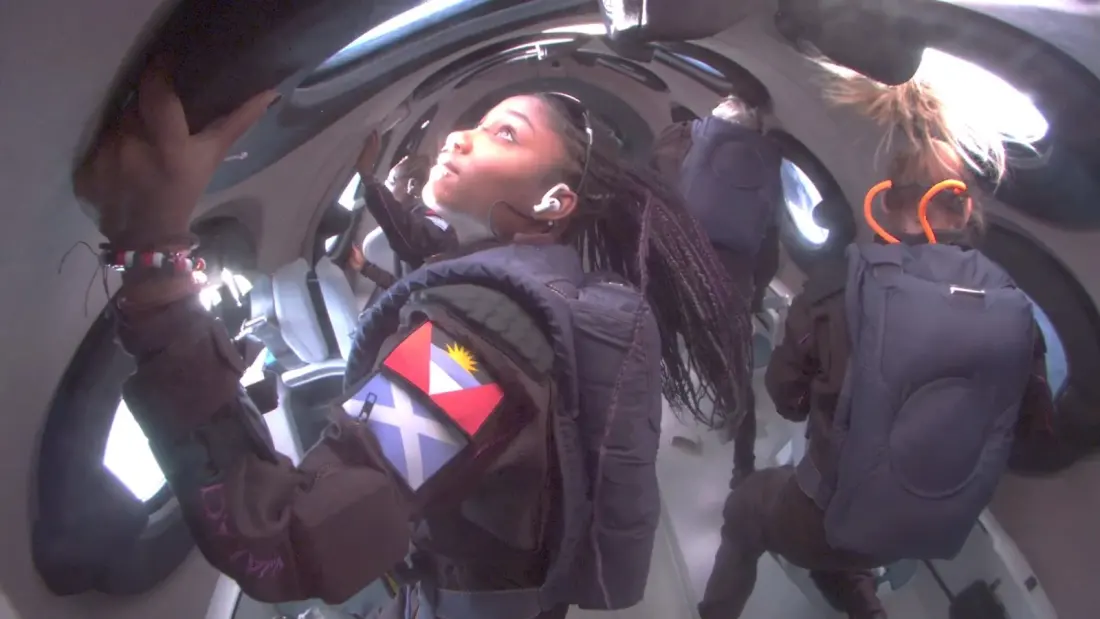
The trip unfolds in the United States, starting in Las Cruces, New Mexico, near Spaceport America. The first four days are all preparation: simulator sessions, centrifuge and G-force tolerance training, parabolic flights, sensory-overload drills, emergency-response practice and equipment familiarisation. On day five comes the main event — a suborbital hop with several minutes of weightlessness and views of Earth through the spacecraft's 17 windows.
The timing is no accident. Virgin Galactic is gearing up to resume commercial flights with a new generation of spacecraft, with the first vehicle expected to enter service in February 2027 — a slight slip from its previous late-2026 target. The company opened bookings in April 2026 for 50 expeditions at US$750,000 each, and by mid-August the tranche was oversubscribed, adding over US$50 million in future revenue. Trip.com's customers are effectively reserving seats ahead of the fleet's return.
What makes this listing notable is the seller. Instead of booking directly with a specialist space company, wealthy Chinese travellers can now buy a spaceflight the same way they'd buy a luxury cruise — through a conventional travel platform. It's also a signal of China's broader ambitions: state contractor CASC unveiled its own space tourism initiative at the Shenzhen high-tech fair in November 2025, and the country operates the Tiangong space station while working with Russia on a planned lunar research station, with site reconnaissance due in 2026 and construction from 2028.
The broader market is moving too. Blue Origin's New Shepard had flown 92 passengers (86 individuals) by the end of 2025, and in 2025 ESA engineer Michaela Benthaus became the first wheelchair user to cross the Kármán Line. Since Dennis Tito paid his way to the ISS on a Soyuz in 2001, spaceflight for private citizens has shifted from one-off stunts to a small but growing industry.
Not everyone in China is convinced. Social media reaction has questioned whether a few days of training is enough, who bears responsibility for passenger safety, and how mature the sector will actually be by 2027. At 5.1 million yuan, this remains an experience for a tiny slice of the market — but its appearance on a mainstream booking site marks a real shift. Spaceflight is becoming a product you can scroll past between hotel deals.