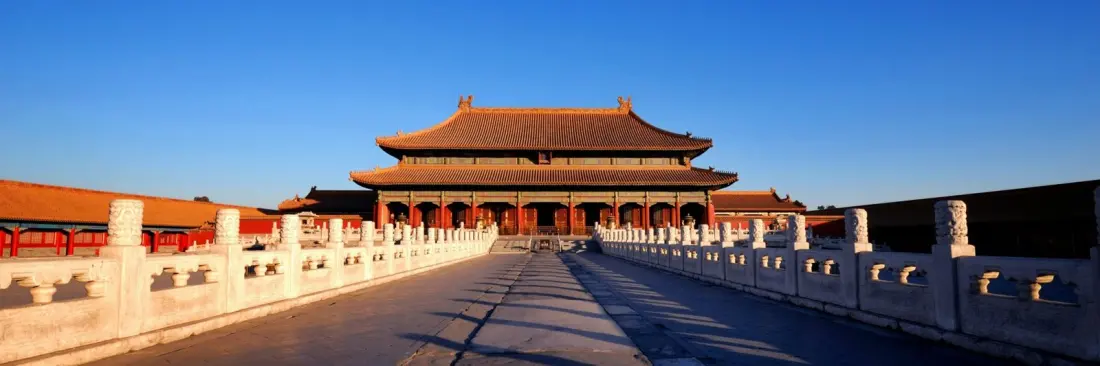
The Forbidden City has been named the world's most-visited museum, pulling in 19 million people in 2025, and it's far from alone at the top. The latest ranking from the Themed Entertainment Association, compiled with Entertainment + Culture Advisors and the Park Database, puts Chinese institutions in 12 of the top 20 spots — including the entire podium.
A decade ago, London, Paris and Washington dominated this list. Now the Summer Palace in Beijing sits second with 17.4 million visitors, and Xi'an's Emperor Qin Shihuang's Mausoleum Site Museum — home of the Terracotta Army — takes third with nearly 11 million. Part of the shift comes down to definitions: palaces and heritage sites now count as museums, which flatters China's vast imperial complexes.
Beijing alone places five entries. Beyond the two palace sites, there's the National Museum of China (10th, 6.9 million visitors), the beautifully preserved Qing-dynasty Prince Kung's Mansion Museum (14th), and the China Science and Technology Museum at number 20. The rest of China's haul spans the country: the Nanshan District Museum in Shenzhen (6th), the Opium War Museum in Dongguan (9th), the Sanxingdui Museum in Guanghan with its astonishing bronze masks (15th), Chengdu's Wuhou Shrine Museum (16th), the Nanjing Museum (18th) and the Shenyang Palace Museum (19th).
Europe manages five entries, led by the Louvre in fourth with just over 9 million visitors — still the most-visited museum outside China. The Palace of Versailles follows in fifth with 8.4 million. London contributes two, helped by free entry: the Natural History Museum (7th) and the British Museum (13th). The Vatican Museums, with the Sistine Chapel, come eighth.
South Korea doubles its presence with Seoul's Gyeongbokgung Palace and the National Museum of Korea in 11th and 12th, while New York's Metropolitan Museum of Art is the lone American representative at 17th.
For travellers, the practical takeaway is that a museum trip now means booking ahead for China's headline sites. The Forbidden City caps daily visitor numbers and sells out fast, so reserving tickets online well in advance is essential. It also means China has quietly become one of the world's richest countries for culture-heavy itineraries — you can pair the imperial treasures of Beijing with the Terracotta Army in Xi'an, the archaeology of Sanxingdui and Chengdu's panda reserves, or Nanjing's art collections, all on high-speed rail. Meanwhile, Europe's familiar heavyweights remain excellent and often free or cheap by comparison, with the same palace-and-ruins pattern emerging closer to home: Versailles, Topkapı, Schönbrunn, Wawel and Pompeii lead the European rankings.
Whichever side of the shift you land on, the message is clear: the world's busiest cultural sites are no longer only in Western capitals.