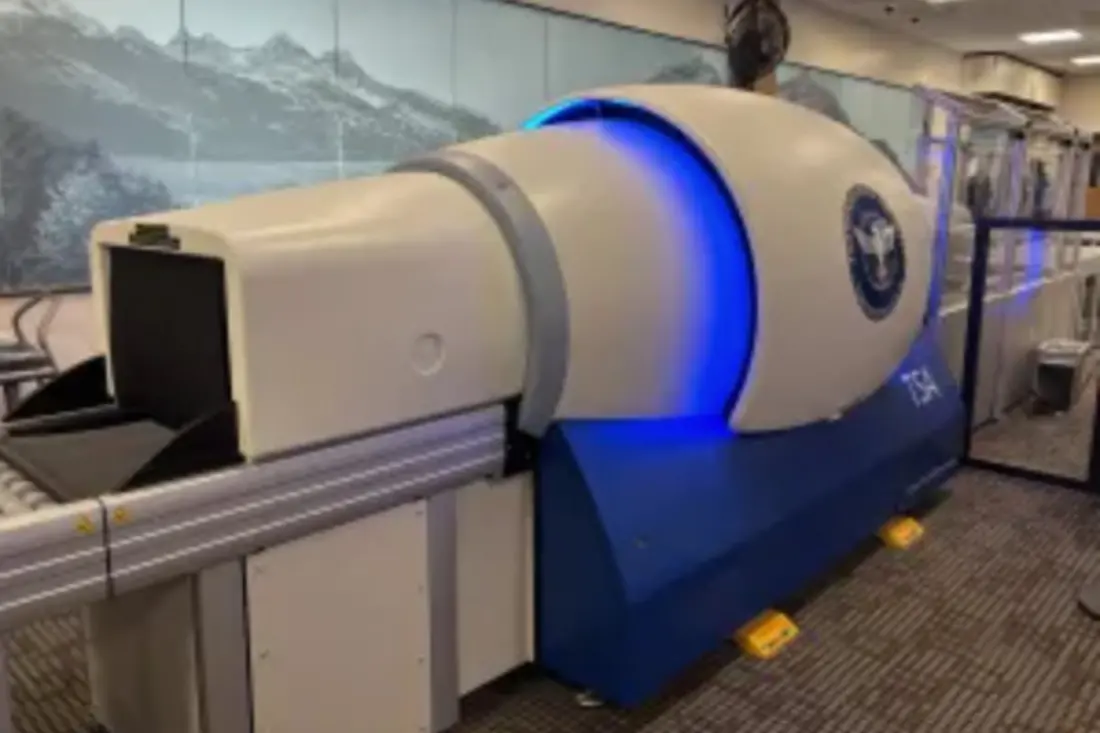
Anyone who has ever forced a bulging suitcase into an overhead bin is about to face a stricter gatekeeper: the scanner itself. The US Transportation Security Administration is rolling out new CT machines at airport security checkpoints, and they come with a smaller opening than the old equipment. The TSA says the tighter design is required to make the advanced imaging technology work properly — the trade-off is that carry-ons pushing past airline size limits may simply not slide in.
That could mean an unwelcome surprise at the checkpoint: if your bag won't fit, you could be sent back to check it, with all the time and gate-check fees that involves. Most US airlines cap carry-ons at 22 by 14 by 9 inches, and bags within those dimensions should pass through the new machines fine. It's the habitual over-packers and borderline rollers who risk getting caught out.
There's a genuine upside, though. The new scanners produce a rotating three-dimensional image that security officers can turn and examine on screen, rather than squinting at a flat X-ray. That means fewer bags get pulled aside and manually opened — and, crucially for most travellers, laptops and other electronics can stay inside your bag. Anyone who remembers frantically digging a MacBook out of a stuffed roller at 6am will appreciate that change.
The technology is the same style of CT imaging already used for checked luggage, now applied at the checkpoint. Officers can slice through the 3D view to inspect suspicious items without touching your belongings, which should speed things up overall — assuming your bag physically fits through the tunnel in the first place.
Why it matters: this is mostly good news for travellers who play by the rules and bad news for those who don't. If your carry-on has been quietly exceeding the published size limits for years, the margin for error is shrinking. Measuring your bag before you fly — wheels and handles included — is now worth the two minutes it takes, especially on US domestic routes where these scanners are appearing. Pack electronics accessibly anyway as a fallback, and keep anything you'd hate to gate-check in a personal item.
Reported by The Independent Travel.