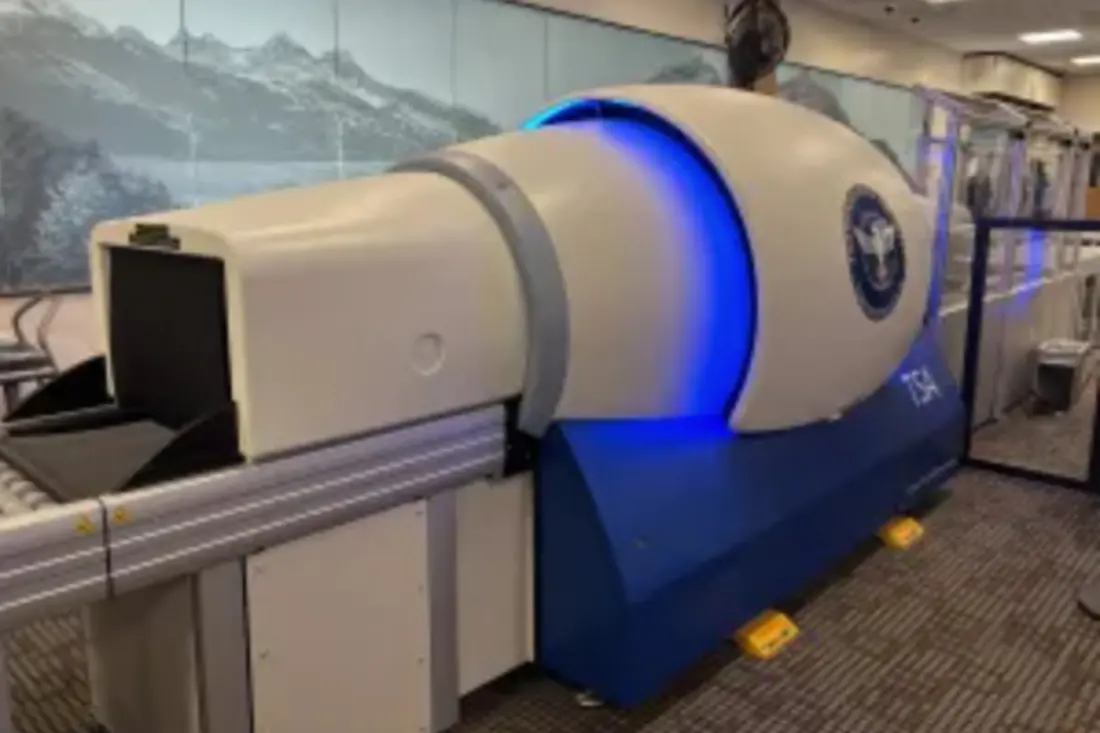
Travellers flying out of US airports who like to push their luck with carry-on sizing are about to run out of runway. The Transportation Security Administration is rolling out new CT scanners at security checkpoints, and the machines come with a smaller opening than the older X-ray units. Bags that exceed standard airline carry-on dimensions may simply not fit through — and if they don't, the TSA says passengers could be forced to check them at the gate.
The upside is real, though. The new scanners produce a three-dimensional image of everything inside a bag, letting officers rotate and inspect the view on screen rather than rummaging through your stuff. That means fewer bags pulled aside for manual searches, and — a change frequent flyers will appreciate — no more fishing laptops and tablets out at the checkpoint, since electronics no longer need to be unpacked for screening.
The trade-off is the tighter aperture. A TSA spokesperson told FOX 13 that the smaller opening is a deliberate design choice, needed to house the advanced imaging technology and keep it performing accurately. Officers will be on hand to help travellers with larger or awkward items through the process, but the guidance is clear: the machines are built around standard bag sizes.
For reference, most US airlines cap carry-ons at roughly 22 by 14 by 9 inches. Bags within those limits should slide through the new scanners without trouble. It's the chronic oversizers — the duffel that's 'basically' a carry-on, the backpack that's been quietly growing for years — who face the risk of an unexpected gate check and whatever fee or delay comes with it.
The TSA's own advice is straightforward: stick to your airline's published carry-on dimensions and you'll sail through. Pack to the limit, not beyond it, and the new tech should actually speed you up rather than slow you down.
Why it matters: anyone with a US trip on the horizon should treat carry-on rules as genuinely enforced for the first time in a while. If your bag squeaks past the sizer at the gate on a good day, it may not clear security at all once these scanners are live at your airport. Check the dimensions, measure the bag before you fly, and leave room for the fact that electronics can stay put — one less thing to juggle in the queue.