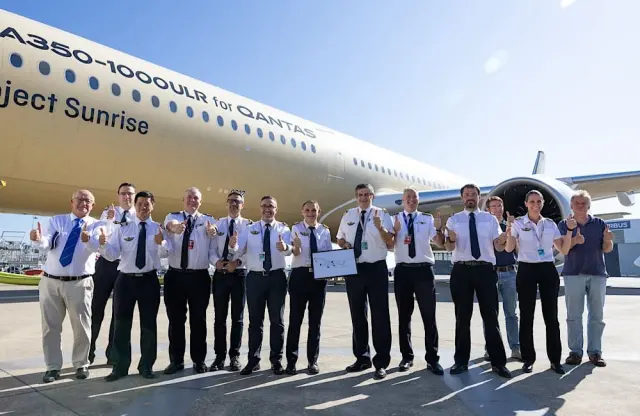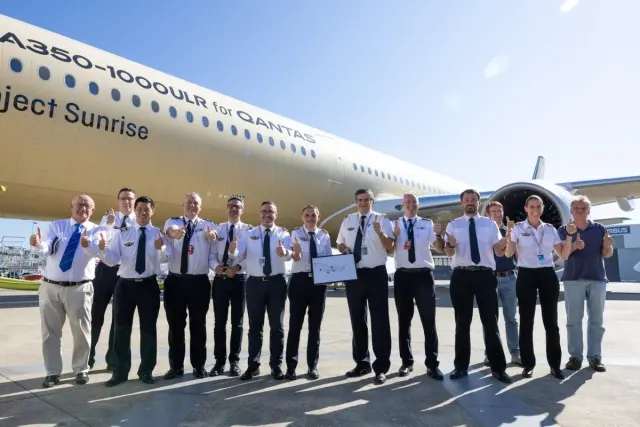
Can an airline really design away jet lag? Qantas has spent nearly a decade trying to find out, and the science behind its answer is shaping the cabins and service of its upcoming Sydney–London and Sydney–New York nonstop flights, known as Project Sunrise.
Since 2015, Qantas has worked with the University of Sydney's Charles Perkins Centre. The standout experiments came in 2019, when three research flights from New York and London to Sydney — around 20 hours in the air — carried 23 volunteer passengers wearing devices that tracked their sleep and activity. Researchers from Monash University monitored the pilots too, even tracking brain waves and melatonin levels. Everything on board was tweaked against the usual long-haul routine: lighting sequences, when meals were served, and scheduled movement breaks, including iPad-based tests to measure reaction times.
The 2023 findings were encouraging. Passengers on the optimised flights reported milder jet lag, slept better on board, and performed better cognitively in the two days after landing. It's early-stage science — much of it relies on passengers' own logs kept before, during and two weeks after each flight — but the airline and its researchers see enough promise to build the findings into Project Sunrise's 12 new Airbus A350-1000ULRs.
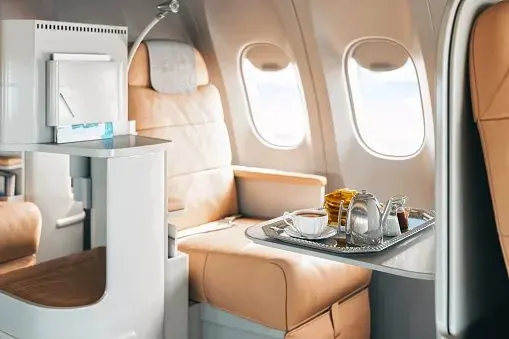
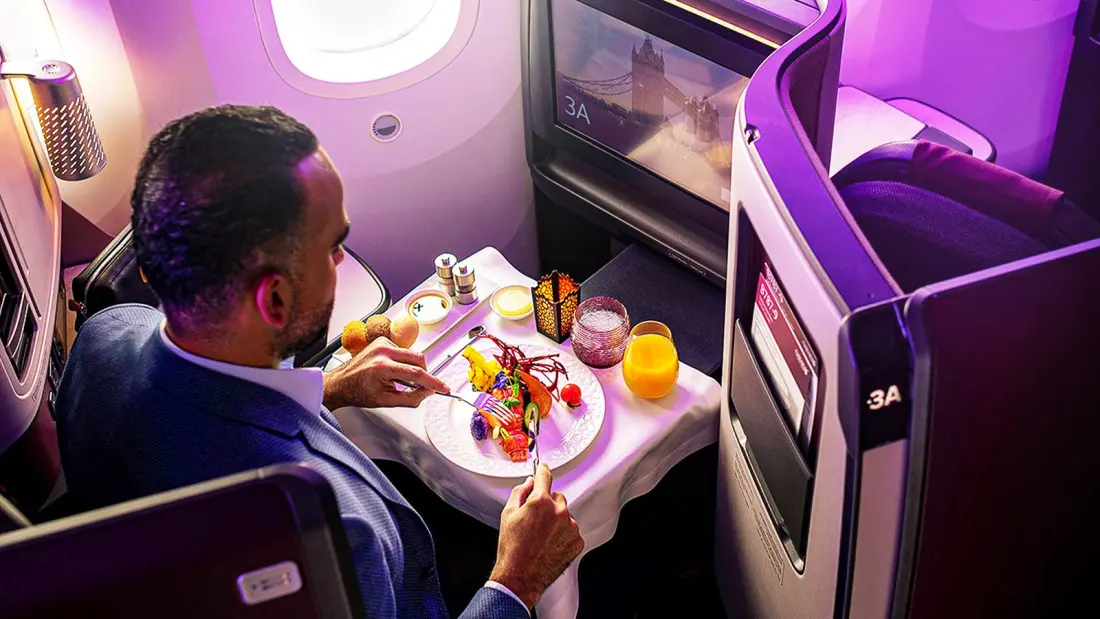
So what actually changes? Meals follow the destination's clock rather than the standard meal-after-takeoff, sleep, second-meal-before-landing formula. Menu design plays a role too: fish or chicken with fast-acting carbs when alertness is needed, and lighter, low-fat, protein-rich comfort options like soup and milk-based desserts before sleep, aimed at boosting tryptophan and easing passengers into rest.
Lighting gets equal attention. Qantas, Airbus, the Charles Perkins Centre and Caon Design spent more than 150 hours testing hundreds of patterns in an A350 mock-up in Hamburg, distilling them into 12 scenes. 'Awake' uses blue-enriched light for alertness, 'Sunset' fades toward a night sky, and 'Sunrise' rolls an Australian dawn from the front of the cabin to the back, plus 'Welcome' and 'Farewell' scenes for boarding and disembarking.
There's a physical component as well. The A350s will carry a Wellbeing Zone between premium and economy cabins — open to everyone — with self-serve refreshments, a hydration station, and surfaces and handles built for stretching, guided by exercises developed with the Charles Perkins Centre and shown on large monitors. Crew and pilots get structured rosters too, built around data showing human alertness drops after about 10 hours on duty.
For travellers, the payoff could be real: Qantas estimates the nonstop routings save roughly four hours versus connecting itineraries, and with about 100 fewer seats than comparable aircraft, there's more space in every cabin. If you're booked on a Project Sunrise route once services launch, following the recommended eating, sleep and movement schedule is worth taking seriously — the whole cabin will be timed to ease you onto local time before you land. Even on ordinary long-haul flights, the principles travel well: match your meals to your destination, sleep when it's night there, and get up and move regularly.