One of the world's great epics has quietly survived in Istanbul for centuries — and researchers have only now given it a proper close look. A new study by Hamdi Şahin, head of Ancient History at Istanbul University, examines a 260-folio manuscript of Homer's Iliad held in the personal library of Sultan Mehmed II — Mehmed the Conqueror — at Topkapı Palace. It turns out to be a complete copy of the epic, which is extraordinarily rare for a manuscript this old.
The manuscript is dated to the 12th or 13th century and once belonged to Patriarch Gennadius II, according to a Greek ownership inscription inside the front cover. It measures 26.2 by 19.8 centimetres per folio, bound in leather-covered wooden boards, and later received French and Ottoman Turkish labels plus the seal of the Topkapı Palace Registration Commission — a paper trail through Byzantine, Ottoman and modern eras.
The research produced some striking findings. Page layout, writing quality and the depth of commentary suggest the copy may have been produced in a manuscript workshop in Istanbul itself. The design is systematic and handsome: the main text runs in large, clear capital letters at the centre of each page, while dense commentaries fill the wide margins, acting almost like a built-in dictionary and mythology explainer. Red ink marks headings, initials and reference marks; decorative bands and interlacing knot patterns separate sections. The fifth folio carries a short life of Homer — family tree, parents, birthplace — before the epic itself begins on folio seven.
Perhaps most intriguing for scholars, Şahin's team thinks this 'Istanbul manuscript' may be an intermediary copy connected to the famous 10th- and 11th-century Venetus A and Townleyanus manuscripts, which left Istanbul with Patriarch Bessarion in the 15th century and now sit in Venice's Marciana Library. If so, the Topkapı copy could bridge a gap between early manuscripts and later 14th- and 15th-century versions, possibly serving as their model. The work had never been studied before; the team plans to reconstruct damaged sections by comparison with other copies.
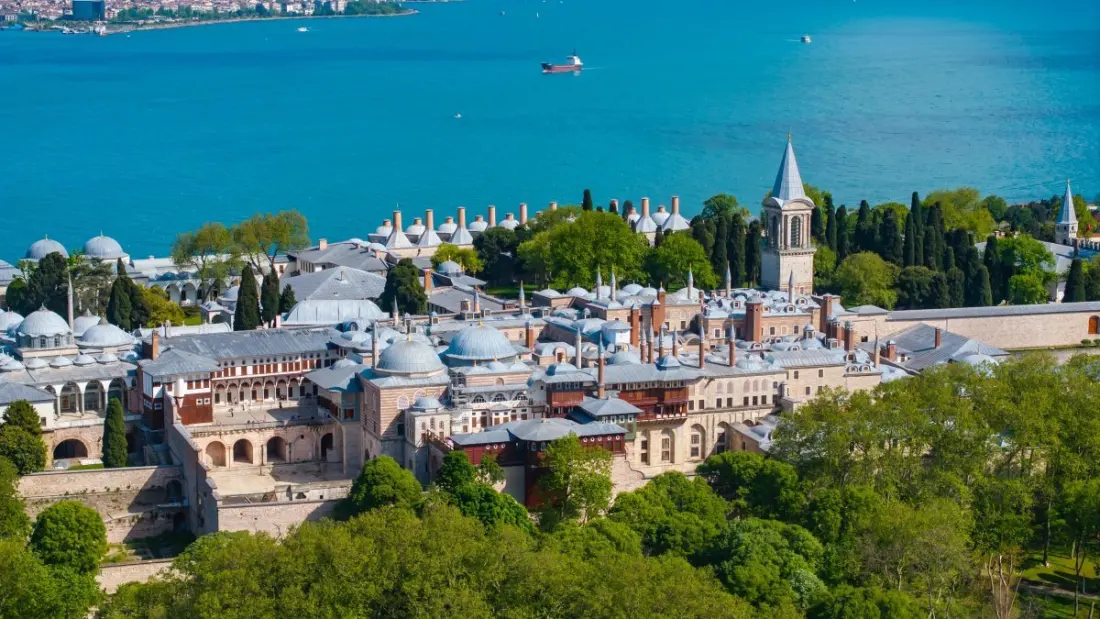
For travellers, the story is a reminder that Istanbul's treasures aren't limited to its mosques and bazaars. Topkapı Palace, the Ottoman court's home for four centuries, houses one of the world's great manuscript collections, including the revered Holy Mantle pavilion and library chambers where works like this have been preserved. The city's layered history — Byzantine scholarship flowing directly into Ottoman collecting — is exactly what this manuscript embodies: a Greek epic owned by a patriarch, then by the sultan who conquered Byzantium, now catalogued by Turkish researchers. Culture-focused visitors can follow the thread further at Istanbul University's rare book collections and the city's other manuscript libraries.
Şahin calls the work unique worldwide. Research began in February 2026, sparked by what looked like a single misspelled word in Homer's text — a small anomaly that led to the identification of a complete, previously undocumented copy of the Iliad, still in the city where it may have been written.