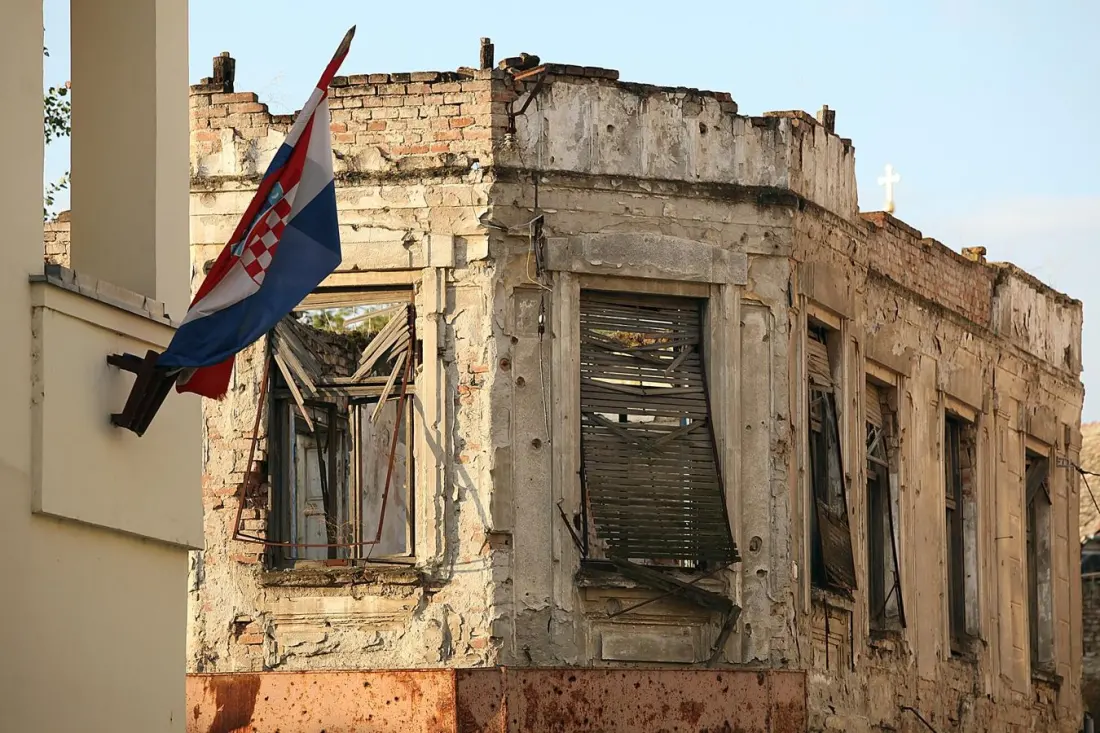
For many Americans with Croatian roots, the route to an EU passport starts with one document: a birth certificate (rodni list) from a great-grandparent's home village. Too often, the request hits a wall — municipal offices reply that the local archives were burned, shelled or lost during the Homeland War of the 1990s. This hits families whose roots lie in Slavonia, Banovina, Kordun or the Dalmatian hinterland especially hard, and many applicants assume it's game over. It isn't.
Under Croatian administrative law, the Interior Ministry needs an unbroken chain of evidence linking you to an Croatian ancestor. When the primary civil registry no longer exists, you can legally rebuild the proof using secondary records — but you'll need an official certificate confirming the registry's destruction, plus state-recognised alternative documentation of your ancestor's birth and residency. A family story or a letter won't cut it.
Here's the lucky break: 19th and early 20th-century Croatia, shuffled between empires and regimes, recorded vital events multiple times. Catholic parishes had to send duplicate baptismal, marriage and death registers to diocesan archives in cities like Zagreb, Split and historically Đakovo — copies that often survived even when the village town hall didn't. Regional state archives hold civil records over a century old that were moved out of municipal offices long before Yugoslavia's collapse. Property registries — court records of land, plots and inheritances — often spell out full family lineages, birth years and relationships. And Austro-Hungarian-era census, tax, school and military conscription lists can corroborate an ancestor's presence in a specific village. Don't be discouraged if your ancestor isn't listed as "Croatian" in those documents; given the era, they almost certainly wouldn't be.
The catch is practical, not legal. Reconstructing a lineage from thousands of miles away is brutal for a DIY applicant. Local clerks aren't obliged to play historical detective for overseas requests, and tracking down duplicate registers in a diocesan vault or pulling 19th-century inheritance deeds demands physical presence, archival know-how and fluent administrative Croatian. Services like Croatian By Descent — staffed by diaspora Croats — work with local archival experts and lawyer partners to locate surviving duplicates, coordinate with authorities and package the file to the Interior Ministry's standards.
Why should a holiday site care? Because a Croatian passport isn't just paperwork — it's an EU passport that turns an occasional heritage trip into a lifetime option: summers on the Dalmatian coast, long stays in Zagreb, property ownership rights across the EU. If your family's records were a war casualty, the archive trail still exists; it just takes more digging.