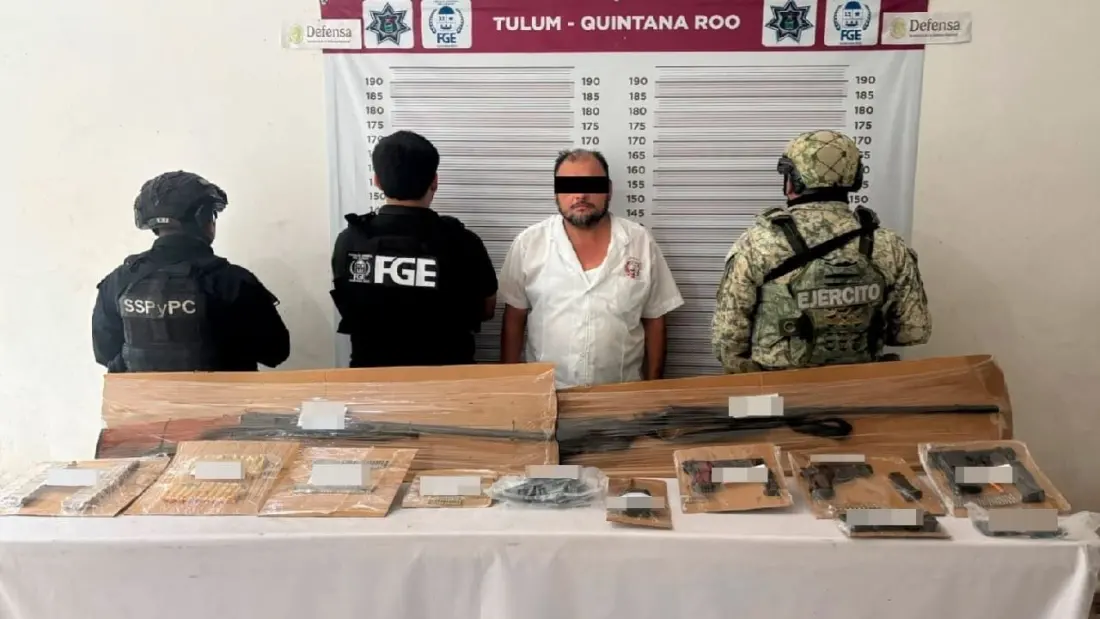
A routine-sounding police operation on the outskirts of Tulum ended with a taxi driver in custody and an arsenal in evidence. Officers from Mexico's Investigative Police, working alongside the National Defense Secretariat and Tulum's Municipal Police, pulled over a white taxi on a dirt road leading toward the Jacinto Pat ejido, about 12 kilometres along the Tulum-Cobá highway. The driver, identified by authorities only as Ricardo "N", was reportedly caught handling suspected narcotics.
What followed was a search that went well beyond the usual traffic stop. On his person, police say they found doses of dried marijuana, a mobile phone, a short firearm with a magazine and usable rounds. The vehicle itself held more: additional marijuana, two more short firearms, three magazines, live cartridges and two long guns. In total, five firearms were seized. The State Attorney General's office (FGE) confirmed the driver now faces charges of illegal drug and weapons possession.
For most visitors, this story is a glimpse behind the postcard rather than a warning to change plans. Tulum remains one of Mexico's most popular beach destinations, and the arrest happened on a back road toward the Jacinto Pat ejido — an area well away from the hotel zone, the beach strip and the archaeological site that draw the crowds. Tourists are unlikely to cross paths with this kind of police activity unless they wander off the main tourist corridors.
That said, it's a useful reminder of a few practical realities. Official taxis and registered transport in the Riviera Maya are generally a safe way to get around, and incidents involving drivers are rare enough to make local news precisely because they're unusual. Stick to sitios (rank taxis) or apps like Uber, which operates in the region, agree on fares before setting off where meters aren't used, and keep your wits about you if a driver suggests a detour. The Tulum-Cobá road itself is worth knowing: it's the route to the famous Cobá ruins, so plenty of travellers use it legitimately — but parts are unpaved and lightly patrolled.
The broader picture is that Quintana Roo, the state that includes Tulum, Playa del Carmen and Cancún, has an ongoing security presence, with joint operations between military and police forces being fairly routine. Occasional arrests like this are a sign that enforcement is active, not that violence is spilling into tourist areas. Millions of visitors pass through the Riviera Maya each year without incident.
If you're planning a Tulum trip, the takeaway is simple: use the same common sense you'd apply in any unfamiliar city. Stay on well-travelled routes, use licensed transport, avoid buying or carrying anything illegal (drug laws in Mexico are strictly enforced, even for small quantities), and don't let one headline put you off the cenotes, ruins and beach clubs that make the area worth the flight.
This report originally appeared in Riviera Maya News.