
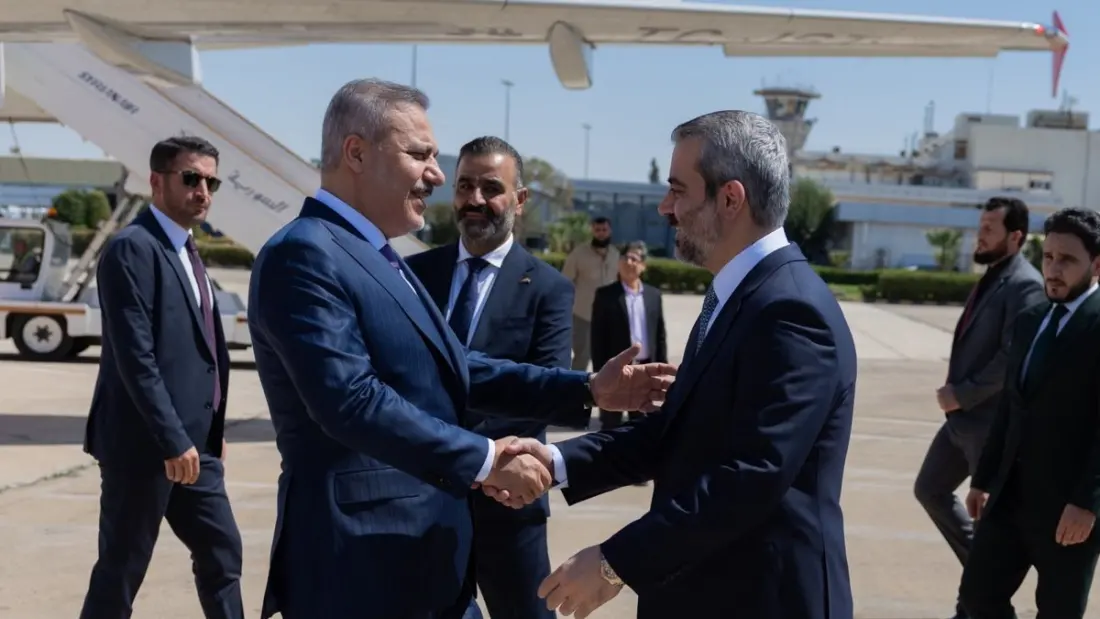
Turkish Foreign Minister Hakan Fidan flew to Damascus on Sunday for talks with Syria's foreign minister, Asaad al-Shaibani — the latest sign of how quickly Ankara and Damascus are rebuilding a relationship that seemed unthinkable only a few years ago. At a joint press conference, Fidan confirmed that the two sides discussed logistics for a planned first visit to post-Baathist Syria by President Recep Tayyip Erdoğan, a trip that would carry heavy symbolic weight given Türkiye's long and complicated involvement in Syria's civil war.
Two other threads ran through the meeting. First, Fidan publicly welcomed the dissolution of the SDF — the Kurdish-led force also known as the YPG — and its integration into Syria's security forces, calling it a precious and important step. He framed the move as one that should bring Syria's Kurdish citizens greater prosperity and freedom, a notable shift in tone from a government that spent a decade fighting the YPG as a security threat.
Second, Fidan aimed sharp words at Israel, describing it as the biggest obstacle to Syrian stability and an actor deliberately working to destabilise the country. He pointed to an attack on the Abu Zuhur airbase as an example, alleging that Israel systematically targets Syria's military capacity and indirectly supports groups like Daesh (ISIS). It is a strong accusation, and one that underscores how contested Syria's security environment remains even after the fall of the Assad-era Baathist regime.
For anyone tracking the region, the takeaway is that Syria's political map is being redrawn in real time: Ankara is positioning itself as a key partner of the new Damascus government, Kurdish forces are being folded into state structures, and Israeli strikes continue to punctuate the transition.
Why it matters for travellers: Syria remains under blanket 'do not travel' advisories from the UK, US and most Western governments. These diplomatic shifts do not change that calculus. Border crossings with Türkiye and the broader security picture could shift quickly in either direction, so even overland travellers in the region — for example in southeastern Türkiye or northern Iraq — should monitor advisories closely rather than treat normalisation as a green light.