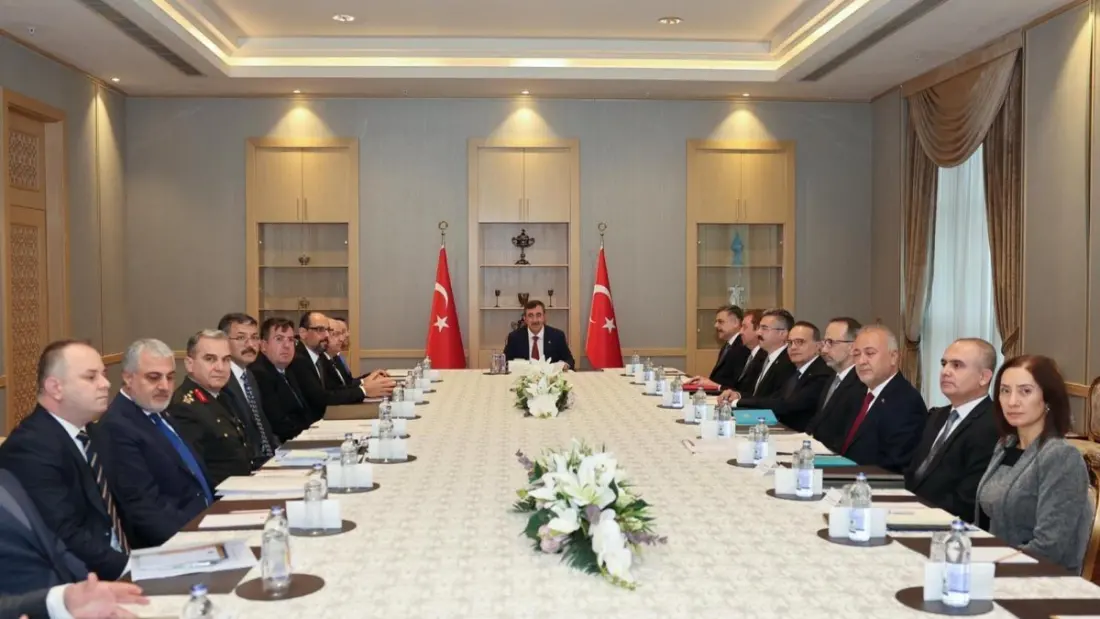
Vice President Cevdet Yılmaz chaired the second meeting of the National Solidarity and Social Integration Board this week, the body overseeing the 'Terror-Free Türkiye' initiative, and the message coming out of it was pace: officials want the process of dismantling the PKK moved forward faster and in tighter coordination.
The Board, which brings together heavyweights including the justice, interior and national defence ministers plus the head of the National Intelligence Organization (MIT), settled the structure and authority of new subcommittees tasked with keeping the process 'effective, swift and coordinated'. Yılmaz laid out a two-stage path: first, verify on the ground that disarmament and the dissolution of the organisation's structures have actually happened, then have that confirmed by a National Security Council decision. Only after that does the legal phase kick in, with a parliamentary board set up to monitor progress and receive regular updates.
The back story matters here. The initiative traces to a 2024 call by MHP leader Devlet Bahçeli suggesting the PKK's imprisoned leader Abdullah Öcalan order his fighters to lay down arms — at parliament, no less. Öcalan agreed, the PKK committed to disarmament, and the process began symbolically when several members burned their weapons at a ceremony in northern Iraq, where the group's senior leadership is based. In August, Turkey's parliament passed a law deferring prosecution and sentencing for members not involved in violent acts.
The most eye-catching number of the week came from Yılmaz himself, speaking in Istanbul: the Presidency of Strategy and Budget calculated that terrorism has cost Türkiye at least $2.3 trillion over more than 40 years — money, he argued, that could have gone into education, healthcare, production and investment. Beyond public finances, he noted, insecurity pushed both people and capital away from affected regions, suppressing their potential in everything from agriculture to tourism.
That last point is the one travellers should register. Türkiye's southeast — cities like Mardin, Şanlıurfa and Gaziantep — holds some of the country's most remarkable heritage: ancient stone towns, Göbeklitepe's 11,000-year-old temples, one of the world's great food cities. A durable end to the conflict is exactly the kind of development that has historically opened regions like these up to visitors, investment and better infrastructure. Nothing changes overnight, and foreign office advice on southeastern provinces should still be checked before any trip, but the direction of travel is unmistakably toward normalisation.
For anyone with Türkiye on their list — whether that's Istanbul, the coast or the less-visited east — this is the political backdrop worth understanding. A country that keeps its peace dividend is likely to be a cheaper, easier and far more interesting one to explore in the years ahead.
Story via Daily Sabah Travel.