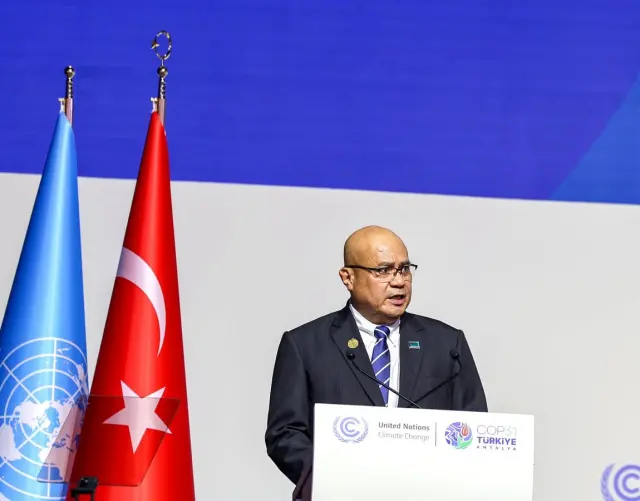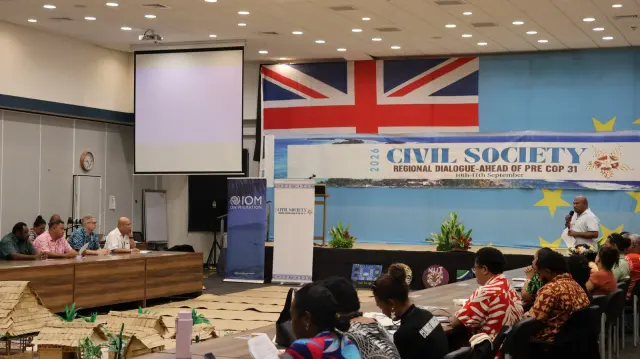
At the COP31 climate talks in Antalya, Türkiye, Tuvalu's Prime Minister Feleti Teo delivered one of the most blunt assessments of how climate change is reshaping Pacific island life - and made two concrete funding asks that matter to anyone who cares about the region's future.
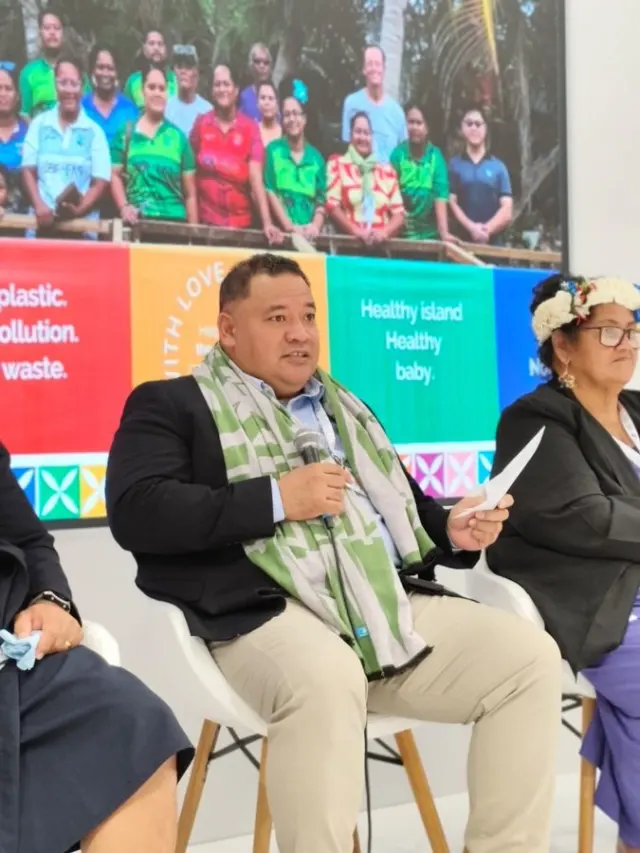
His central argument: women across the Pacific are already doing the heavy lifting of climate adaptation, yet it barely registers in official plans. In Tuvalu, women track declining shellfish stocks and coral bleaching, adjust fishing to let reefs recover, manage household rainwater and replant pandanus inland as erosion creeps closer. Teo, who spent eight years running the Western and Central Pacific Fisheries Commission before becoming prime minister in 2024, contrasted this with fisheries negotiations that can account for every tonne of commercial tuna but ignore what coastal families catch to eat. Almost none of this work appears in Tuvalu's national climate commitment, he said, and very little reaches a funding proposal.
The stakes are existential. Tuvalu's highest point sits less than five metres above sea level, and Teo declared that a 'just transition' on a planet that overshoots 1.5°C is a contradiction in terms. There's also a fiscal twist travellers rarely hear about: warming oceans are expected to push tuna eastwards, away from several Pacific nations, threatening the licence fees that fund schools and hospitals.
Teo's second big push was practical money: US$160 million is still needed to complete the Weather Ready Pacific plan for region-wide forecasting and early warning systems. His point was durability, not just hardware - equipment needs maintaining, communication networks need keeping connected, and local professionals need training to run weather services through disasters. SPREP Director-General Sefanaia Nawadra echoed the goal of leaving no island community behind.
Elsewhere in the Pacific story at COP31, Papua New Guinea is battling a severe El Niño - dried-up rivers, frost and wildfires wiping out subsistence crops - while rising seas continue to displace Carteret Islanders. Pacific representatives also showcased 70 renewable energy projects worth US$2.3 billion and demanded a fossil fuel phase-out.
Why should a traveller care? Because the Pacific you visit - the reefs, the villages, the fisheries that stock the seafood and fund the schools - is being managed largely by communities whose work goes unfunded and uncounted. Teu's ask to negotiators was simple: 'Give me something to tell them.' If you're planning time in Tuvalu, Fiji, Samoa or Vanuatu, choosing locally run operators and understanding what king tides and El Niño actually mean on the ground is part of travelling well in this region.