Tuvalu goes through more than a million disposable nappies every year, and on a speck of land with nowhere to put them, that pile is a genuine crisis. So the Pacific nation is trying something no one else has: swapping plastic nappies for fully compostable ones, composting them locally, and building a funding model that pays for plastic that never gets made.
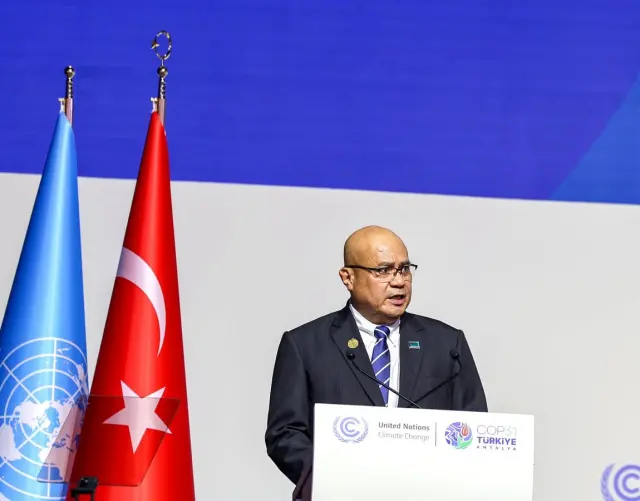
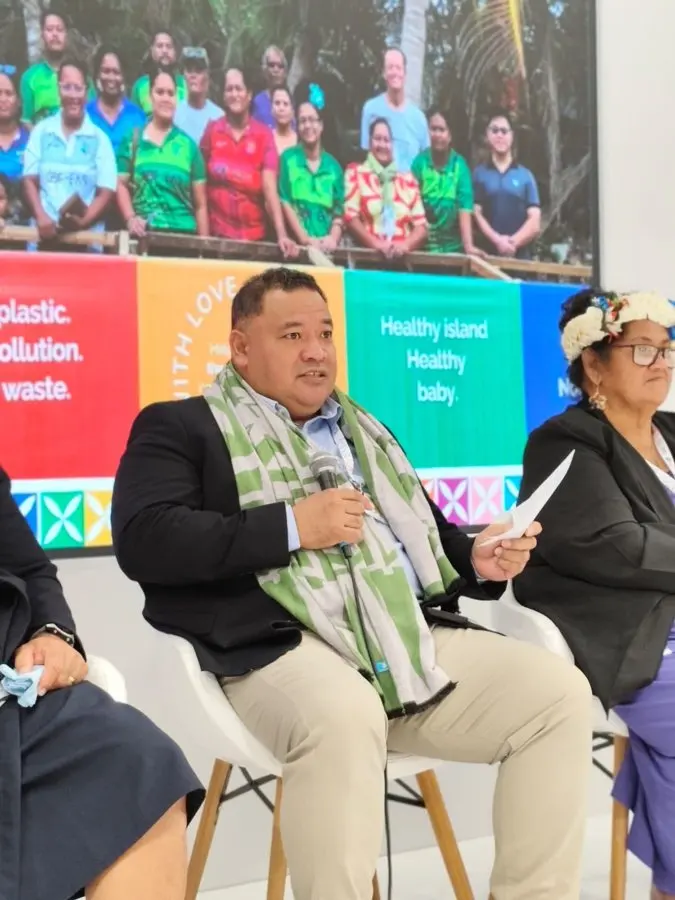
The programme, run with The Greater Good Diaper Project, was presented at the Moana Blue Pacific Pavilion at COP31. The numbers behind it are stark. SPREP research from 2022 found nappies make up around 27 per cent of household waste across the Pacific — roughly 173,000 tonnes of plastic a year. Tuvalu's climate change minister, Dr Maina Talia, described the national dump site as a nightmare of plastic rubbish.
Here's how the Tuvalu scheme works. Around 600 babies are already enrolled. Local women — led by country manager Lina Losa Peleti, a mother of five and grandmother of 24 — deliver the compostable nappies and collect the used ones rather than letting them end up in landfill. Five composting boxes use green waste, a locally prepared inoculant and even seawater to break everything down, with internal temperatures hitting 69°C. In good conditions, decomposition takes four to five weeks, and the resulting compost feeds vegetable gardens — no small thing in a country where poor soil makes growing food hard.
The impact per 100 babies is measurable: roughly 700kg of plastic avoided weekly, 104kg of compost produced, and four part-time jobs created for women. During consultations covering more than 300 babies, 94 per cent of mothers, single parents and grandparents said they were willing to make the switch, and leaders from Tuvalu's outer islands want the programme too.
The clever bit is the money. Compostable nappies cost more to make, but The Greater Good sells them at the same price as brands like Huggies, with the gap covered by philanthropy for now. The next step is a first-of-its-kind financing model: Alternative Material Certificates developed by Singapore's PCX Solutions, which reward avoided plastic rather than cleaned-up plastic — "paid for every tonne of plastic that was never created," as co-founder Dr Jason Graham-Nye puts it. A US$50 million Circular Transition Bond is being developed with a global financial institution, backed by about US$1 million in donor commitments, half of which is already secured through letters of intent.
Why should travellers care? Tuvalu is one of the world's least-visited and most climate-threatened countries, and this is exactly the kind of locally led solution it wants to show the world. The initiative will feature at Tuvalu's international meeting on transitioning away from fossil fuels, co-hosted with Ireland in July 2027 — a rare chance for visitors to witness a small nation punching far above its weight. Samoa, Vanuatu and Fiji are lined up as the next stops, so the model may spread across the Pacific.
For anyone following climate innovation in island nations — or planning a trip to one — this is a story worth knowing. Original reporting: Islands Business.