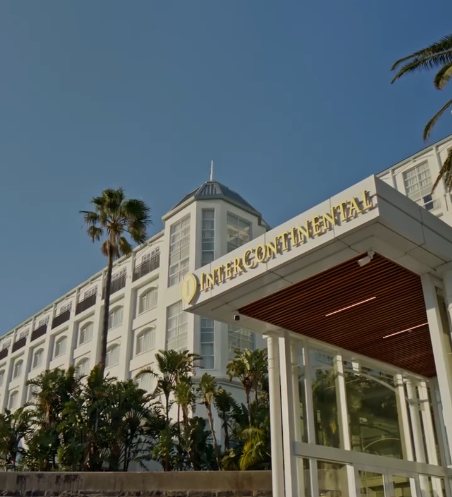
Cape Town's V&A Waterfront has quietly become one of Africa's most sustainable hospitality precincts. Two of its hotels — Cape Town EDITION and InterContinental Table Bay — have just earned 5-Star Green Star SA design ratings from the Green Building Council of South Africa, scoring 52 and 55 points respectively against a 35-point threshold for the top rating, labelled 'South African Excellence'. They're among the first four projects certified nationally under the GBCSA's new New Build & Major Refurbishment V2 Pilot tool.
What makes the story interesting is that the hotels didn't get there alone. Both lean on shared infrastructure the Waterfront has built for the whole precinct over more than a decade — investments individual buildings couldn't justify on their own, according to precinct CEO Graham Wood. Three systems stand out. A desalination plant on East Pier can cover more than 80% of the precinct's monthly potable water needs, easing pressure on Cape Town's strained municipal supply. A seawater district-cooling system uses heat exchangers to help air-conditioning at Victoria Wharf and both hotels run more efficiently than standalone chillers. And through wheeling agreements, off-site renewable electricity supplies up to 70% of the precinct's annual energy.
The two properties took different routes to the same rating. InterContinental Table Bay reopened after an 18-month refurbishment that kept the original core, brickwork and facade — avoiding the embodied carbon of demolition. It aimed for net-zero construction waste and, while falling short of that target, donated carpets to community partners including the Astra School for Learners with Special Educational Needs and prepared thousands of square metres of paving for reuse elsewhere in the precinct. Mature trees and plants were relocated rather than removed.
Cape Town EDITION, the hotel and residences on Quay 7, was designed from scratch to plug into the shared infrastructure. Modelling projects a 75% improvement in water performance against the Green Star baseline and a 43% energy improvement before renewables are counted — though real figures will only be confirmed once the building is running. Engineers compared four floor systems before choosing post-tensioned concrete slabs for their low embodied carbon, and exposed brick and concrete reduce the need for finishes over time. A retained heritage wall and harbour cranes keep the working-harbour character intact.
Both ratings are design-stage certifications; the hotels must now achieve As Built certification within three years to prove the measures actually work. They bring the Waterfront's total to 30 Green Star-rated buildings, under a commitment that all major new developments hit at least 4-Star.
Why should travellers care? For anyone choosing where to stay in Cape Town, these ratings are a credible third-party signal that a hotel genuinely cuts water and energy use — meaningful in a city that has faced severe drought and power cuts. Staying at either property means your visit is running on desalinated water, seawater cooling and mostly renewable electricity, without any sacrifice to comfort. And the precinct-wide model suggests more V&A Waterfront hotels will follow suit.