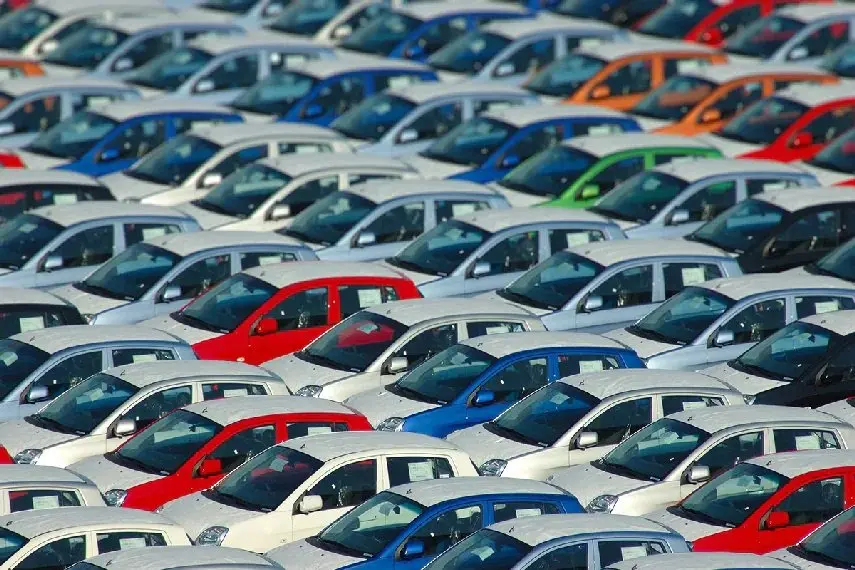
Kyrgyzstan now counts 1.4 million privately owned passenger cars — up 13 percent in a single year — according to figures the National Statistical Committee released on October 25 for the country's Day of Road Transport and Road Infrastructure Workers.
The numbers paint a picture of a country that moves almost entirely by road. As of January 1, 2026, there were 191 cars per 1,000 residents, with ownership heavily concentrated around the capital: Chui region leads with 288 cars per 1,000 people, followed by Bishkek at 260.
For anyone planning a trip, the freight and passenger figures explain a lot about how travel actually works on the ground. Road haulage moved more than 62 million tonnes of cargo in 2025 — over 80 percent of all freight in the country — and individual entrepreneurs handled the bulk of it. Buses and taxis carried roughly 660 million passengers, and a striking 58 percent of those rides happened in vehicles owned by private individuals rather than formal companies. Specialized operators accounted for the remaining 279 million trips, and their fleet of buses and electric buses grew 1.6-fold over the year — a sign that scheduled public transport is expanding, particularly in Bishkek and Chui.
Practically, this confirms what visitors quickly discover: in Kyrgyzstan, marshrutka minibuses, shared taxis and informal lifts are not a backup option, they are the backbone of getting around. Whether you're heading from Bishkek to Song-Kul, shuttling between Chui towns, or moving freight-style luggage toward Talas, you'll almost certainly be travelling in a privately run vehicle. It also hints at improving infrastructure and more frequent services around the capital, where both passenger and freight volumes are highest.
For travellers, the takeaway is simple: budget cheaply for transport, expect flexibility over punctuality, and treat shared rides as part of the experience rather than a compromise. Drivers are everywhere, routes are numerous, and the system — however informal — moves the whole country.