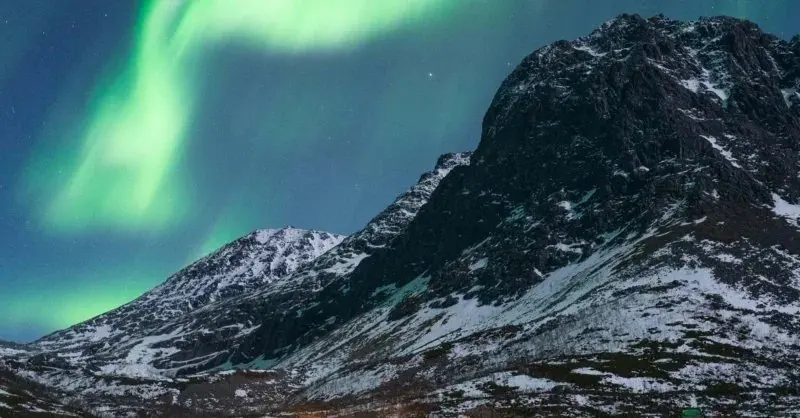
Chasing the aurora is a funny kind of holiday: you can spend serious money on comfort, but nobody can book the sky. What the luxury operators can do is stack the odds. That means the right latitude, the right lodge, enough nights, and guides who watch the forecasts so you don't have to.
The consensus among specialists at Scott Dunn, Abercrombie & Kent, Black Tomato and Carrier: Finnish Lapland tops the list, thanks to reliably clear skies, a long season and infrastructure that keeps you warm while you wait. It also bundles well with husky sledding, reindeer encounters and Sámi experiences. Other strong picks include remote northern Iceland, Sweden's Abisko, Canada's Yukon and Northwest Territories, and the quieter corners of Svalbard and Greenland.
A few properties come up again and again. Deplar Farm on Iceland's Troll Peninsula is praised for being as much a part of the trip as the lights themselves — think skiing, snowmobiling and heli-skiing by day. In Finnish Lapland, Octola Private Wilderness sits on the Arctic Circle with almost no light pollution, a private glass igloo suite and an aurora wake-up call. Norway's Lyngen Alps offer Black Tomato's Private Aurora Lodge, complete with a floating sauna. And for something most travellers miss: Hotel Arctic in Ilulissat, Greenland, has seven aurora cabins looking over Disko Bay and the Icefjord.
Timing matters, but not in the way people hope. The season runs roughly late September to March (with edges in late August and early April), and the weeks around the September and March equinoxes can bring favourable geomagnetic activity. New moon nights help too. The single biggest misconception, guides say, is that clear skies guarantee a sighting — they don't. In Iceland, vedur.is lets you track both cloud cover and aurora activity yourself.
The most useful tip from everyone interviewed: stay at least four or five nights. Quick one- or two-night dashes rarely work, and a longer stay gives the sky time to cooperate. For peak lodges over Christmas and New Year, book six to 12 months ahead. It's also worth picking somewhere with enough to do in daylight — a week of waiting is a long week with nothing else on the schedule.
That daylight time can be excellent. Ice floating in Finland or northern Norway (in thermal suits, drifting under the sky) is a favourite, as is private dining in glass-domed igloo tents in Iceland, with a photographer or aurora specialist on hand. Alaska pairs well too: a Regent Seven Seas or Seabourn cruise plus two or three nights in Fairbanks inland.
Already ticked off the Arctic? Black Tomato suggests flipping the plan for the Southern Lights in New Zealand — less predictable, so build a 10-day South Island trip around Mount Cook, Lake Pukaki, Dunedin and the Otago Peninsula, ideally with an astronomy guide and Māori storytelling woven in.
The real takeaway: treat the aurora as the bonus, not the whole trip. Pick a place you'd love even if the lights don't show, stay long enough, and let the sky decide.