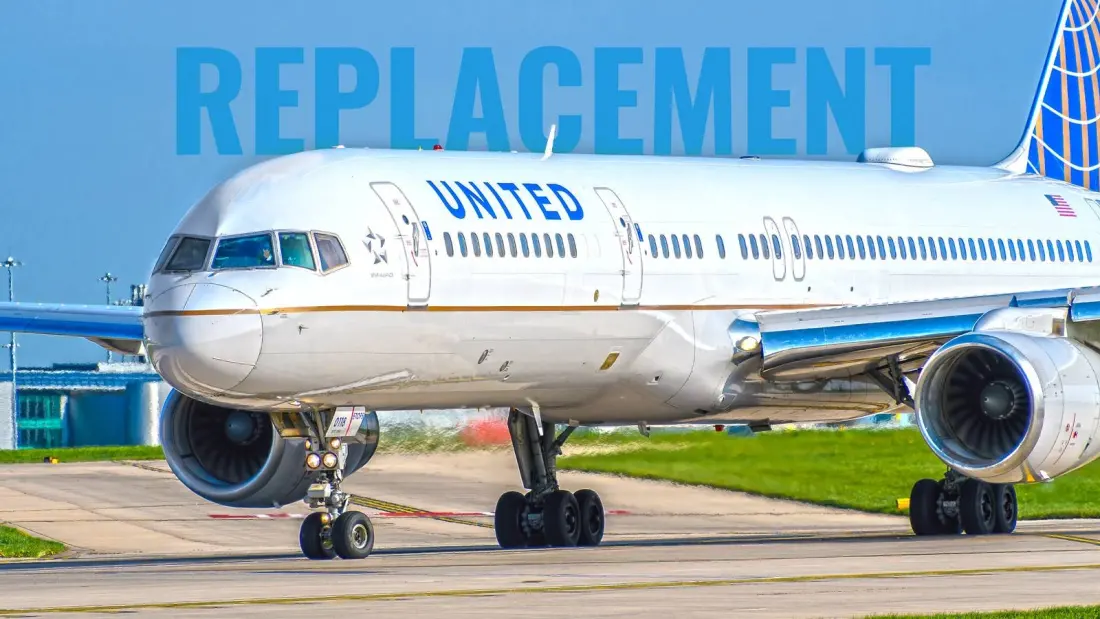
For more than 30 years, United's Boeing 757s have been quietly doing something no other narrowbody could: crossing the Atlantic. From Newark to Edinburgh and Washington to Lisbon, the 'flying pencil' served a sweet spot of East Coast-to-Europe routes too thin for widebodies. With many of those jets now pushing three decades old, United has finally settled on a successor — and it isn't a Boeing. The Airbus A321XLR, of which United ordered 50 back in 2019, will take over virtually all of the 757's routes, according to the airline's network planning chief Patrick Quayle.
The logic is straightforward. The XLR stretches the proven A321neo with an extra 12,900-litre fuel tank in the rear fuselage, giving it a range of up to 4,700 nautical miles — comfortably New York to Berlin or Boston to Rome, with flights of up to 11 hours. Airbus says it burns about 30% less fuel per seat than the aircraft it replaces and has a 50% smaller noise footprint. That efficiency lets United profitably serve smaller European cities — Porto, Shannon, Faro, with Reykjavik and Tenerife also floated — and keep routes running in low season by swapping a big jet for a right-sized one.
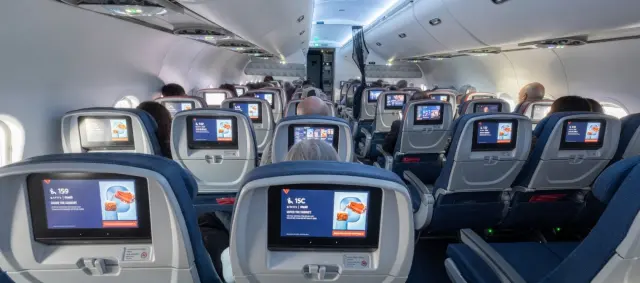
For passengers, the cabin is where things get interesting. United is configuring its XLRs with around 150 seats, well below the 757's typical 170–180 and far under the Airbus maximum of 244. Up front: Polaris lie-flat suites in a 1-1 layout with direct aisle access and sliding doors — a first for a narrowbody in United's fleet. Premium Plus follows with wider seats and extra recline, while economy gets larger bins, ambient lighting and a quieter cabin. It's a deliberate trade of capacity for comfort and yield.
The timeline has slipped. Certification delays meant European approval only came in 2024, with FAA sign-off expected shortly after, pushing United's first delivery to early 2026. United had originally hoped to fly the type by 2024. In the interim, refurbished 757s will keep the routes going. Once deliveries ramp up, United plans to deploy the XLR aggressively on both Atlantic and South American networks.
Why should a traveller care? Because this is the 'long and thin' revolution in action: more direct flights to secondary European cities that would never justify a widebody, more frequent service, and a genuinely premium lie-flat option on smaller aircraft. If your transatlantic plans involve somewhere other than London, Paris or Frankfurt, the XLR is likely the plane that will get you there from 2026 onwards.