Hiring a car in France is getting pricier, and a growing number of visitors are discovering they barely need one. The state rail operator SNCF runs a network that covers most of the country, from high-speed TGV trains crackling along at 300km/h to slower regional TER services that thread through wine country and old cathedral towns. In rural areas you may still want wheels, but with a bit of planning, trains, station-linked buses, trams and taxis will carry you across most of France.
A few practical tricks make it work. Book ahead — tickets open roughly three to five months out, and early booking is both cheaper and safer on busy routes. SNCF's INOUI premium network serves 200-plus destinations with extra space and a restaurant car, while OUIGO is the budget option: fares from as low as €10 Paris–Bordeaux and €13 to Brussels, though you get second-class seats only, a slower ride and a capped luggage allowance. Download the SNCF Connect app before you go — it handles live platform info, mobile tickets and even auto-rebooking if you miss a connection. Paper tickets still need stamping ('composting') in the yellow machines on the platform. And keep in mind that Sunday and holiday timetables thin out dramatically in smaller towns. For discounts, the Carte Avantages card (€49) isn't just for residents — visitors can buy it and shave 30% off fares. Strikes get all the headlines, but in practice French trains run efficiently most of the time.
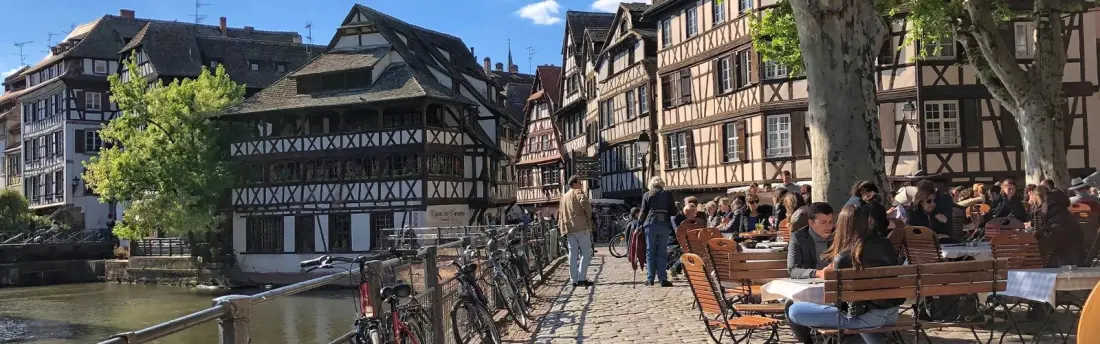
So where can you actually go car-free? Plenty of places. Avignon drops you minutes on foot from the Palais des Papes, with Arles, Orange and L'Isle-sur-la-Sorgue all under half an hour away by regional train. Nice is a natural hub: Monaco in 25 minutes, Cannes in 27, and a Sud Azur Explore Pass covers unlimited travel for 3, 7 or 14 days around the Alpes-Maritimes. Montpellier pairs a handsome old town with a tram system that runs all the way to the beach, plus easy hops to Sète — or a 2h55m detour to Barcelona. Aix-en-Provence's TGV station is awkwardly far out, so skip the pricey taxi and take the cheap city bus from town instead. Toulouse offers the surreal Halle des Machines and its giant Minotaur, with Albi and Carcassonne close by rail. Lille (barely an hour from Paris) puts you near Roubaix's La Piscine museum and within easy reach of Brussels and Bruges. Reims is only 41 minutes from Paris Gare de l'Est, gateway to champagne cellars and Épernay's Avenue de Champagne. And Strasbourg, with its Petite France canals and Gothic cathedral, has Colmar 30 minutes down the line and Germany a tram ride away.
The bigger point for travellers: rail travel in France is part of the holiday, not just the transfer between them. No parking headaches, no motorway tolls, and that second glass of wine at lunch is suddenly back on the menu.
Credit: The Good Life France