
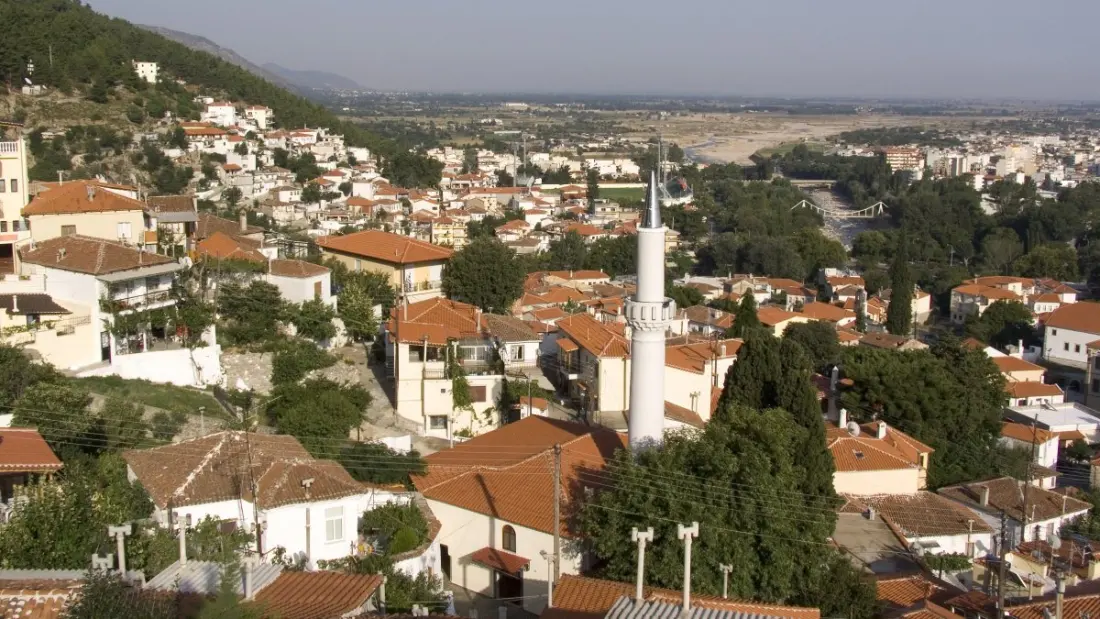
Insulting graffiti appeared on the outer wall of the Çınar Mosque in Xanthi — known in Turkish as Iskeçe — in Greece's northeastern region of Western Thrace, scrawled near the entrance on Sunday, September 13. Local Turkish community leaders quickly condemned the attack, and the story has drawn attention to a part of Greece most holidaymakers rarely hear about.
The elected Mufti's Office in nearby Komotini (Gümülcine) called the messages an affront to moral and humanitarian values, warning that rhetoric aimed at the region's Muslim Turkish minority has been rising and threatens the area's long tradition of coexistence. Two Xanthi lawmakers, Burhan Baran and Hüseyin Zeybek, pushed back against treating the incident as mere vandalism — Baran demanded authorities find and prosecute those responsible, while Zeybek described it as a deliberate provocation against social peace rather than ordinary graffiti.
Türkiye's Consul General in Komotini, Aykut Ünal, visited the mosque to show solidarity with community members and said he hoped the perpetrators would be identified and brought to justice.
For readers unfamiliar with the area: Western Thrace sits near Greece's border with Türkiye and is home to a Muslim Turkish minority of roughly 150,000 people, whose presence dates back centuries. Their rights are protected under the 1923 Treaty of Lausanne, but community representatives have long complained of socioeconomic discrimination, unequal access to quality education and shortcomings in political representation. The region is also among the poorest in Greece economically.
Why does this matter to travellers? Xanthi and the wider Thrace region are genuinely rewarding corners of Europe — an old town of Ottoman-era mansions, bazaar streets, tobacco-heritage architecture and a distinctive blend of Greek, Turkish and Pomak culture you won't find on the islands. The city regularly draws visitors for its carnival and its mix of mosques, churches and Byzantine churches standing side by side. Incidents like this are aimed at a local minority, not at tourists, and the area remains calm and welcoming. Still, if you're travelling in border regions, it helps to understand the community dynamics beneath the surface — and to be a respectful guest in neighbourhoods where religion and identity are lived daily. Budget travellers will also find Thrace one of the most affordable corners of Greece, well off the beaten island-hopping track.