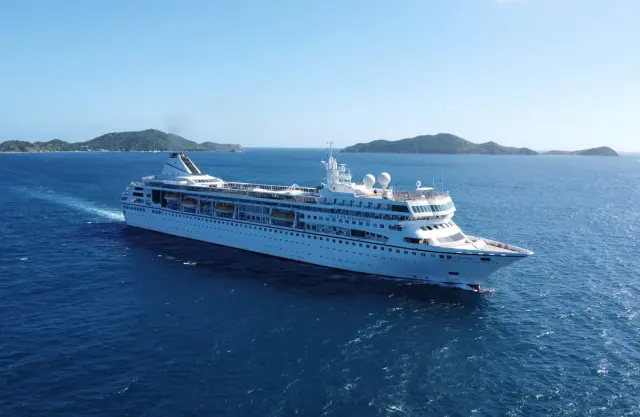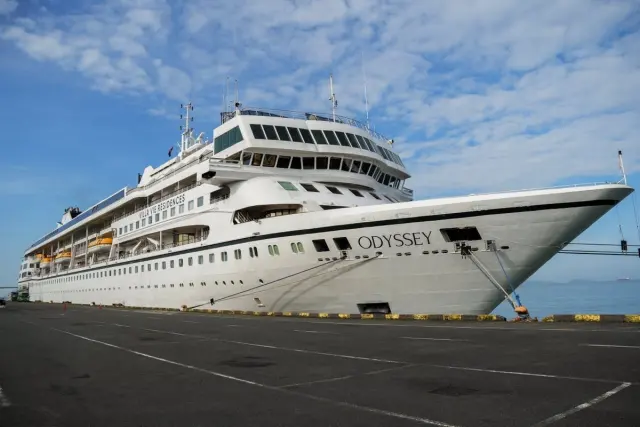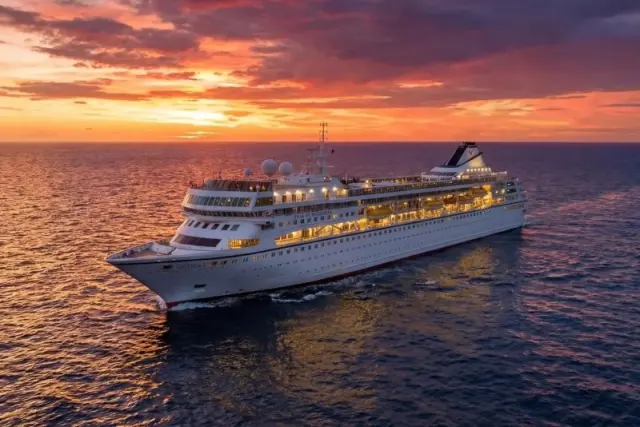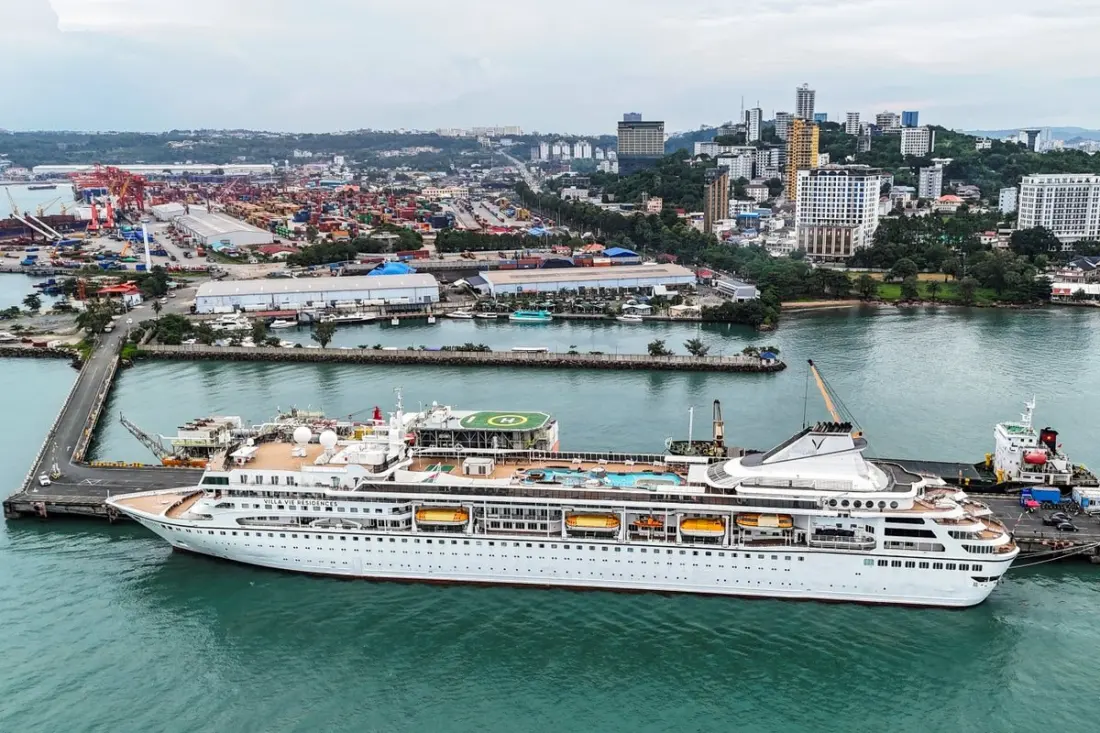
The Odyssey was supposed to be the first cruise ship people could genuinely live on. Villa Vie Residences bought the 542ft vessel — built in 1993 and previously sailing as Crown Dynasty and Fred Olsen's Braemar — refurbished it at Belfast's Harland and Wolff shipyard, and promised residents a three-and-a-half-year lap of the world hitting more than 425 ports across 147 countries. Cabins, sold as 'villas', could be bought outright with ownership guaranteed for up to 15 years, or taken on a pay-as-you-go basis.
It never went to plan. The departure from Belfast in 2024 slipped from mid-May through the whole summer thanks to faulty steelwork in a grey water tank, new rudder stocks and gearbox trouble. Residents, many of them Americans who had sold houses and cars to move aboard, were shuttled to hotels each night while repairs dragged on. Some were even asked to cover their own expenses during the delays, before being offered up to $200 a day in onboard credit as compensation. One passenger, Florida's Jenny Phenix, was voted off the ship entirely after her WhatsApp comments about the delays were deemed to be hurting community morale.
The ship finally left Belfast on 30 October 2024 with 125 residents aboard, anchored briefly in Belfast Lough over paperwork, then got on with the voyage. Life onboard settled — a pub, cocktail bar, pool, spa, gym and medical room made up the floating community, and residents like Colorado writer Randy Cassingham described it as home 'for life unless'.
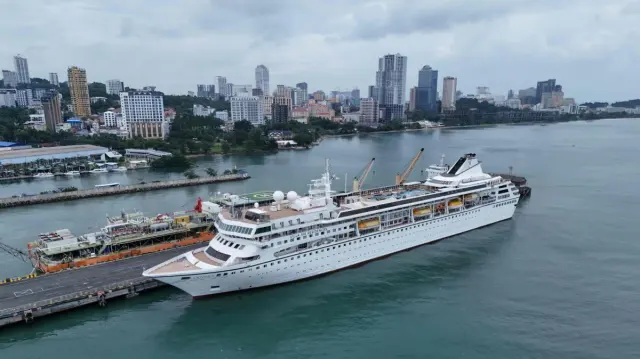
Then it unravelled. On the morning of 26 October 2026, guests docked at Sihanoukville, Cambodia, were told the operation was suspended and that everyone had to disembark by 2pm the same day. Rising fuel costs — which Villa Vie blamed on the Iran-US war — had drained the company's ability to keep sailing, despite slowing the itinerary and spending longer docked. Some residents said they'd been asked to chip in extra money for fuel, including a collection to pay for enough fuel to leave Cambodia. The company says it is helping residents coordinate disembarkation and find temporary accommodation.
For the people involved, this isn't a missed holiday — it's the collapse of a home. Many had sold their houses, built friendships over two years at sea and planned to spend the rest of their lives aboard. One resident, Lanette Canen, described packing up her life and saying goodbye to a place she loved.
The story is a cautionary tale for anyone tempted by residential or long-term cruise concepts. Living aboard sounds romantic, but you're also tied to a company's balance sheet. When fuel prices spike or a refit overruns, there's no exit clause for your floating home. Anyone considering a similar scheme should look hard at refund protections, what happens if the voyage is cut short, and how much of your money is tied up in the operator rather than the cabin.