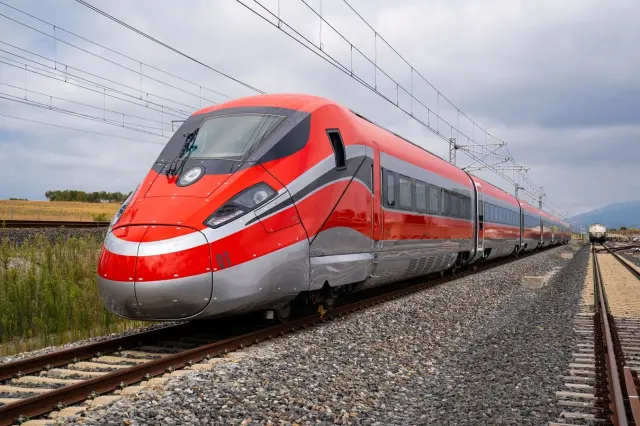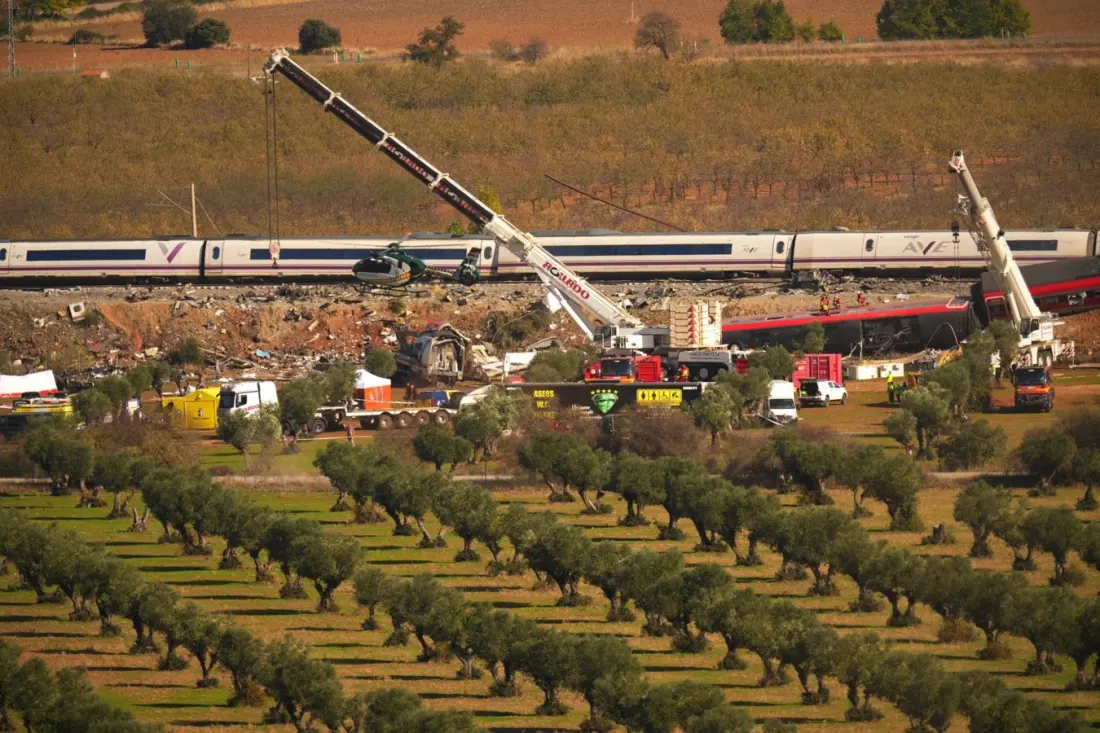
A collision between two trains on the Madrid-Seville high-speed line has killed 69 people, shaking confidence in a network long held up as a European success story. The crash happened on the morning of Wednesday 28 October in Toledo province, when a RENFE train travelling at roughly 160-200km/h hit a stationary IRYO train on the same stretch of track. It was Spain's second major rail disaster of 2025 — a January derailment on the same route claimed 46 lives.
The timeline emerging from investigators is troubling. At about 8.30am, the line's LZB safety system — which tracks train positions and can brake automatically to prevent collisions — stopped working. Controllers in Madrid took manual charge of a 63km section, with six trains on it. Six minutes later, a controller authorised the RENFE train to resume normal speed. The IRYO train's driver, unable to release his own automatic stop, radioed for help. At 8.53am the two trains met.
Transport Minister Óscar Puente has called the decision to restart one train while a stop signal remained active 'inexplicable' and 'erroneous', putting the focus on an individual controller. Black boxes have been recovered and handed to the Civil Guard, and both a judge and a government commission are investigating. Prime Minister Pedro Sánchez has promised answers, and King Felipe VI and Queen Letizia visited injured passengers in hospital in Toledo.
Unions say blaming one person misses the point. The controllers' union SCF points to chronic understaffing and heavy workloads, while the engineers' union SEMAF argues the LZB system — in use for about three decades and being phased out — should have been replaced long ago, noting it has failed repeatedly before. Rail workers staged a pre-planned strike the day after the crash, demanding safety commitments made after the January disaster be honoured.
There's also a structural question. Spain opened high-speed rail to competition in 2021, ending RENFE's monopoly; both of this year's crashes involved a RENFE train and a privately run IRYO train. Daily services between Madrid and Barcelona jumped from 56 in 2019 to 89 in 2024, and unions want to know whether maintenance and investment have kept pace. No one has established privatisation as a cause, but the debate is now firmly part of the conversation.
For travellers, the context matters: Spain runs the second-largest high-speed network in the world after China's, and before this year it had gone more than three decades without a fatal high-speed crash. If you have rail trips booked in Spain, services on the Madrid-Seville corridor may face disruption and extra safety checks while the investigation continues. Watch for official RENFE and Adif updates, allow buffer time for connections, and consider alternative corridors if you're travelling in the coming weeks. Whether the fault lies with one decision, ageing kit, understaffing or a fast-growing network — or all of the above — the answer will shape how safely you ride Spain's trains for years to come.