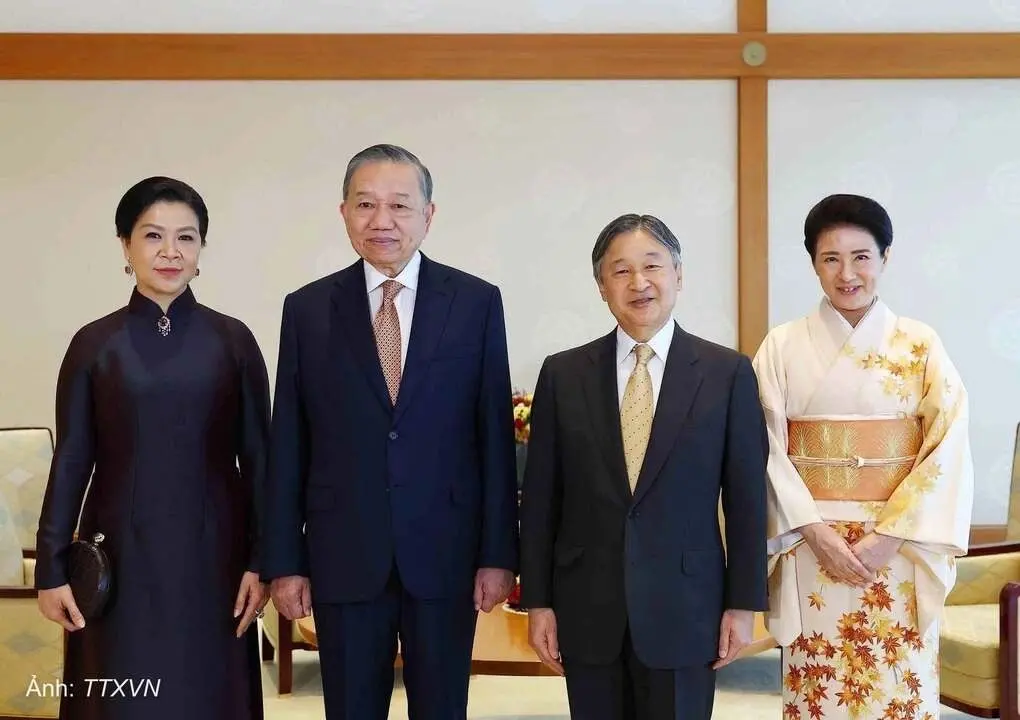
A diplomatic audience in Tokyo turned into a nostalgia tour through 1,300 years of Vietnam–Japan connections. On November 11, Vietnam's General Secretary and State President To Lam met Emperor Naruhito and Empress Masako at the Imperial Palace, and the conversation leaned heavily on the cultural threads that bind the two countries — the kind of detail that makes this more interesting than a standard bilateral meeting.
The Emperor went well beyond pleasantries. He recalled the story of Lam Ap music, carried from Vietnam to Nara in the 8th century by the Buddhist monk Phat Triet, which eventually wove itself into Japanese court music. He also flagged the Japanese ceramic fragments dug up over the years in Hoi An — physical proof of trade links that were centuries old before anyone drew modern borders. Naruhito has a personal stake in the relationship too: he visited Vietnam in 2009 as Crown Prince.
For Vietnam's part, To Lam brought up the 2017 visit by then-Emperor Akihito and Empress Michiko, which both sides still treat as a landmark moment in the relationship. He thanked the Imperial Family for its warmth toward Vietnam and pointed to education, healthcare, workforce development, agriculture, culture and tourism as areas with room to grow.
Why does this matter if you're booking flights rather than following politics? Because warm state ties tend to translate into easier travel: more direct routes, smoother visas and growing tourism investment between the two countries. Vietnam has become one of the most popular destinations for Japanese travellers, and Japanese cities draw steadily growing numbers of Vietnamese visitors. The historical hooks mentioned in the meeting are genuinely worth chasing on the ground — Hoi An's old town, where Japanese merchants left their mark in the 16th and 17th centuries, is one of Southeast Asia's most atmospheric stops, and the Japanese Covered Bridge there remains its signature sight. In Japan, Nara's temples and the preserved imperial heritage around them offer a quieter counterpoint to Tokyo, with that ancient musical exchange still echoing in the country's court music traditions.
The visit wrapped with a royal reception hosted by the Emperor and Empress at the Imperial Palace the same afternoon. Diplomacy like this rarely makes an itinerary on its own, but the cultural connections it celebrates make for a genuinely good theme if you're plotting a trip that links the two countries.